7 Best Shopify Themes for Handmade Products 2026
Last modified: June 21, 2026

| # | Image | Name | |
|---|---|---|---|
| 1 |
|
Craft
|
|
| 2 |
|
Stockholm
|
|
| 3 |
|
Mono
|
|
| 4 |
|
Allure
|
|
| 5 |
|
Galleria
|
|
| 6 |
|
Story
|
|
| 7 |
|
Horizon
|
|
|
Show More
|
|||
Our rankings aren't just opinions. They are based on proprietary detection data from 3.5 million+ Shopify stores, aggregated daily since 2017.
Craft
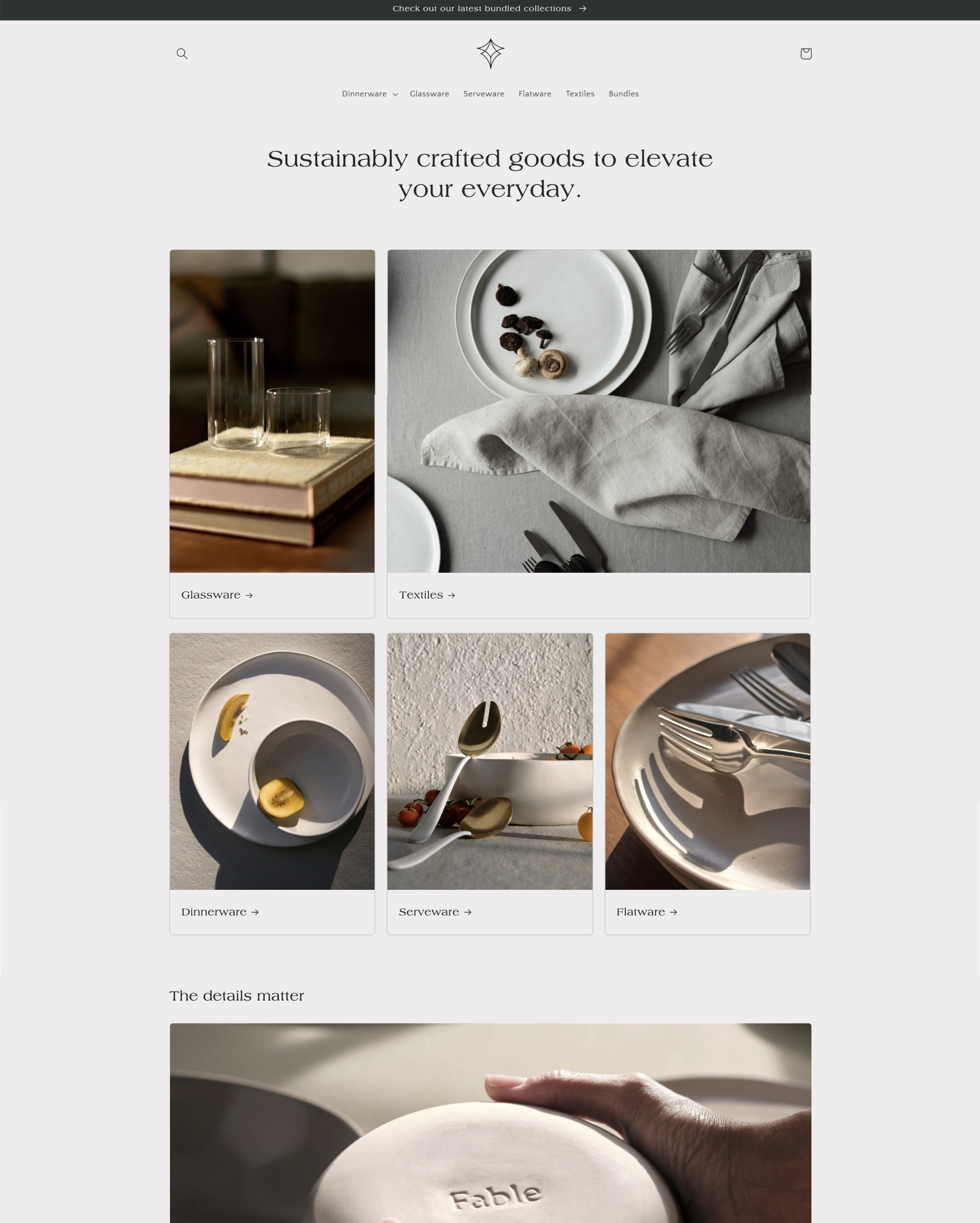
Craft is Shopify’s free theme built explicitly for the handmade and artisan niche. The name is not marketing - the design philosophy genuinely treats the maker’s story, process, and personality as first-class citizens. Generous spacing, refined typography, and elevated storytelling sections give you space to tell where the thing came from, who made it, and why it matters.
For an Etsy migrator, Craft is the closest replication of the “small brand with a face” feel you had on Etsy, but on your own URL. Mega menu, enhanced search, color swatches, and product videos cover the modern ecommerce baselines. Cart notes and in-store pickup help if you sell at local markets alongside online.
Weakness: only one preset (Craft itself), so visual variety is limited. Rating sits at 56% across 45 reviews - some buyers report needing customization for non-craft niches. If your aesthetic is anything other than “warm, story-led handmade,” another theme will fit faster.
Craft Highlights
- Free - the most natural fit on the Shopify Theme Store for handmade and artisan brands.
- Maker story sections built into the homepage and product page templates.
- Enhanced search, mega menu, and product filtering for growing catalogs.
- Cart notes for handwritten messages, in-store pickup for market-day sales.
- Color swatches, image zoom, and product videos for process documentation.
- Built and maintained by Shopify - free updates and stable through theme version bumps.
Stockholm
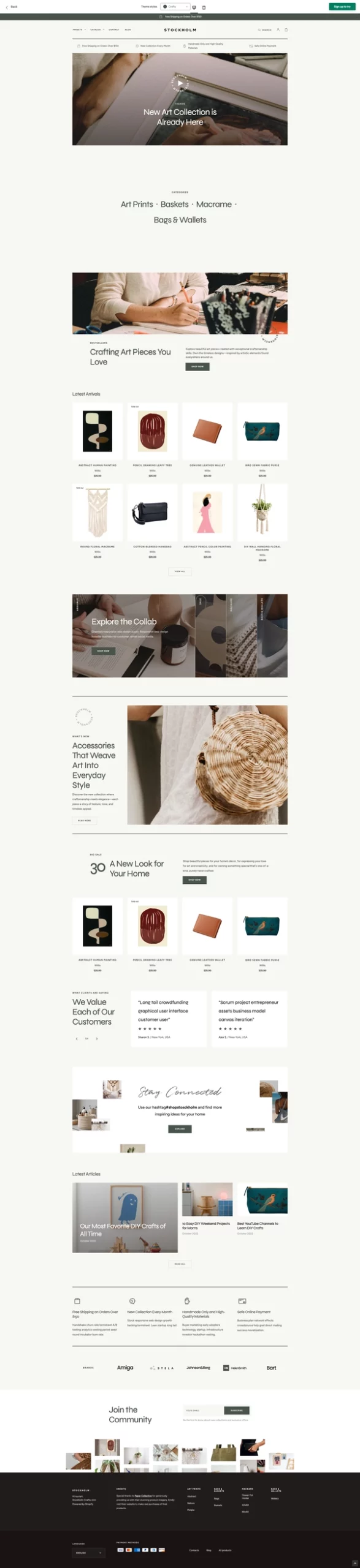
Stockholm by Superfine is the minimalist editorial pick. The Artifact preset reads like a Scandinavian gallery - lots of whitespace, restrained color, large hero photography that makes a single piece feel important. For ceramicists, woodworkers, and any maker whose pieces are visually distinctive, Stockholm puts the work front and center without competing with it.
Five presets (Stockholm, Detox, Admire, Match, Artifact) cover a real aesthetic range, from clean modernist to softer earth-toned. Before/after sliders, image zoom, and product videos handle process documentation. Mega menu and enhanced search keep up as you add a “Small batch March 2026” collection every few weeks.
Weakness: $320 is real money for a small studio. The minimalist aesthetic is opinionated - if your brand voice is warm and playful, Stockholm’s restraint will feel cold. Buy Stockholm when your photography is strong enough to carry a minimalist layout.
Stockholm Highlights
- Artifact preset reads as gallery-quality - lots of breathing room around each piece.
- Before/after sliders for “raw materials to finished piece” sequences.
- Image zoom and high-resolution product galleries for detail-heavy crafts.
- EU translations (English, French, Italian, German, Spanish) built in.
- 15-minute support response time from Superfine.
- 94% positive rating across 18 reviews.
Mono
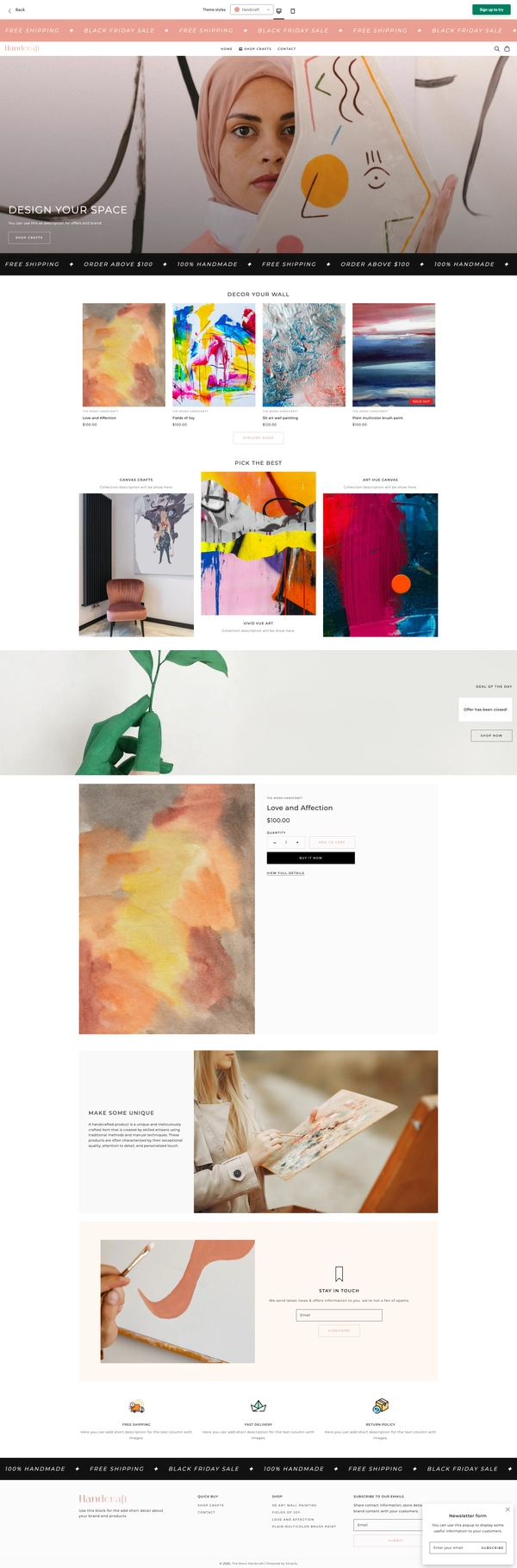
Mono by Slash Themes is the highest-rated theme on this list - 98% positive across 119 reviews. The Folk preset is the right fit for handmade: warm tones, organic shapes, layouts that feel less like a corporate ecommerce site and more like a small studio’s online catalog. Four presets (Mono, Folk, Clay, Tiny) cover the range from rustic to refined.
The merchandising stack does real work: gift wrapping at the cart, trust badges, stock counters (useful for “only 3 of this design left” messaging), countdown timers for limited drops, and promo popups for first-time buyer discounts. Before/after sliders and color swatches handle process docs and material variants cleanly.
Weakness: at $300, Mono is not cheap, and the depth of customization options creates a learning curve. New shop owners may spend a weekend tuning section settings before launch. Budget the setup time or hire a Shopify expert for 2-3 hours of initial configuration.
Mono Highlights
- 98% positive rating - the highest in this lineup, across 119 reviews.
- Folk and Clay presets read as warm, organic handmade without being twee.
- Stock counter for “only X left” urgency on small-batch pieces.
- Countdown timers for limited drops and seasonal collections.
- Gift wrapping, quick buy, and slide-out cart all native.
- Mega menu and swatch filters for growing catalogs.
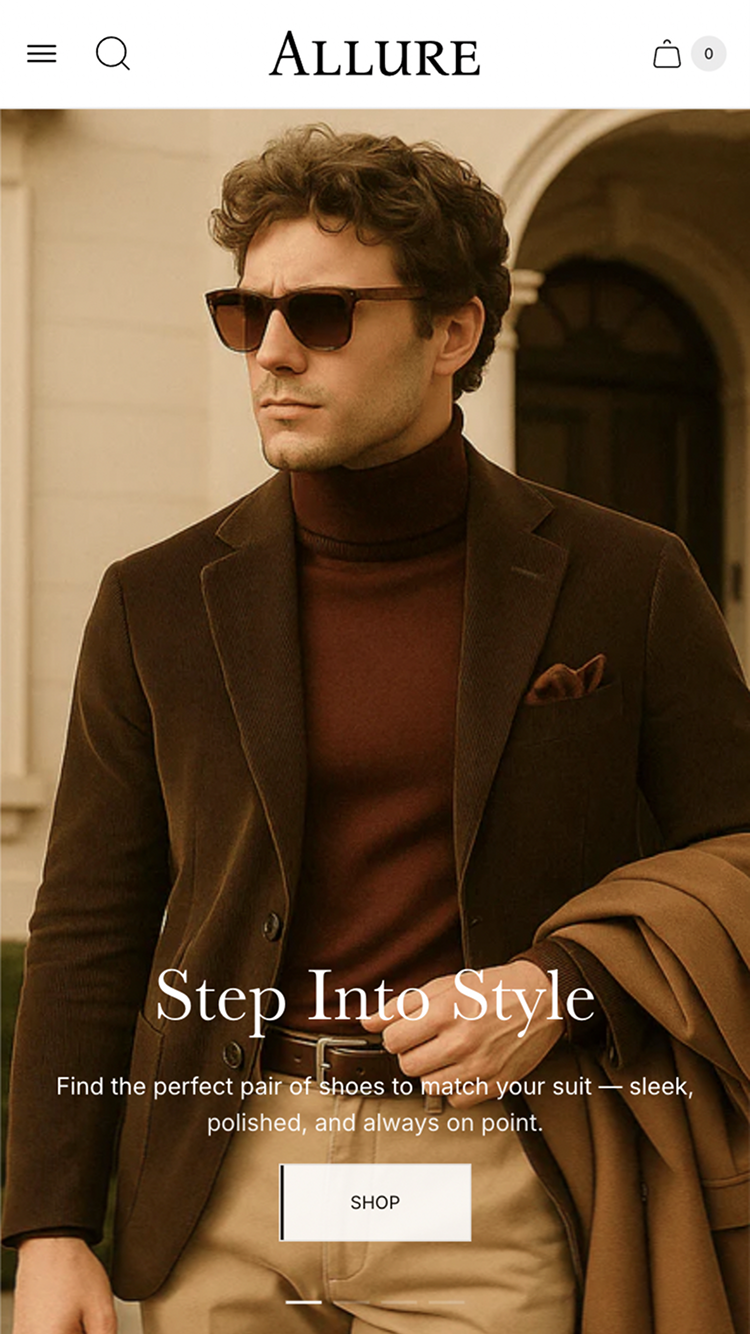
Allure
Allure by UTD is the budget pick at $100 - the cheapest paid theme in this lineup by a wide margin. The Stitch preset is named for a reason: it suits textile, sewn, and knit handmade goods where stitching, weave, and fabric texture matter. For a small sewing studio or a knitwear maker, Stitch is closer to brand-on-the-box than any other preset on this list.
Five presets total (Allure, Stitch, Carrara, Pristine, Bijou) give you real aesthetic flexibility for one-third the price of Stockholm or Mono. Mobile-first responsive design, image hotspots, color swatches, gift wrapping, and back-in-stock alerts cover the conversion essentials. Pre-order capability is useful for made-to-order pieces with 2-4 week lead times.
Weakness: at $100, you get what you pay for in terms of support depth - documentation is thinner, and the developer is smaller, so update cadence is less predictable than Shopify-built or top-tier paid themes. Best for makers who are technically comfortable or have a Shopify expert on call.
Allure Highlights
- $100 - by far the cheapest paid theme in this lineup, real budget pick.
- Stitch preset is purpose-named for textile, sewn, and knit handmade goods.
- Pre-order capability for made-to-order pieces with lead times.
- Mobile-first responsive design with fast load times.
- Image hotspots, color swatches, countdown timers, and back-in-stock alerts.
- Gift wrapping in the slide-out cart for gift-buying customers.
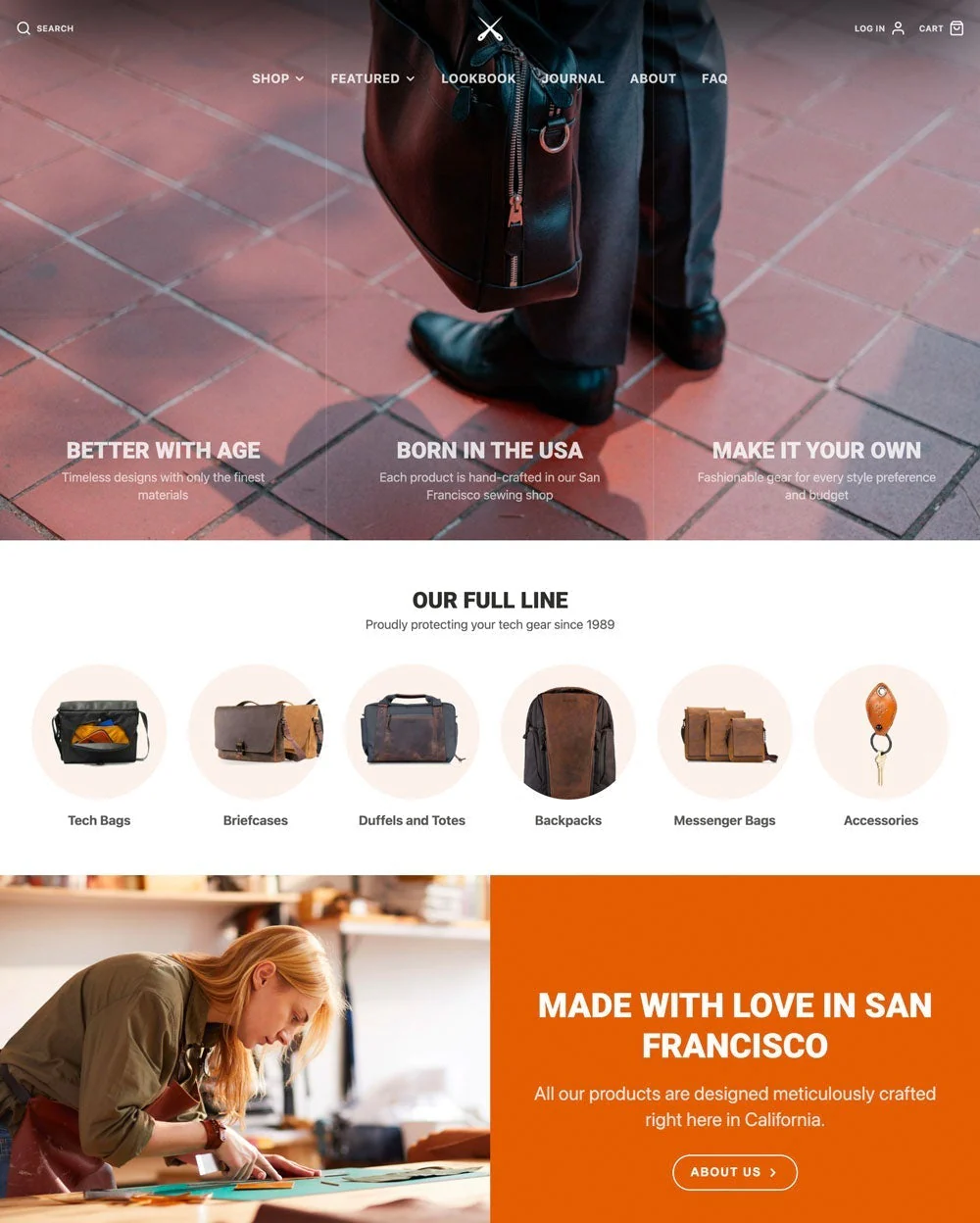
Galleria
Galleria by Mile High Themes is the gallery-style pick - 99% positive across 162 reviews, the most highly-rated theme in this lineup. The Drape preset is the right Galleria preset for handmade boutiques where photography is everything: clothing makers, soft goods, textile artists. Drape uses generous image areas and a column-style slideshow that lets a single hero shot carry the homepage.
Three presets (Galleria, Drape, Showroom) cover boutique handmade well. Image rollover effects, zoom, and high-resolution gallery support let you sequence detail shots without making product pages feel cluttered. Promo popups, product badges (great for “Limited Edition” or “1 of 5” labeling), and stock counters round out the marketing toolkit.
Weakness: Galleria leans visual - if your photography is mid, the layout will expose that. Invest in a half-day photography session before launching on Galleria. Pre-order and in-store pickup are supported, but gift wrapping is not native (add an app if you want it at cart).
Galleria Highlights
- 99% positive rating across 162 reviews - the highest-rated in this lineup.
- Drape preset is purpose-built for boutique handmade clothing and soft goods.
- Image rollover, zoom, and gallery columns showcase craft detail.
- Product badges for “Limited Edition” or numbered-piece labeling.
- Stock counter for “only X left” scarcity on one-off pieces.
- EU translations (English, French, Italian, German, Spanish) included.
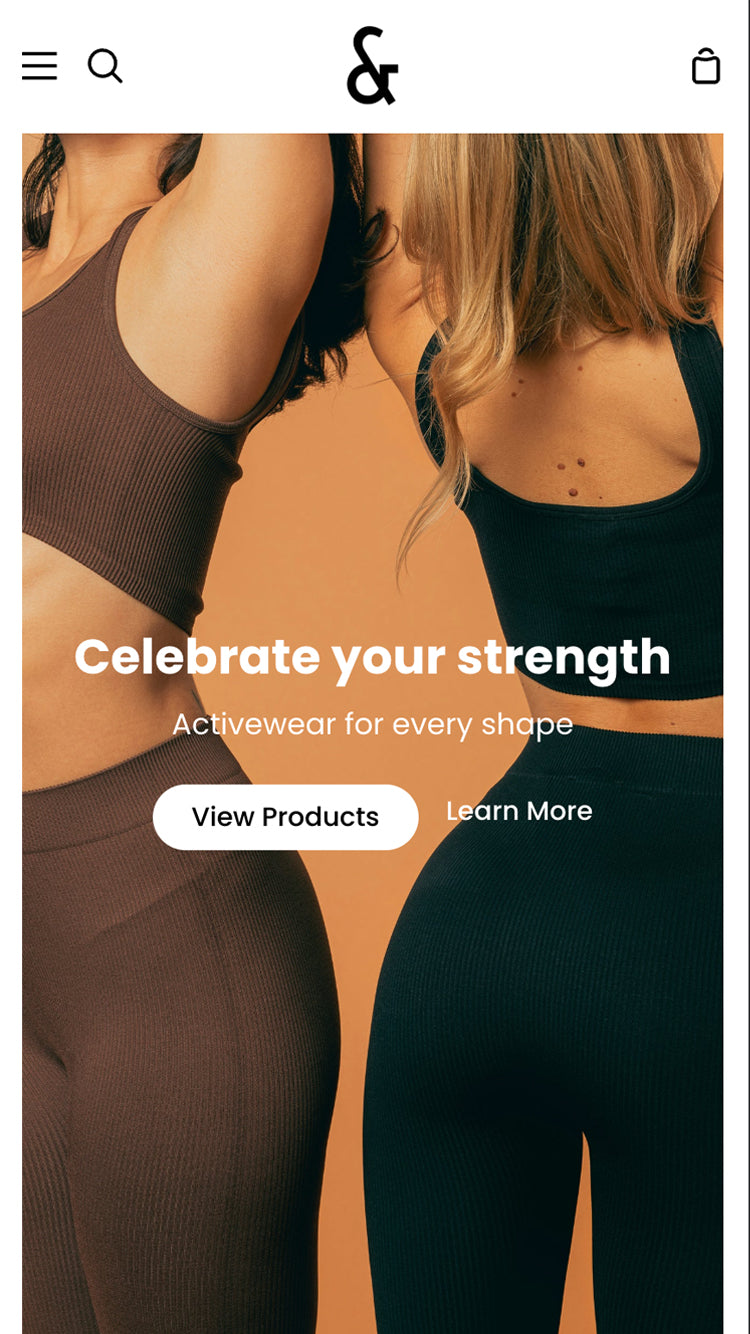
Story
Story by Groupthought is the editorial brand-led pick. The Spade preset is darker and moodier than the default Story preset, which suits handmade brands with strong identity: leather goods, dark ceramics, brass jewelry, anything where the aesthetic is intentionally not pastel and not corporate. Spade reads as a serious craft brand from frame one.
Four presets (Story, Spade, Solace, Shale) all give generous whitespace and magazine-spread product cards. Drag-and-drop sections let you build a homepage that mixes a founder’s note, process video, and product collection without writing code. Sibling product swatches handle the “available in 5 leather colors” pattern cleanly.
Weakness: lighter on aggressive promo tools than Mono or Allure. If your business runs on countdown timers and flash sales, Story will feel restrained. If your business runs on a strong brand story and slow-burn customer trust, that restraint is the feature.
Story Highlights
- Spade preset reads as a dark, intentional craft brand - leather, brass, dark ceramics.
- $280 - the lowest paid price after Allure in this lineup.
- Drag-and-drop sections for founder’s note, process video, and collection mixing.
- Sibling product swatches for color and material variants.
- Pre-order, slide-out cart, and in-store pickup all native.
- Mobile-first build - phone product pages render cleanly without custom CSS.
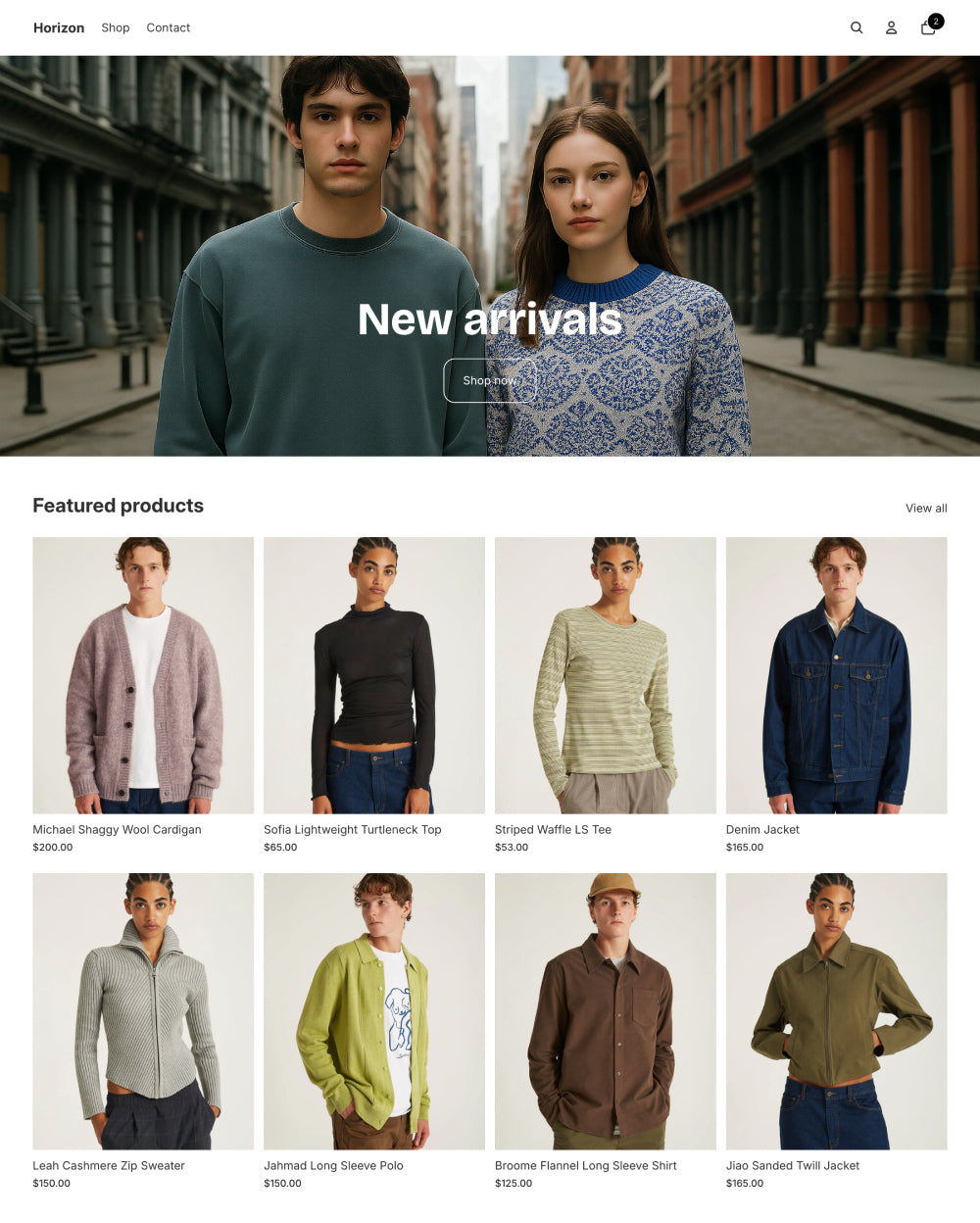
Horizon
Horizon is Shopify’s newer free flagship theme, launched as a faster, more conversion-focused alternative to Dawn. For handmade brands that want a modern free baseline (instead of Craft’s opinionated handmade aesthetic), Horizon is the right pick. Clean modern typefaces, fast-loading performance, and nested theme blocks make it the most flexible free Shopify-built option.
The “launch-ready minimalism” framing is accurate - Horizon ships ready to go, with sensible defaults that work without much customization. Mega menu, infinite scroll, swatch filters, color swatches, image zoom, product videos, and lookbooks cover the modern feature set. Back-in-stock alerts and pre-order are useful for handmade brands selling small-batch and made-to-order pieces.
Weakness: Horizon is intentionally aesthetic-neutral, which means it does not have Craft’s handmade warmth out of the box. If you want maker-story aesthetics, plan to customize Horizon’s typography and color palette, or pick Craft instead. Best for handmade brands that want speed and conversion focus first, story-led aesthetics second.
Horizon Highlights
- Free - Shopify’s newer flagship theme, built for speed and conversion.
- Nested theme blocks for deep section customization without coding.
- Infinite scroll, swatch filters, and lookbooks - feature parity with paid themes.
- Back-in-stock alerts and pre-order for small-batch handmade pieces.
- Mobile-first by design with strong Core Web Vitals.
- Built and maintained by Shopify - stable through theme platform updates.
-
What is the best Shopify theme for an Etsy seller migrating to Shopify?
Craft is the closest replication of the Etsy “small brand with a face” feel, and it is free. It has maker story sections built into the homepage and product page templates, which give you the warmth and personality Etsy buyers expect. Pair Craft with Judge.me for reviews and a real About the Maker page and you replicate the Etsy trust stack on your own URL. Move to a paid theme like Mono or Galleria once you cross 100 SKUs or $3,000 monthly revenue.
-
Are there any free Shopify themes built specifically for handmade products?
Yes. Craft is the most explicit handmade-fit free theme on the Shopify Theme Store, built by Shopify with maker storytelling as a core design principle. Horizon is Shopify’s newer flagship free theme, faster and more flexible than Craft but aesthetically neutral. Dawn remains a solid generic free option if neither Craft nor Horizon fits your brand voice. All three update for free as Shopify ships theme platform changes.
-
How do I handle products with many size and color variants on a handmade Shopify store?
Shopify caps native variants at 3 option types and 100 total combinations, which most handmade brands hit fast (a hat in 4 sizes x 8 yarn colors = 32 combinations of one product). Install Bold Product Options or Infinite Options to add unlimited custom-field variants outside the native cap. All seven themes in this lineup integrate cleanly with those apps. For made-to-order pieces, enable the pre-order capability that ships with Allure, Story, Mono, and Horizon.
-
Do I need a paid Shopify theme to look professional as a handmade brand?
No. Craft and Horizon are both free, both built by Shopify, and both look polished out of the box. Many established handmade brands run on free themes for years. The visible difference between free and paid themes is usually depth of customization options and bundled marketing features (countdown timers, popups, advanced filtering), not core polish. Spend on a paid theme when you actually need the bundled features, not for perceived “premium” feel.
-
How do I know which Shopify theme a successful handmade brand is using?
Use a free Shopify theme detector. Paste any Shopify store URL and the detector returns the theme name, preset, and a list of installed apps. For a handmade maker picking a theme, looking at five successful brands in your specific niche (ceramics, knitwear, candles, jewelry) and seeing what patterns emerge beats any review article. You are seeing real production decisions rather than marketing recommendations.
How to Pick a Theme for Your Handmade Brand
The right theme depends on three signals: where your photography is today, whether your aesthetic is warm-handmade or sharp-editorial, and how much you can spend. A new maker with strong process photos and a warm brand voice runs cleanly on Craft. A ceramic studio with gallery-quality photos and a minimalist aesthetic wants Stockholm’s Artifact preset. A textile or sewing studio on a tight budget wants Allure’s Stitch preset. A boutique handmade clothing brand with strong photography wants Galleria’s Drape preset. A dark-craft brand (leather, brass, dark ceramics) wants Story’s Spade preset.
Before you buy, run the theme demo through three tests: open a product page on your phone (do the variant options read cleanly for a buyer adding a hand-knit hat in two sizes and three colors?), check the homepage in slow-3G throttling (does it render under 3 seconds when your buyer is on the bus?), and add three items to the cart from different collections (does the cart hold state without breaking?). The themes above pass all three on their demo stores; many otherwise-popular themes fail at least one in production.
Migrating From Etsy? Read This First
If you are coming from Etsy, the theme choice matters less than the trust stack you build around it. Etsy buyers expect multiple product photos, a clear maker bio, real reviews on every product, transparent shipping times, and a “made by hand” signal somewhere on the page. The themes above support all of that natively, but you still need to do the work: add 5-8 photos per product (not 1-2), install Judge.me for reviews, write a real About the Maker page, and put your shipping policy where buyers can find it before checkout. For the full migration logic, see our Shopify vs Etsy for handmade goods sellers guide.
Run Your Theme Through Our Detector First
Before you commit to any of the seven themes above, point our Shopify theme detector at a handmade brand whose store you admire. The detector tells you exactly which theme, preset, and apps the store is running - free, no signup. That intelligence beats any review article (including this one) because you are seeing what real handmade brands in your niche actually picked, not what a marketer recommends. Look at five successful handmade Shopify stores in your specific category (ceramics, candles, jewelry, knitwear) and you will see a pattern emerge.
For broader theme research, see our best Shopify themes for clothing hub for established apparel brands, our best Shopify jewelry themes guide for handmade jewelry specifically, our best Shopify themes for art roundup for artists selling prints and originals, and our Shopify stationery and gift shop themes for paper goods makers.
Conclusion: A Handmade Theme Is a Permission Slip to Tell Your Story
The seven themes above were picked because each one treats the maker’s story as core, not decorative. Craft and Horizon win as free starters. Mono wins on rating (98%) and warmth. Galleria wins on rating (99%) and boutique photography. Stockholm wins on minimalist editorial. Story wins on dark-craft editorial. Allure wins on price and textile fit.
The theme is a permission slip to tell your story; it does not write the story for you. Strong product photography, a real About the Maker page, reviews on every product, and clear shipping timelines do more for conversion than any theme feature. Get the theme right first as the foundation, then layer your photography, reviews, and brand voice on top.