14 Shopify Fashion Themes for 2026
Last modified: October 11, 2026
| # | Image | Name | Price | Reception | Adoption | CWV pass rate |
|---|---|---|---|---|---|---|
| 1 |

|
Blum
|
$170 | (260) | 0.1% | 72.3% |
| 2 |

|
Wonder
|
$390 | (146) | 0.5% | 63.7% |
| 3 |
|
Baseline
|
$420 | (95) | 0.3% | 95% |
| 4 |

|
Concept
|
$400 | (656) | 1.3% | 75.6% |
| 5 |
|
Atlantic
|
$300 | (226) | 0.1% | 91.8% |
| 6 |

|
Showcase
|
$400 | (147) | 0.3% | 58.4% |
| 7 |

|
Broadcast
|
$420 | (283) | 1.7% | 74.8% |
| 8 |
|
Impulse
|
$500 | (1,301) | 4.0% | 78.3% |
| 9 |

|
Palo Alto
|
$420 | (312) | 0.9% | — |
| 10 |

|
Reformation
|
$430 | (257) | 0.5% | 78.4% |
| 11 |

|
Prestige
|
$400 | (869) | 4.4% | 78.8% |
| 12 |
|
Stiletto
|
$380 | (150) | 0.6% | 79.8% |
| 13 |
|
Ecomus
|
$88 | 0.5% | 63.1% | |
| 14 |
|
Shella
|
$49 | 0.2% | 50.5% | |
|
Show More
|
||||||
Data first, opinion second: we track usage across 3.5+ million Shopify stores daily, and have since 2017. The stats tell us what merchants actually use; our editors rank the final picks by quality, pricing, and fit.
How These Themes Compare on Speed
| Theme | CWV pass rate | Few apps | Median LCP |
|---|---|---|---|
| Baseline | 95% | 97.2% | 1.3s |
| Atlantic | 91.8% | 96% | 1.3s |
| Stiletto | 79.8% | 85.6% | 1.7s |
| Prestige | 78.8% | 85.8% | 1.6s |
| Reformation | 78.4% | 88.5% | 1.6s |
| Impulse | 78.3% | 85.7% | 1.6s |
| Concept | 75.6% | 83.4% | 1.5s |
| Broadcast | 74.8% | 86.8% | 1.5s |
| Blum | 72.3% | 88% | 1.3s |
| Wonder | 63.7% | 64.2% | 1.8s |
| Ecomus | 63.1% | 65.8% | 1.8s |
| Showcase | 58.4% | 72.3% | 2.1s |
| Shella | 50.5% | 61.4% | 2.1s |
Blum
Ideal for: Designer and premium labels
Blum takes a lookbook-first approach, which suits fashion brands that style pieces into complete outfits rather than a plain grid. It shows up less often than the mass-market themes, mainly because it is newer, and it lands as the value pick.
Its shoppable hotspots tag pieces on a styled photo, matching how fashion sells a look, and the fashion-specific design means a polished store with little setup. For a newer label building styled, shoppable edits on a budget, it punches above its price.
Blum Highlights:
- Lookbook and outfit-building layouts
- Shoppable hotspots on styled photos
- Purpose-built for fashion
- Premium paid theme by eComX
Here is how it shows up in our store data:
Blum Page Speed: Live Data
Wonder
Ideal for: Styled, shoppable lookbooks
Wonder is a premium conversion theme from NETHYPE, and it earns its spot on features rather than a single niche. It is built to sell, with a slide-out CRO cart, plus built-in bundles, quizzes, and a subscription widget that cover jobs which usually need separate apps. The design is polished and modern, with five ready-made presets to start from. Our full Wonder review has the detail.
The trade-off is speed. Real-store Core Web Vitals put Wonder mid-pack, so turn on only the sections you need and test as you build. Pick it when you sell on presentation and want conversion tools built in, rather than a lean, fast catalog theme.
Highlights:
- Slide-out CRO cart with quick buy
- Built-in bundles, quizzes, and subscriptions
- Rich merchandising: before-and-after, lookbooks, size charts
- One-time price with five ready-made presets
Wonder Page Speed: Live Data
Baseline
Ideal for: Fashion brands that want conversion tools built into the theme
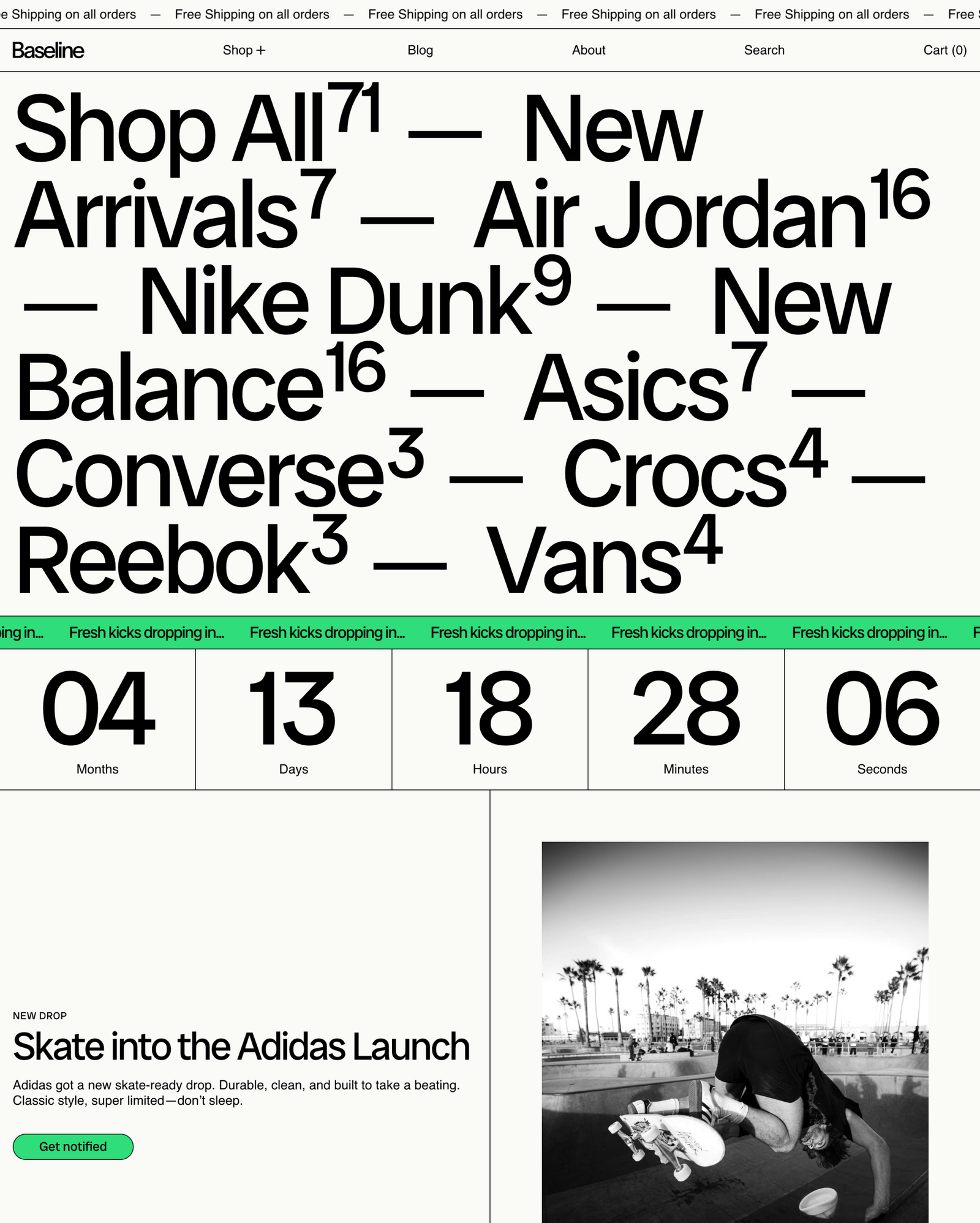
Baseline is a design-led theme from Switch built around a brutalist, editorial look, which puts it in good company on a fashion list. Hard grids, graphic lines, and restrained mono palettes give a clothing brand a gallery feel, while text-centric layouts leave room for lookbook copy and brand storytelling without crowding the product. Color swatches and swatch filtering handle the size-and-shade browsing fashion shoppers expect.
Its strength is standing apart from templated storefronts. Products can sit center stage or off to one side, and the presets range from loud and graphic to quiet and minimal, so a label can match the theme to its own aesthetic. Baseline is a one-time purchase from Switch, so there is no monthly theme fee on top of your apps.
Baseline Highlights:
- Brutalist, editorial design by Switch
- Color swatches and swatch filtering
- Text-centric layouts for lookbook storytelling
- Flexible product placement
- One-time purchase, not a subscription
Baseline Page Speed: Live Data
Concept
Ideal for: Focused, design-led edits
Concept, by RoarTheme, is a clean, mobile-first theme built around a focused product presentation, which suits fashion brands with a tight, considered edit. Its minimal design lets each piece read clearly without visual noise.
Carousel swipes and thumb-friendly navigation make browsing a curated range easy on a phone. For a brand built around a focused, design-led selection, its pared-back clarity fits neatly.
Concept Highlights:
- Clean, minimal single-product focus
- Mobile-first, thumb-friendly navigation
- Uncluttered, edit-led presentation
- Premium paid theme by RoarTheme
Here is how it shows up in our store data:
Concept Page Speed: Live Data
Atlantic
Ideal for: Visual-led fashion brands with strong imagery
Ideal for: mid-to-large soft-goods, lifestyle, apparel, home, or editorial stores that want a Shopify Theme Store theme with strong real-store performance and section depth from a long-shipping developer.
Based on adoption data from stores in our dataset, Atlantic from Pixel Union earns a slot here on measurable qualities rather than familiarity. The field CrUX cohort on real Atlantic stores passes Core Web Vitals at a rate well above the premium-theme median, which is unusual for a theme that bundles image zoom, live search, multi-column menus, and a lookbook section library out of the box. The five presets (Atrium, Atlantic, Plush, Cotton, Parfum) lean soft-goods and lifestyle rather than one vertical, so the preset depth is useful for a merchant exploring one of several related categories before committing to a visual language.
The install base in our dataset is small compared to the top-of-chart themes, so Atlantic is not winning on familiarity. Pixel Union has shipped Shopify themes since the early Partners program, and that history shows in the practical details: section depth that covers lookbook and editorial without a plug-in, metaobject templates that handle extended product content, and a mobile pattern that holds up on a slow network. Full write-up: Atlantic Shopify Theme Review.
Atlantic Highlights:
- Rated 96% positive on 226 reviews ($300 one-time)
- Five presets under one license across soft-goods and lifestyle angles
- Section library handles lookbook, editorial, image zoom, live search, and multi-column menus natively
- Real-store CWV pass rate well above the premium-theme median
- Mature feature set from a long-shipping developer (Pixel Union: Prestige, Empire, Expanse, Palo Alto, Reformation)
Atlantic Page Speed: Live Data
Showcase
Ideal for: Broad, varied ranges
Showcase is built around big, confident visuals, which is exactly what image-led fashion wants. Full-bleed photography and gallery sections turn a lookbook into the main event rather than a footnote.
It gives editorial-minded labels room to tell a season’s story while keeping products a click away. For a brand where the imagery carries the identity, Showcase leans into that strength.
Showcase Highlights:
- Full-bleed, gallery-style imagery
- Editorial storytelling sections
- Products a click from the story
- Premium paid theme by Clean Canvas
Here is how Showcase shows up in our store data:
Showcase Page Speed: Live Data
Broadcast
Ideal for: Broad, varied ranges
Broadcast pairs a bold, editorial look with dozens of flexible sections and strong filtering, which suits fashion brands carrying a wide, varied range. Its large hero areas give room for styled, lookbook-style imagery.
Filtering keeps sizes, colours and styles shoppable across a broad catalogue, and the flexible sections leave room for edits and collections. For a brand with a big range and a strong look, it has the room to show it.
Broadcast Highlights:
- Bold, editorial design
- Dozens of customizable sections
- Strong size and style filtering
- Premium paid theme by Presidio
Here is how it shows up in our store data:
Broadcast Page Speed: Live Data
Impulse
Ideal for: Drop and campaign-led brands
Impulse is a fashion theme through and through, built for apparel with shoppable hero images, bold banners and promotion tools that match how clothing sells on drops and seasonal campaigns. It is the most-reviewed pick here.
The promo tooling builds hype around a launch, and quick buy keeps an impulse purchase moving. For a fashion brand built on drops, sales and campaigns, it does real work.
Impulse Highlights:
- Built for fashion and apparel
- Shoppable hero images and promo tools
- Drop and campaign-friendly sections
- Premium paid theme by Archetype
Here is how it shows up in our store data:
Impulse Page Speed: Live Data
Palo Alto
Ideal for: Lifestyle and identity-led labels
Palo Alto is a storytelling theme, a strong fit for fashion brands that sell a lifestyle and a point of view as much as the clothing. Its editorial sections give space for styled photography and the identity these brands trade on.
Underneath the story it stays practical, with quick buy, a slide-out cart and back-in-stock alerts, so a considered browse still converts. For a brand building a recognisable world, it fits neatly.
Palo Alto Highlights:
- Editorial, lifestyle-led layouts
- Quick buy, slide-out cart, back-in-stock
- Upsell and merchandising tools
- Premium paid theme by Presidio
Here is how it shows up in our store data:
See our full Palo Alto review for the style-by-style detail.
Reformation
Ideal for: Fashion labels with a strong social feed
Reformation suits fashion brands whose feed does the marketing. It threads social content and lookbooks through the shopping flow, so the storefront carries the same energy as the brand’s own feed.
The imagery-first design flatters seasonal drops and hero pieces alike. For a label that lives on social, it keeps the shop and the feed in step.
Reformation Highlights:
- Social feed and lookbook sections
- Imagery-first product pages
- Suits seasonal drops
- Premium paid theme by Fuel Themes
Here is how it shows up in our store data:
Reformation Page Speed: Live Data
Prestige
Ideal for: Apparel brands that lead with editorial styling and drops
Prestige is the premium anchor for fashion, the natural lead for a designer or high-end label. Maestrooo built it for luxury brands, and its refined layout and large imagery let a collection carry the page rather than compete with it.
That polished presentation supports a premium price and makes a store look considered from the first scroll, with merchandising that never crowds the clothing. For an established fashion brand, it is the proven, elegant foundation.
Prestige Highlights:
- Refined, high-end aesthetic
- Large imagery for collections
- Strong, quiet merchandising
- Premium paid theme by Maestrooo
Here is how it shows up in our store data:
Prestige Page Speed: Live Data
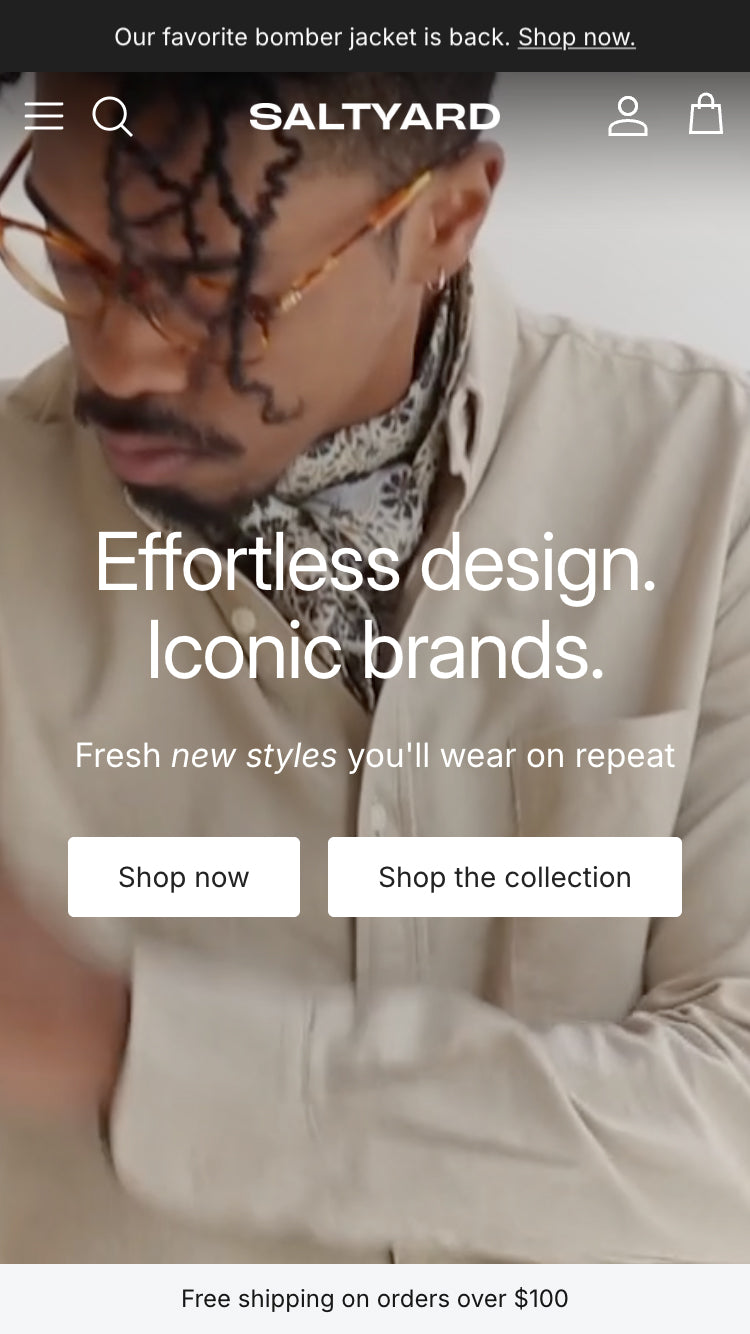
Stiletto
Ideal for: Editorial, design-led fashion brands
Fashion lives or dies on how the clothes look on screen, and Stiletto is built around that. The layouts are editorial by default, with big campaign imagery and clean product pages that keep the focus on the garment. It works across the spectrum, from a minimalist menswear label to a bold streetwear brand, because the five presets each set a different tone from the same base.
It also covers the mechanics apparel shoppers expect. Size charts, color swatches, and product filtering help people sort by fit and style without leaving the collection. Lookbooks and image hotspots turn one styled photo into a full shoppable outfit, which nudges a larger cart. For drops and seasonal launches, the built-in countdown timers, free shipping bars, and sticky buy button do the work that would need apps on a leaner theme. Mega menus and enhanced search keep a growing range easy to browse as new collections land. The payoff is a store that looks considered, which is what earns trust in a category where shoppers judge on the first screen.
Our full Stiletto review breaks down the presets and setup if you want the detail.
Stiletto Highlights:
- Editorial layouts built around campaign photography
- Size charts, swatches, and filtering for fit and style
- Shoppable lookbooks and image hotspots for full outfits
- Countdown timers, free shipping bars, and sticky buy for drops
- Five presets spanning minimalist to bold
Stiletto Page Speed: Live Data
Ecomus
Ideal for: fashion catalogs with review-forward merchandising
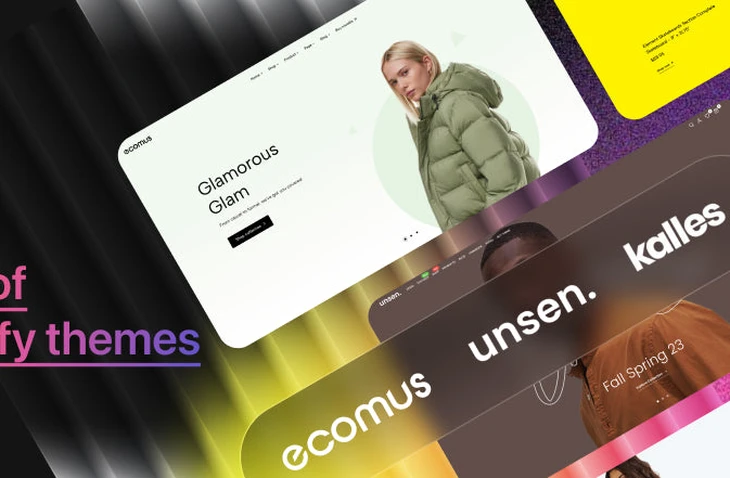
Ecomus is a multipurpose theme from The4, sold on ThemeForest rather than the Shopify Theme Store, where it carries one of the marketplace’s highest ratings. For a fashion catalog its draw is breadth: more than 30 prebuilt demos, built-in product compare and wishlist, mega menus, and quick-view, so an apparel store can run lookbooks, large collections, and seasonal drops without bolting on several apps.
In our data, Ecomus skews toward stores with large product counts, which suits fashion catalogs that carry many styles, sizes, and colorways. It is a paid theme with a one-time license rather than a subscription, and it sits below most premium Theme Store options on price, though it does not get Shopify’s in-admin theme updates.
The live figures below show how many stores in our dataset run Ecomus and how it performs on real-world Core Web Vitals. Our Ecomus review has the full speed and adoption breakdown.
Ecomus Highlights
- 30+ prebuilt demos spanning fashion and multipurpose layouts
- Built-in product compare, wishlist, and quick-view for large catalogs
- Mega menu and merchandising blocks that cut app reliance
- One-time license with no monthly fee
Ecomus Page Speed: Live Data
Shella
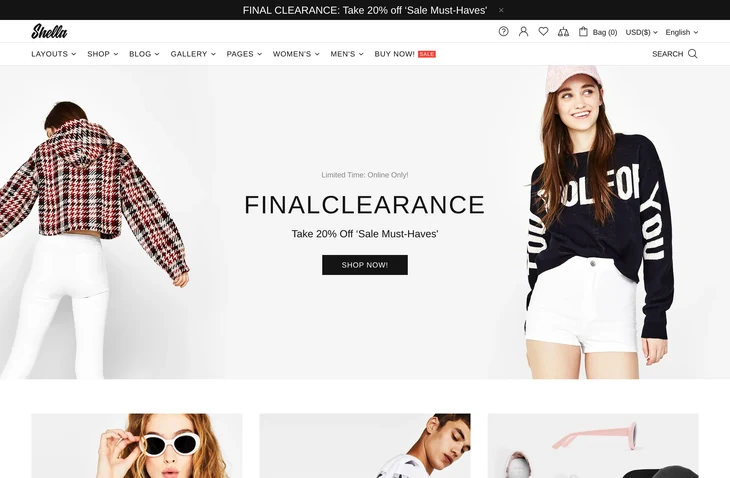
Shella is a paid Shopify theme sold direct through ThemeForest rather than the Shopify Theme Store, popular with fashion, apparel and multipurpose catalog brands. It ships with a wide stock of pre-built layouts, product-page styles and mega-menu templates, and it has been around long enough that its documentation and demo library are deep.
The stores using it in our dataset skew review-forward and catalog-heavy, running Judge.me on a large share of them and pairing the theme with a fuller-than-typical stack of email, subscription and page-builder apps. The theme’s own demo passes Core Web Vitals cleanly; real-store field speed is only middling, and the panel below shows how much of the gap comes from the app pile-up merchants add on top.
Shella Highlights
- Wide stock of pre-built layouts and product-page templates
- Mega-menu and category-first navigation for large catalogs
- Popular with review-forward, image-heavy fashion and multipurpose brands
- Sold direct via ThemeForest, not on the Shopify Theme Store
Shella Page Speed: Live Data
-
Which Shopify theme do most fashion brands use?
Prestige and Impulse are the two themes most established fashion brands run on Shopify. Prestige is the luxury benchmark, with a Couture preset built for fashion and a Signature preset tuned for shoes and clothes. Impulse is the editorial favorite, used by larger fashion brands for its lookbook tools and mobile-first design. Both cost $400 with a one-time license.
-
Is there a free Shopify theme that works for fashion?
Yes. Dawn is Shopify’s default free theme and holds up for a fashion launch, especially for brands with under 20 SKUs. It carries large media support, color swatches, and minimalist layouts that let product photography lead. Dawn lacks countdown timers and drop tools, so once you cross $50k revenue or want urgency-based launches, move to a paid pick.
-
How much does a good Shopify fashion theme cost?
Paid Shopify fashion themes range from $170 to $400 as a one-time license with lifetime updates. Blum is the entry price at $170, Sahara and Testament are mid-tier at $250, and Prestige, Impulse, Motion, and Stiletto sit at the top of the range at $380 to $400. Free options like Dawn work for early-stage brands but cap out on features.
-
What is the difference between a fashion theme and a clothing theme?
Fashion themes are built for brand storytelling, lookbooks, drops, and editorial photography. Clothing themes are built for catalog depth, size and color filtering, and high-volume product browsing. Prestige and Impulse are fashion-leaning; themes like Booster and Ella lean clothing. Pick fashion themes if you sell a brand, clothing themes if you sell a catalog.
-
Which Shopify theme suits a fashion drop or capsule launch?
Stiletto and Motion are the strongest drop themes for fashion. Stiletto ships with native countdown timers, sticky buy buttons, and image hotspots that suit limited releases. Motion handles drop content with native hero video and animation tools, so launch teasers stay on-brand without third-party embeds. Both cost $380 to $400.
-
How do I find out what Shopify theme a fashion brand is using?
Use a Shopify theme detector. Paste the brand’s storefront URL into a detector and it returns the theme name, the preset, and the apps the store runs. ShopThemeDetector.com runs the detection free and works on any public Shopify store. It is the fastest way to copy a working setup rather than guessing from theme demos.