Envy Shopify Theme Review 2026
Last modified: October 11, 2026

| # | Image | Name | Price | Reception | CWV pass rate |
|---|---|---|---|---|---|
| 1 |
|
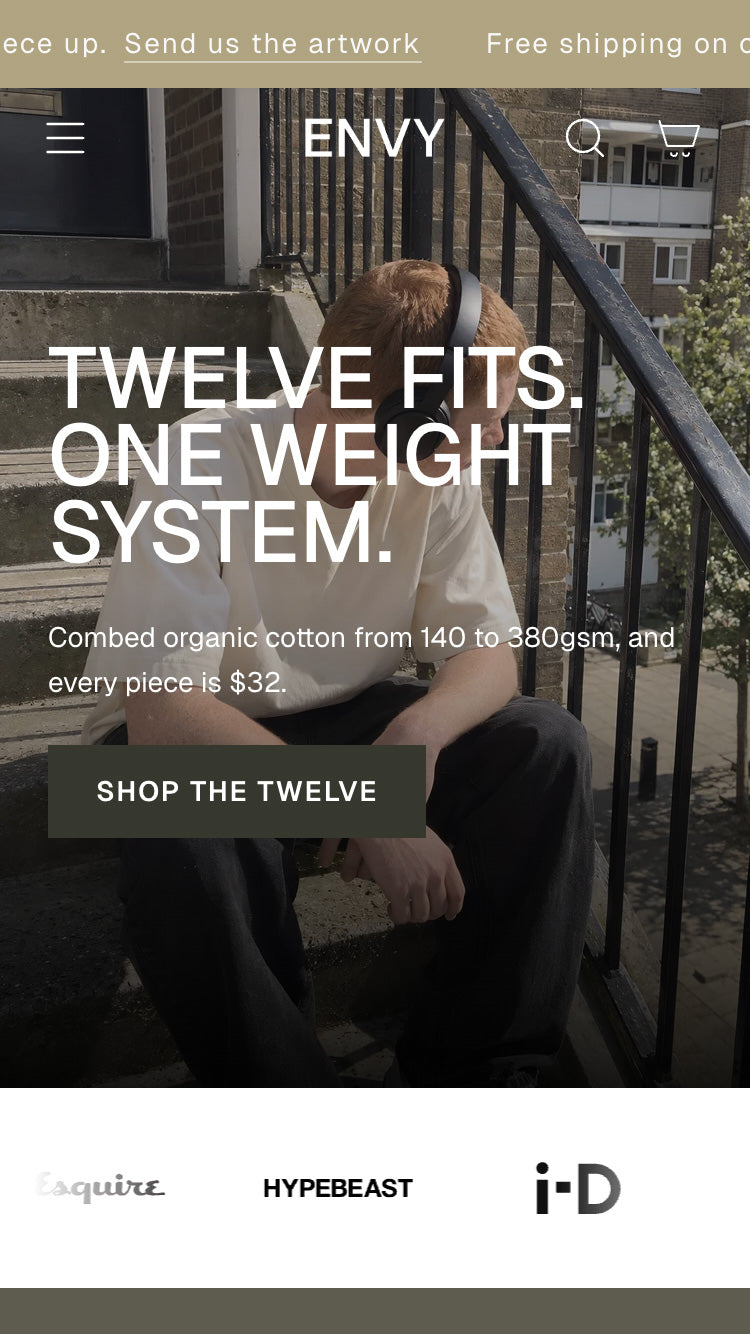
Envy
|
$320 | (273) | 71.6% |
| 2 |
|
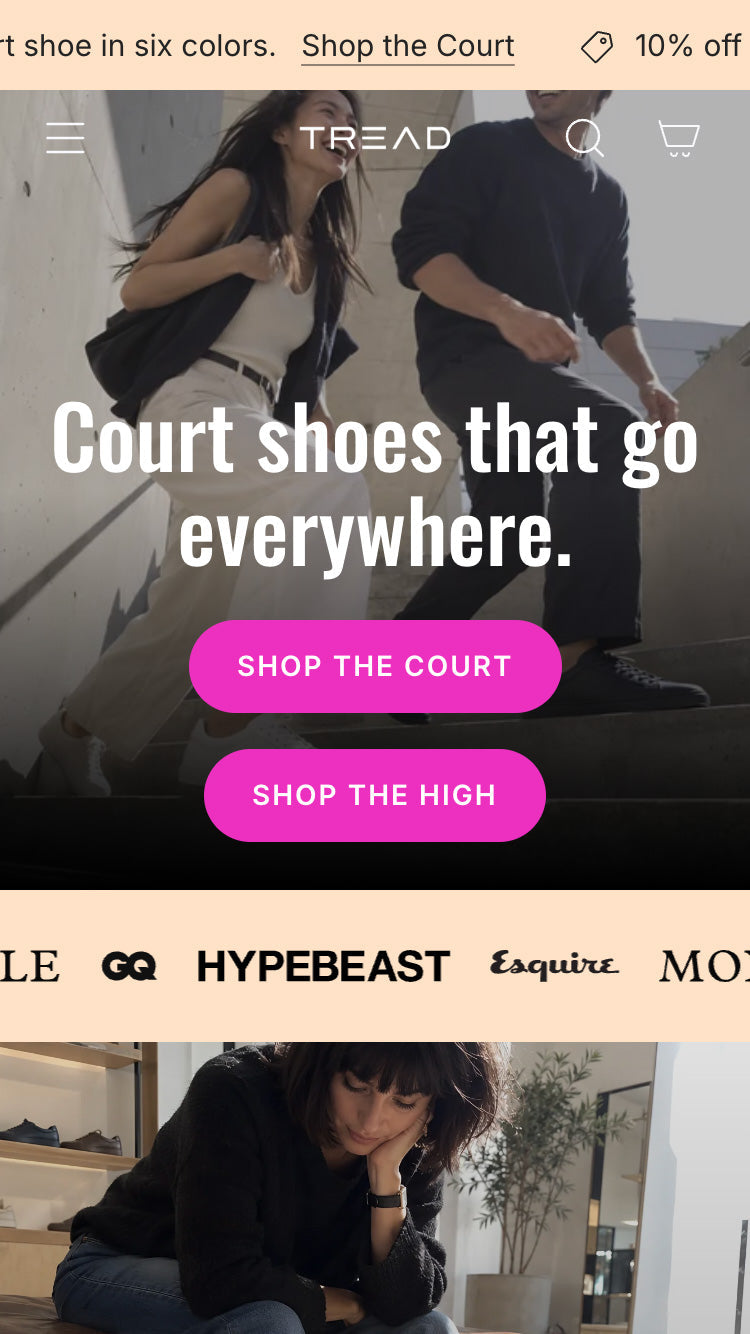
Court
|
- | - | - |
| 3 |
|
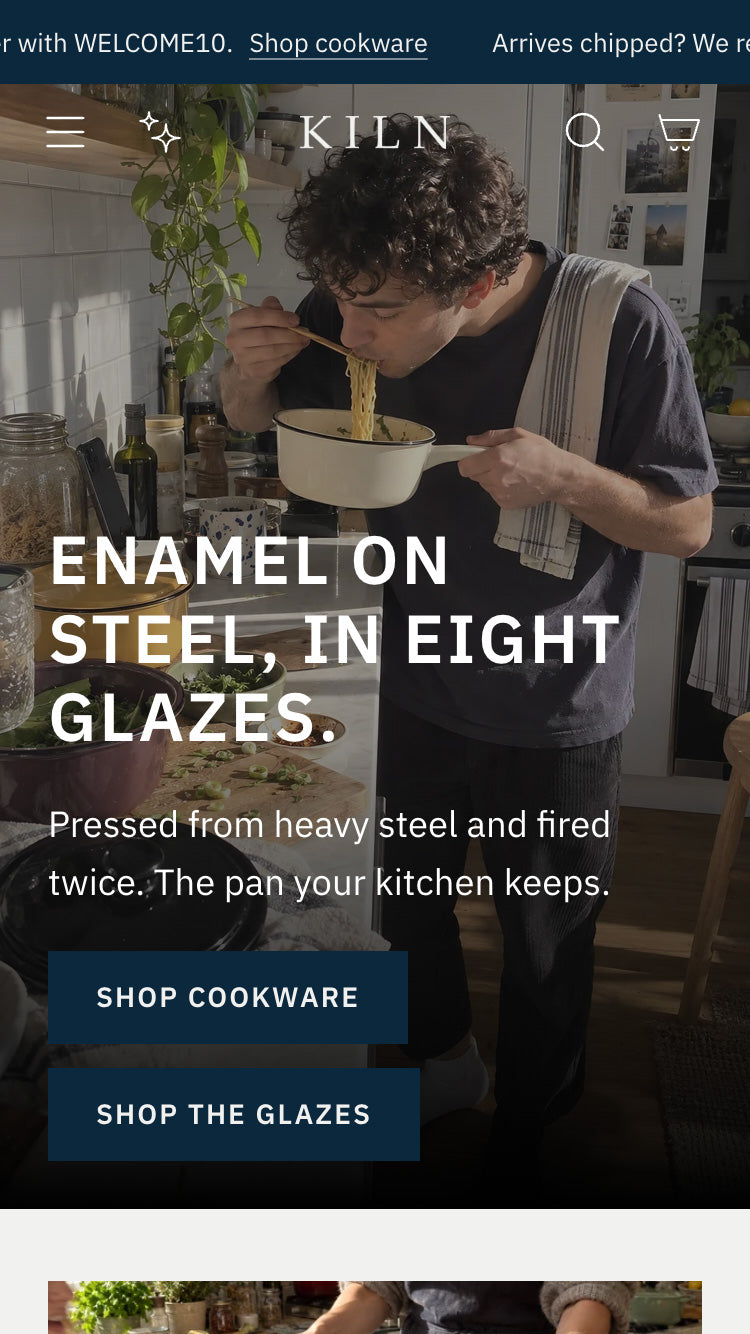
Enamel
|
- | - | - |
| 4 |
|
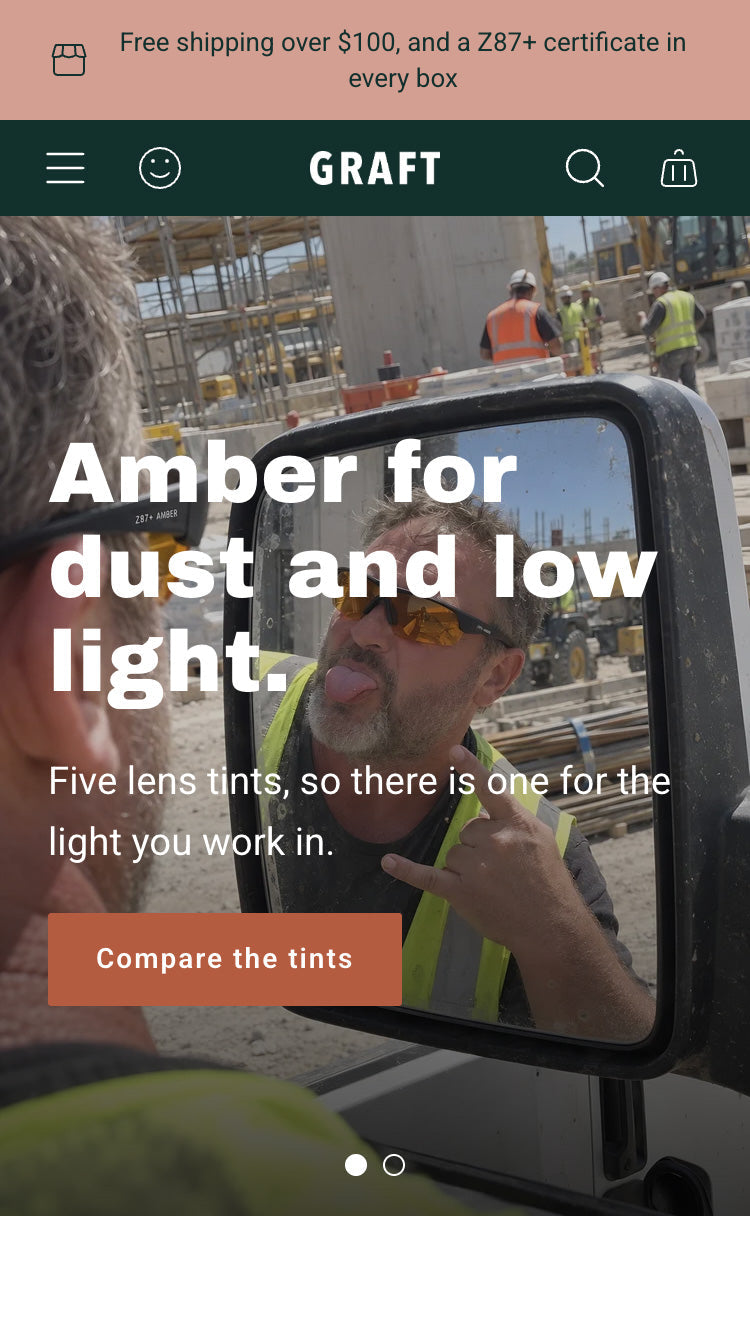
Graft
|
- | - | - |
| 5 |
|
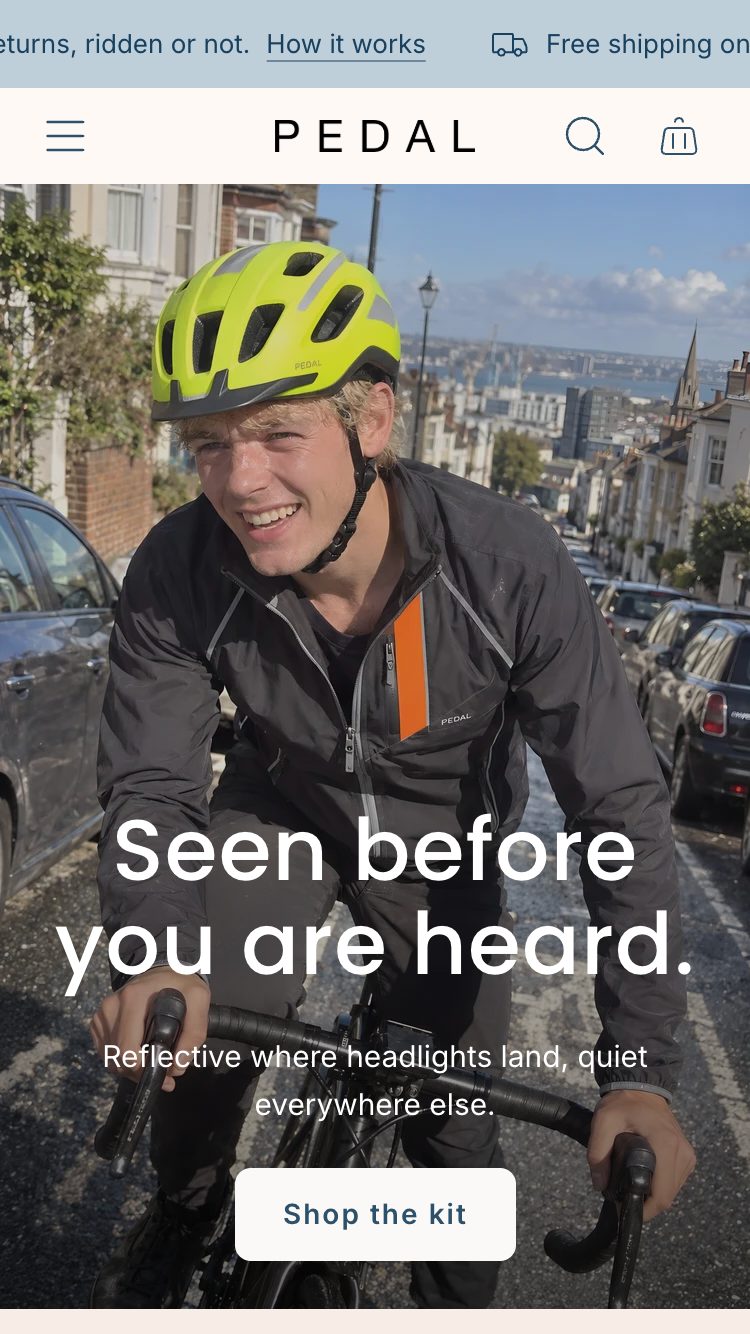
Pedal
|
- | - | - |
|
Show More
|
|||||
Quick Comparison
| Design | Best For | Aesthetic |
|---|---|---|
| Envy | Apparel brands selling a core range | Editorial, fit-by-fit apparel |
| Court | Sneaker and shoe brands | Colorway-forward, every variant in view |
| Enamel | Cookware and home brands | Sold by color and matching set |
| Graft | Workwear and tool brands | Spec-led, built on trust |
| Pedal | Cycling and outdoor brands | Gear sold as kits |
Envy is a premium Shopify theme built for apparel brands that sell a core range, fit by fit. Made by Eight Themes and sold on the Shopify Theme Store, it ships with five ready-made designs, Envy, Court, Enamel, Graft and Pedal, each tuned to a different vertical and customised section by section rather than dropped in as a plain product grid. Our detection shows it running on a small but steady set of live Shopify stores, and it holds a 91% positive rating from merchants.
The short version: Envy is a well-rated, mid-priced theme aimed at apparel brands that want an editorial storefront with conversion tools built in. It pairs a photography-led look with countdown timers, flash-sale banners and an offers drawer, so brand feel and campaigns sit together, and its five designs do a lot of the layout work for you. This review leans on data from the stores actually running Envy, not the Theme Store sales page.
What Is Envy?
Envy is a paid theme sold on the Shopify Theme Store and built by Eight Themes, a UK studio. It runs on Shopify’s Online Store 2.0 framework, so sections and blocks are editable on every page, and it ships in five designs, Envy for apparel, Court for footwear, Enamel for cookware and home, Graft for workwear and tools, and Pedal for cycling and outdoor, so you can start from a look close to your brand instead of a blank page.
Envy pairs that editorial look with real conversion tools. Alongside lookbooks, testimonials and brand-story sections, its designs ship with countdown timers, flash-sale banners, an offers drawer and quick buy, so it brings the campaign features that feature-first themes like Stiletto are known for without losing the brand feel.
The tools it leans on are the ones a brand-led store actually uses:
- Five vertical-tuned designs with full demo content
- Drag-and-drop sections for lookbooks and brand pages
- Countdown timers, flash-sale banners and an offers drawer for campaigns
- Quick buy, back-in-stock alerts and a stock counter
- Image hotspots for shoppable looks and editorial product grids
What Apps Do Envy Merchants Install?
The apps a theme’s stores run show who really uses it. Envy’s list reads like a brand-builder’s toolkit, not a discount-driven one.
| Rank | App | % of stores | Category |
|---|---|---|---|
| 1 | Klaviyo | 50.0% | Email Marketing |
| 2 | Judge.me Product Reviews App | 28.6% | Product reviews |
| 3 | Loox ‑ Product Reviews App | 15.8% | Product reviews |
| 4 | PageFly ✦ AI Page Builder | 13.3% | Page builder |
| 5 | Rebuy Personalization Engine | 12.8% | Checkout - Other |
| 6 | Recharge | 11.2% | Subscriptions |
| 7 | Shopify Inbox | 10.2% | Support - Other |
| 8 | Swym Wishlist | 9.7% | Wishlists |
| 9 | Hotjar Install | 8.7% | Analytics |
| 10 | Yotpo | 8.2% | Product reviews |
Klaviyo leads for email, backed by reviews through Judge.me and Loox, personalization from Rebuy and wishlists via Swym. That mix points to stores investing in repeat customers and social proof, which fits a theme built to tell a brand story.
How Popular Is Envy?
Envy runs on 0.2% of the Shopify stores in our detection dataset. That is a focused share rather than a mass-market one, in line with a premium theme, and its stores tend to run a few more apps than average.
You can see the full picture, updated as our data refreshes, on the Envy usage statistics page.
How Fast Is Envy?
Speed is a fair question for a design-rich theme, and Envy holds up better than most. Across real Envy stores, 71.6% pass Google’s Core Web Vitals, and the rate climbs on stores running only a few apps, with quick largest-contentful-paint and no measurable layout shift.
The takeaway is practical. Envy’s own code is quick, so the speed you keep depends on discipline: the image-led designs lean on large imagery, so compress your photos and keep your app list tight to hold those numbers as your catalog grows.
Envy Design and Layout
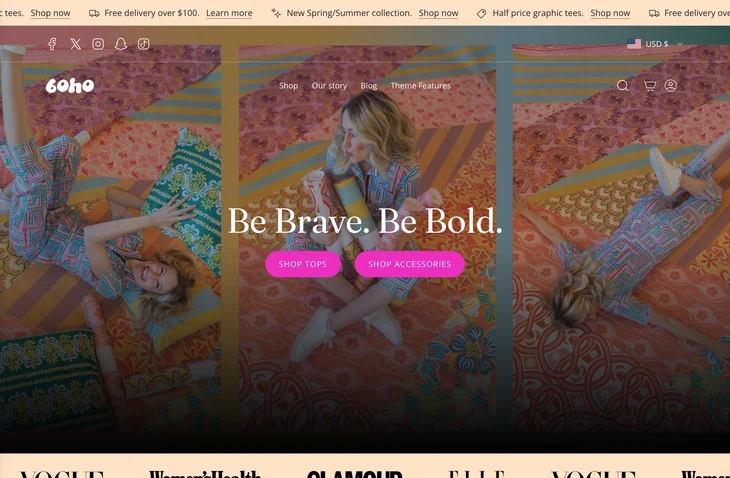
Envy’s design is editorial and photography-led. The designs lean on full-width imagery, shoppable looks and lookbook layouts, so a store with strong photography reads as a considered brand rather than a catalog. The five designs span different verticals, from apparel and footwear to cookware, workwear and cycling, so the look you start from depends on what you sell.
The trade-off is that the design leans on your content. With weak imagery or thin copy, the story sections feel empty, and the editorial effect falls flat. Themes like Broadcast face the same tension, so plan your photography and brand copy before you build.
Envy Features That Matter
Most of Envy’s value is in how it presents a brand. The features that earn their place:
- Vertical-tuned designs: five full designs, from apparel and footwear to cookware, workwear and cycling.
- Built-in conversion tools: countdown timers, flash-sale banners, an offers drawer and promo popups for campaigns.
- Quick buy and slide-out cart: quick view, cross-sell and recommended products, with gift wrapping and pre-order.
- Stock signals: back-in-stock alerts and a stock counter for light urgency that reflects reality.
- Shoppable merchandising: image hotspots, collage grids and color swatches that keep a range easy to browse.
The caveat is really about fit, not features. Envy now carries a full set of conversion tools, so if you sell apparel or a core product range and want campaign features without a separate app stack, it earns its place. A plain catalog store that needs none of this will find it more theme than it requires.
How Much Does Envy Cost?
Envy is a paid Theme Store theme priced at $320 as a one-time purchase, which sits in the mid-range for the Theme Store. Like every Theme Store theme, you can install and build with it for free and only pay once when you publish it to a live store, and it goes through Shopify’s own theme review.
How to judge the price
Envy is a one-time cost, so weigh it against how much an editorial, campaign-ready storefront matters to your store. If lookbooks, shoppable looks and built-in conversion tools matter to you, paying once for the designs can be cheaper than a custom build plus a stack of apps. If you only need a simple catalog, a free theme will stretch further.
Envy Pros and Cons
Pros
- Five vertical-tuned designs, so you start close to your category
- Editorial, photography-led design that looks considered out of the box
- Conversion tools built in: countdown timers, flash-sale banners, offers drawer
- Solid real-world speed for a design-rich theme
- High merchant rating and one-time Theme Store pricing
Cons
- Leans on strong photography, and looks empty without it
- Built mainly around apparel, so other verticals use one of the four secondary designs
- Large preset imagery means you have to manage speed as you grow
- Mid-range price is more than a small catalog store needs
Who Should Use Envy?
Envy fits apparel brands that sell a core range, fit by fit, and want an editorial storefront with conversion tools built in. If you have the photography to fill its lookbooks and shoppable looks, its designs turn that into a polished, campaign-ready storefront quickly. The other four designs extend the same approach to footwear, cookware, workwear and cycling.
It is a weaker fit for the simplest catalog stores that want a free or minimal theme and none of the editorial layout. If that is you, a leaner theme like Prestige may be a better starting point.
Is Envy Worth It?
Our verdict
A strong choice for apparel brands that want an editorial storefront with conversion tools built in and have the photography to fill it. Less compelling for plain catalog stores that need none of the editorial layout.
Envy earns its place for the brands it is built for. The data backs the pitch: its stores are the marketing and reviews-focused crowd, its real-world speed holds up well for a design-rich theme, and merchants rate it highly. Bring the photography, keep your images optimized, and it will carry an apparel brand as it grows.
Want to compare it with the rest of the field first? Our Shopify theme reviews guide lines up every theme we have tested, from free Theme Store options to premium builds like this one.
Data first, opinion second: we track usage across 3.5+ million Shopify stores daily, and have since 2017. The stats tell us what merchants actually use; our editors rank the final picks by quality, pricing, and fit.
Envy
A strong pick for apparel brands that sell a core range, fit by fit. The Envy design is light and editorial, with generous white space, considered typography and shoppable lookbooks that let a collection breathe. Conversion tools like countdown timers, flash-sale banners and an offers drawer are built in, so brand feel and campaign urgency sit side by side.
Envy highlights
- Editorial product pages built to show a range fit by fit
- Countdown timers, flash-sale banners and an offers drawer for campaigns
- Image hotspots for shoppable looks
- Clean, modern typography for a premium feel
Envy Page Speed: Live Data
Court
Built for sneaker and shoe brands that want every colorway in view. Court leans on color swatches and swatch filtering so a drop’s full range reads at a glance, with collage grids, product video and rollover effects to show fit and detail.
Court highlights
- Color swatches and swatch filtering front and center
- Collage grids organised by fit, weight and color
- Product video, image zoom and rollover effects
- Quick buy and back-in-stock alerts for hyped drops
Enamel
Made for cookware and home brands that sell by color and set. Enamel groups products into coordinated sets and color stories, with tabs and swatches that make a kitchen range easy to browse and build out.
Enamel highlights
- Layouts built to sell by color and matching set
- Product tabs and color swatches for ranges
- Collage grids to merchandise a full collection
- Cart upsells and recommended products to lift set sales
Graft
A design for workwear and tool brands that sell on specs and trust. Graft puts detail, durability and specification up front, with spec-friendly product pages and trust signals aimed at buyers who compare before they commit.
Graft highlights
- Spec-led product pages for technical detail
- Trust signals and reviews placement built in
- Enhanced search and filtering for deep catalogs
- Stock counter and back-in-stock alerts
Pedal
Built for cycling and outdoor brands that sell gear as kits. Pedal is made to bundle components and apparel into complete setups, with cross-sell and recommended-product sections that turn a single part into a full kit.
Pedal highlights
- Kit-building layouts that bundle gear into setups
- Cross-sell and recommended products for add-ons
- Collage grids and product video for technical gear
- Slide-out cart with gift wrapping and pre-order options
-
What is the Envy Shopify theme best for?
Envy is built mainly for apparel brands that sell a core range, fit by fit, with conversion tools like countdown timers, flash-sale banners and an offers drawer built in. It ships five ready-made designs, each tuned to a vertical: Envy for apparel, Court for footwear, Enamel for cookware and home, Graft for workwear and tools, and Pedal for cycling and outdoor gear. Pick the design closest to your category and most stores can launch with light customization.
-
How many presets does Envy have?
Envy ships with five designs: Envy (apparel), Court (footwear), Enamel (cookware and home), Graft (workwear and tools) and Pedal (cycling and outdoor). Each comes with its own demo content and layout tuned to that vertical, so you can start from a look close to your store. You can switch or customise designs in the theme editor after you install it.
-
Is Envy good for jewelry brands?
Not specifically anymore. Envy is now focused on apparel, with designs for footwear, cookware, workwear and cycling rather than a dedicated jewelry look. You can still run a jewelry store on it using the apparel design and strong product photography, but a theme built for jewelry will handle tight product grids and gemstone or size variants better. Envy is the stronger pick when clothing or a broader lifestyle range is your main line.
-
What’s the difference between Envy and Testament?
Envy is a generalist boutique theme that spans niches via its five presets; Testament is a photography-first theme tuned more tightly for editorial fashion and lifestyle brands. Pick Envy when your brand needs flexibility across multiple aesthetics or you sell across niches. Pick Testament when your brand is firmly in the editorial fashion or lookbook-led lifestyle category and you want the photography-presentation depth.
-
Does Envy support subscriptions?
Not natively. Envy is a presentation-focused theme, so subscription support requires an app overlay (Shopify Subscriptions, Bold Subscriptions, Recharge). The app integrations work cleanly but add to your monthly cost. If subscriptions are central to your business model, themes like Booster bundle subscription features natively and may be a better starting point.
-
How much does the Envy theme cost?
Envy is a paid Shopify Theme Store theme sold as a one-time purchase in the mid-range of Theme Store prices. Like every Theme Store theme, you can install and build with it for free and only pay once when you publish it to a live store. Weigh the cost against how much brand storytelling matters to your store.
-
Is the Envy theme fast?
Yes, for a design-rich theme. A solid share of real Envy stores pass Google’s Core Web Vitals, and the rate climbs on stores running only a few apps, with quick largest-contentful-paint and no measurable layout shift. Because its presets lean on large imagery, keep your photos compressed and your app list tight to hold that speed as you grow.
Conclusion: Envy is an Enviable Theme
The Envy Shopify theme doesn’t just play the part, it is the part.
Didn’t find what you liked in Envy? Try these themes: Sahara, Expanse, and Testament Shopify theme review.
Need even more inspiration? Check out our big list of individual Shopify themes.
Whether your brand is bold and bright or cool and curated, these e-commerce template styles let you flex your aesthetic while still keeping UX on lock. If you’re building a storefront that feels as good as it converts, Envy’s where it’s at.