3 Best Alternatives for Prestige Shopify Theme 2026
Last modified: June 11, 2026

| # | Image | Name | |
|---|---|---|---|
| 1 |
|
Booster
|
|
| 2 |
|
Startup
|
|
| 3 |
|
Streamline
|
|
|
Show More
|
|||
Our rankings aren't just opinions. They are based on proprietary detection data from 3.5 million+ Shopify stores, aggregated daily since 2017.
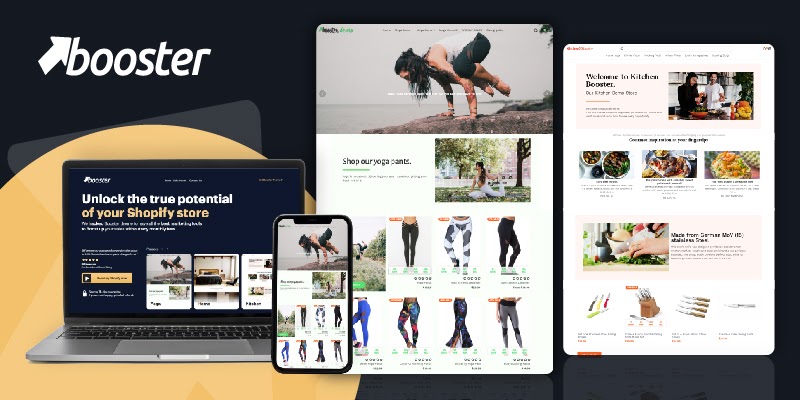
Booster

Booster is one of the top options when it comes to Shopify themes. There is an impressive suite of features that can help you sell more on your website. The website’s loading time is one of the best features, with many websites loading within one second or less. This can directly impact your rank and how much revenue you generate with this theme.
There are lots of features that are included with this theme. For instance, there are countdown timers, call-to-action buttons, a popup builder, live chat functionality and social proof. There are also features that can be used on your website that come with the theme. With all the functions that are added to the theme, you can save up to $3000 on app subscriptions.
In addition, this theme has a lot of options that allow you to reduce the abandoned cart rate on your website. This can be great because you can expect about 80% of your customers to abandon a cart of your website. If you can subscribe them to an abandoned cart option, then you can often get 20-30% of them to return to complete the purchase.
Booster Highlights:
- You can save more than $3000 on app subscriptions with additional functions that are included with the theme.
- This is a fast and highly responsive website theme that can load a website design within one second.
- Attract more traffic with a higher ranking on Google and other search engines.
- You don’t need any experience to use this theme and create a great website.
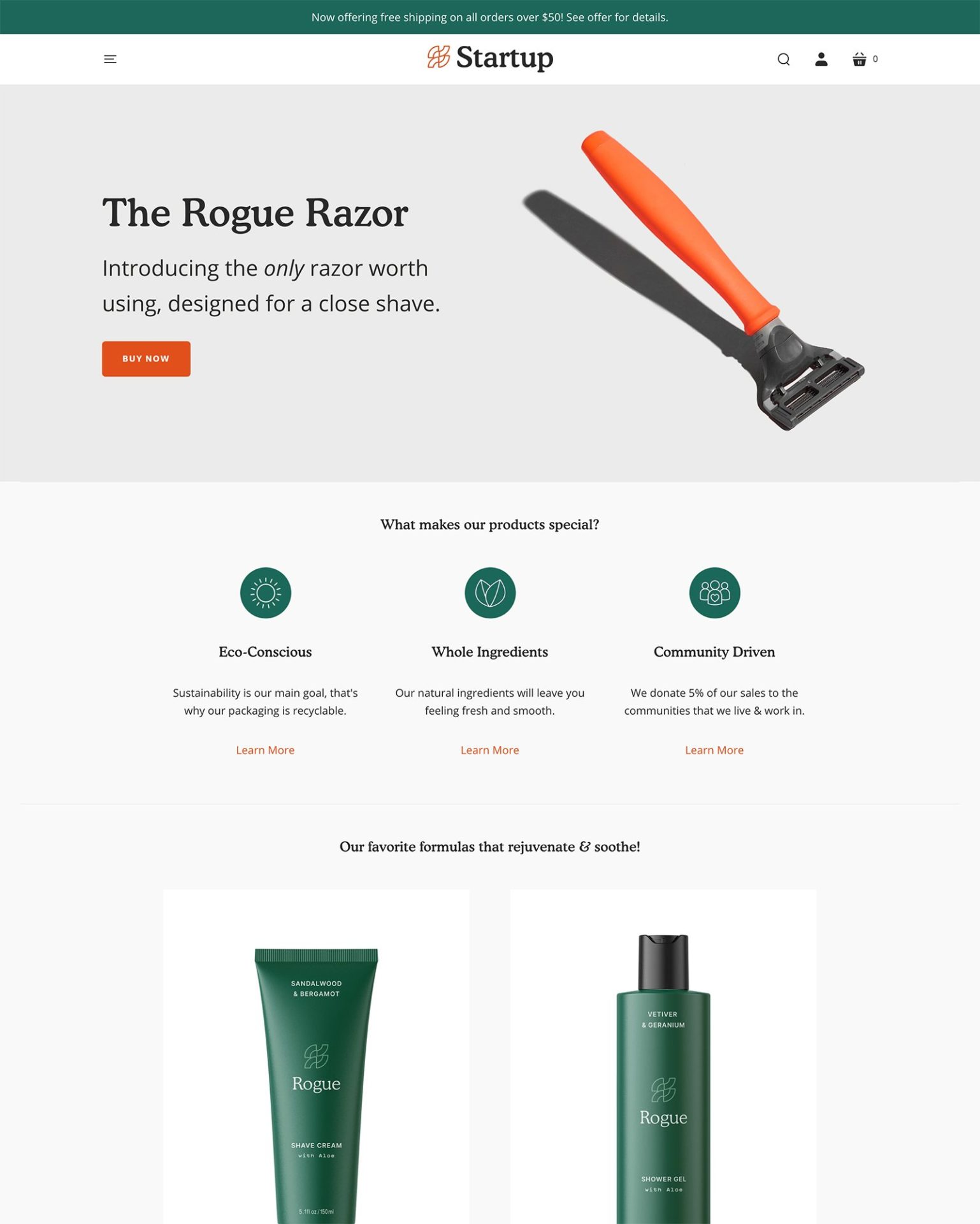
Startup
Startup is a great option for those that want to have a modern Shopify theme for a small catalog. This theme utilizes a modular-style design that can help you customize the website with ease. There are four different and brilliant styles that you can apply to your website with ease. Each one of these can be customized with new text images and more.
The theme is designed to allow you to build a good relationship with your audience. There is a stylish testimonials section.
You’re able to showcase your products with ease using the wide layout. This is great for you to promote your products with ease with large imagery that customers can see the finer details. In addition, you can add a video that is hosted on YouTube or Vimeo onto your website. This can allow you to convert more people who visit your website.
Startup Highlights:
- Startup has been optimized for all devices, allowing you to attract a wide audience.
- Be seen on Google and other search engines for more traffic and customers.
- There are lots of free, professional images that are available for your store.
- Use one of four basic styles that can help you build a better website.
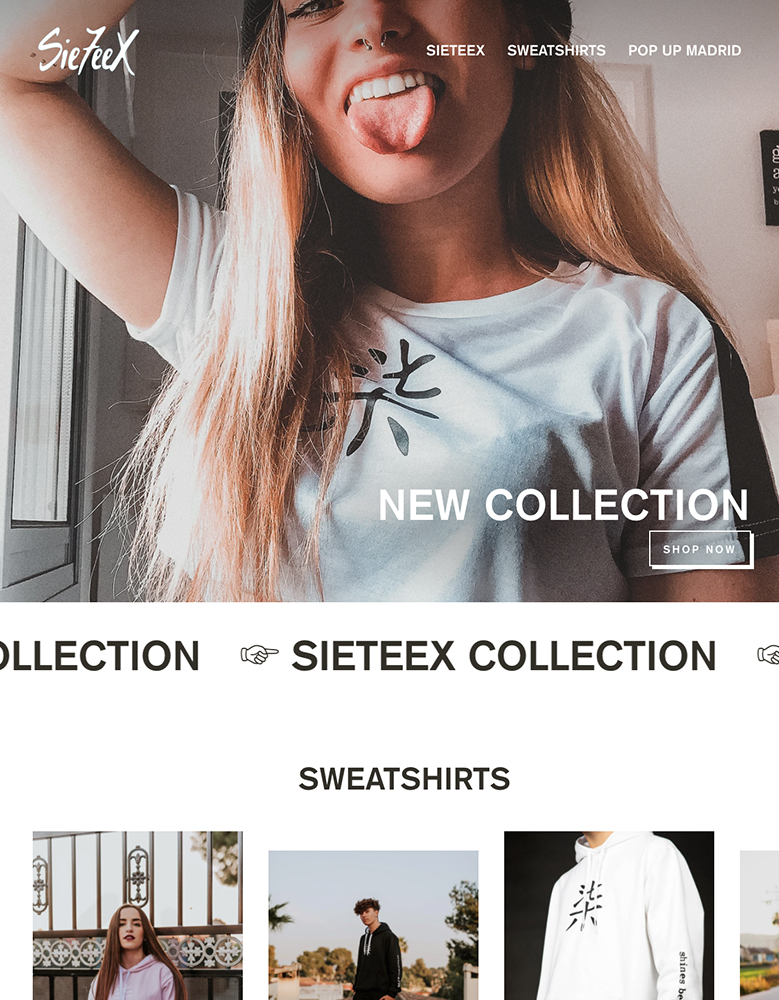
Streamline
Streamline is one of the best themes that can be used on Shopify. It is perfect for any niche, but it is often used in fashion, custom products and similar industries. The theme is designed for those that want to sell their products through the power of storytelling, which can emotionally engage your audience and improves the chances of the customer buying from you.
This theme is also great for those who expect their audience to be on their mobile. This can be wonderful, and the light code can help you build a website that can improve the loading time of your website. This can really help your bounce rate and improve revenues.
To help you improve the content engagement on your website, there are many ways to animate the content. You can animate many different media types from text, images and other page elements. You’re also able to showcase products or brand messages in a fantastic homepage video.
Streamline Highlights:
- This theme can be optimized for website speed and conversions.
- You can use free stock images that can help you populate your website with ease.
- Start building your website with a theme style that can speed up designing your website.
- Customize the sections on your website with ease.
-
Do these Prestige alternative themes support multi-language and multi-currency features?
Yes, many Shopify themes do support multi-language and multi-currency, but it varies. Check the theme’s specific features to ensure it meets your international commerce needs.
-
Can I integrate external apps and plugins with these alternative Prestige Shopify themes?
Yes, you can, most Shopify themes, including Prestige alternatives, allow integration with various apps and plugins. This expands the functionality of your e-commerce platform significantly.
-
How do updates work with Shopify themes and their Prestige alternatives?
Updates for Shopify themes, including Prestige alternatives, are essential to ensure your online store remains secure and up-to-date. Theme updates are typically provided by the theme developer.
-
How much does the Prestige Shopify theme cost compared to alternatives?
Prestige sits at the top of the Shopify Theme Store premium pricing tier - typically $280 as a one-time purchase. Most strong alternatives in the same design quality range are in the $180-$280 band, with a meaningful number at $180-$220 (the standard premium tier rather than the top tier). The free option is Shopify’s own Dawn theme, which is significantly less polished than Prestige but covers the basics if budget is the dominant constraint. The all-in math matters: a $200 alternative versus $280 Prestige is an $80 difference at first store, but if you run multiple storefronts each requires its own license, so the gap grows with scale. Calculate total cost across all stores you’ll run before deciding.
-
When is it worth switching from Prestige to an alternative theme?
Three concrete signals that switching makes sense: (1) you’re paying for two or more apps that an alternative theme would include built-in (sticky add-to-cart, predictive search, color swatches, etc.) - the app subscriptions plus performance overhead usually exceed the cost of a switch within a year; (2) you’ve hit Prestige’s customization limits and your developer is now editing Liquid weekly to keep up with design changes - at that point you’re maintaining a custom theme on top of Prestige, and a more flexible base theme is cheaper long-term; (3) your brand has shifted away from the editorial-luxury aesthetic Prestige is built for, and forcing the theme to match the new direction is fighting it rather than using it. If none of those apply, staying on Prestige is usually the right call - switching themes mid-flight has real costs (data migration, training, lost familiarity) that need to be balanced against the gains.
Prestige Theme: Exploring Options for Storytelling-Focused Stores
The Prestige theme is a popular choice for Shopify stores that prioritize editorial content and visual storytelling. It’s particularly well-suited for brands with physical stores and those looking to create a narrative around their products.
However, depending on your specific business needs, you might want to explore alternatives. For instance, if your focus is more on high-volume sales and quick setup rather than long-form content, exploring themes similar to Icon could be a viable alternative. Icon is designed specifically for dropshippers and stores that process a large number of transactions, with minimal setup steps for a rapid launch.
Another option to consider is the Pipeline alternatives, which strikes a balance between Prestige and Icon. Like Prestige, Pipeline excels in visual storytelling, allowing you to showcase your products in an engaging manner. However, it also caters to high-volume stores and offers quick setup, similar to Simple Shopify theme alternatives.
When deciding between these alternatives, consider your brand’s priorities. If you value the ability to tell your brand’s story but need a platform that can handle high transaction volumes efficiently, Motion might be the ideal middle ground.
On the other hand, if editorial content is less critical for your brand and you’re more focused on streamlined operations for a dropshipping model, Icon could be the better choice.
Remember, the most suitable theme for your store will depend on your unique business model, target audience, and long-term goals.
When you’re looking for a Prestige Shopify theme alternative, then you should consider one of the options above. These are all great for many niches. Which one of these best alternative Shopify themes will you use?
Conclusion: 3 Best Alternatives for Prestige Shopify Theme
In conclusion, the best alternatives to the Prestige Shopify theme provide elegant, high-end designs while offering more flexibility and advanced features.
These themes are built to enhance the customer experience through customization, mobile optimization, and rich product displays, making them ideal for luxury brands aiming to create a polished, high-performing online store. With integrated marketing tools and optimized speed, these alternatives can help elevate your brand and drive growth more effectively, providing both visual appeal and functional benefits.