Flow Shopify Theme Review
Last modified: September 30, 2026
| # | Image | Name | Price | Reception | Adoption | CWV pass rate |
|---|---|---|---|---|---|---|
| 1 |

|
Flow - Grain
|
$320 | (384) | 0.2% | 63.5% |
| 2 |
|
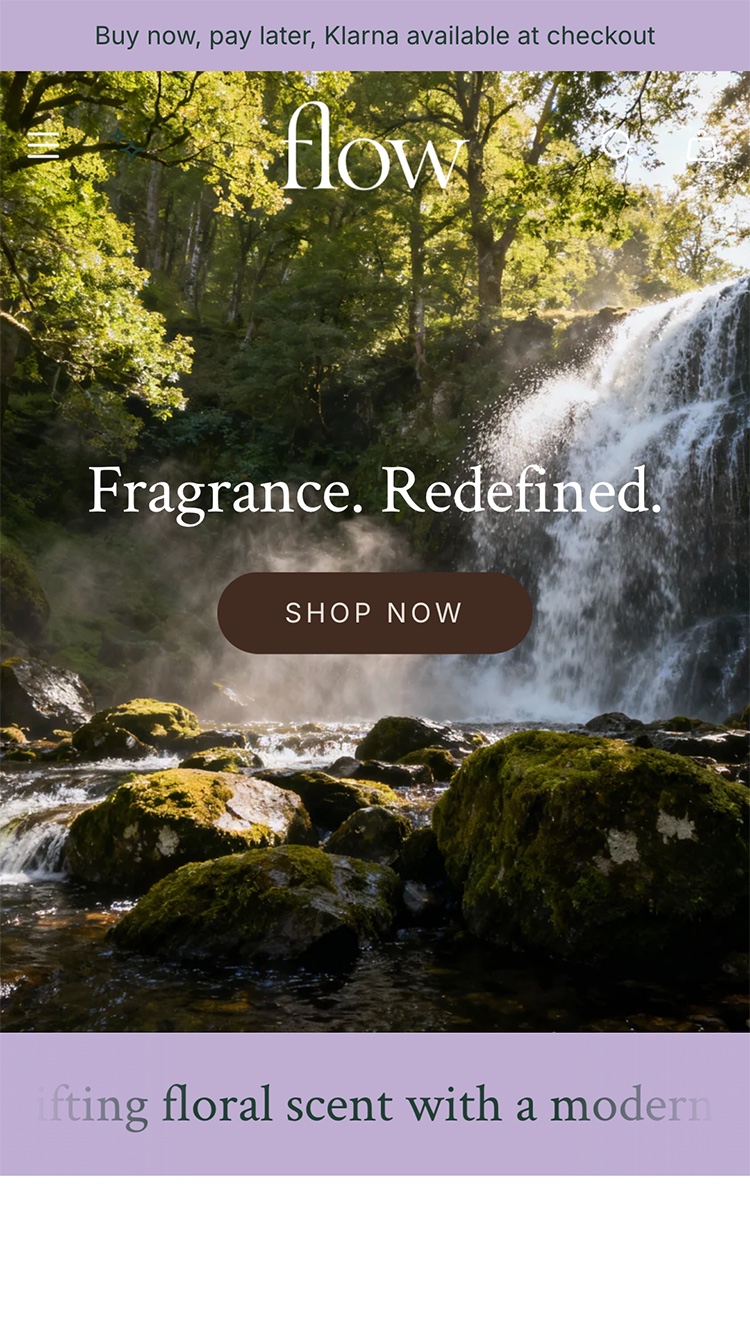
Flow - Nectar
|
$320 | (384) | 0.2% | 63.5% |
| 3 |
|
Flow - Flow (Default)
|
$320 | (384) | 0.2% | 63.5% |
| 4 |

|
Flow - Sanctuary
|
$320 | (384) | 0.2% | 63.5% |
| 5 |

|
Flow - Timeless
|
$320 | (384) | 0.2% | 63.5% |
|
Show More
|
||||||
Quick Comparison
| Preset | Ideal Store | Aesthetic | Photo Need | Catalog Size |
|---|---|---|---|---|
| Flow | Wellness, food & supplements | Fresh, clean | ★★☆ | Medium (20-150) |
| Grain | Creators & personal brands | Warm, editorial | ★★★ | Small (10-50) |
| Nectar | Fragrance & premium beauty | Moody, refined | ★★★ | Small-medium |
| Sanctuary | Home goods & calm lifestyle | Muted, immersive | ★★★ | Medium |
| Timeless | Classic apparel & accessories | Magazine-style | ★★☆ | Medium-large |
Data first, opinion second: we track usage across 3.5+ million Shopify stores daily, and have since 2017. The stats tell us what merchants actually use; our editors rank the final picks by quality, pricing, and fit.
Flow - Grain
Grain is the warm, editorial preset, built for a founder-led or personal brand. Its demo centers a single creator, with a script logo, calm neutral interiors, and a banner announcing a new course, so it suits coaches, creators, and lifestyle brands selling courses, digital products, or a curated range under one name.
Grain highlights
- Warm, neutral palette with editorial, magazine-style layouts
- Built to put a founder or creator front and center
- Room for courses, digital products, and story content
- Strong journal and about sections for a personal brand
Flow Page Speed: Live Data
Flow - Nectar
Nectar oozes drama and editorial flair. Designed for beauty, skincare, and perfume brands, this preset pairs soft gradients with luxurious product photography. If your brand needs to speak in whispers but still leave a mark, this is it. Bonus points: strong typography and minimal distractions keep shoppers focused on the scent, the serum, or the shimmer.
Nectar highlights
- High-impact visuals with shadow-rich, moody lighting.
- Elegant animations and fade-in elements add polish.
- Clean product grids designed for hero items and bestsellers.
- Includes a strong “About” and “Testimonials” section for social proof.
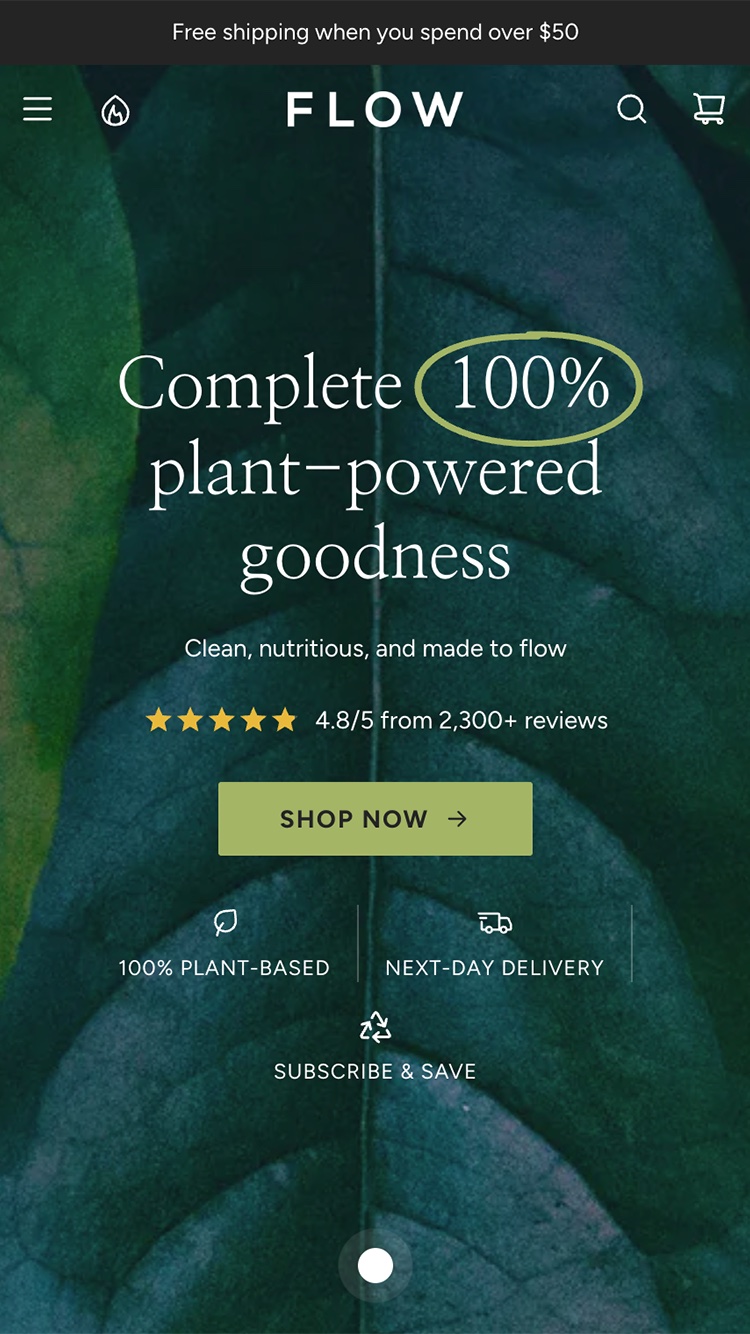
Flow - Flow (Default)
For wellness, food, fitness, and all things healthy, the default Flow preset is bright, bold, and ultra-energizing. It’s made for brands selling consumables like smoothies, supplements, and juices, offering a layout that balances high-volume sales with clean, informative content. Great for pushing subscriptions, weekly offers, and bestsellers.
Flow highlights
- Product-heavy layout with space for bundles, promos, and dietary info.
- Color-coded categories make site navigation a breeze.
- Built-in sections for blog, education, and sustainability messaging.
- Excellent mobile flow with swipeable product cards.
Flow - Sanctuary
Soothing, tactile, and tastefully minimal, Sanctuary feels like a boutique lifestyle brand’s natural home. Ideal for home goods, textiles, and handmade art, this layout leans into soft textures and slow shopping vibes. It’s built to showcase collections with personality and a story, perfect for mindful brands and earthy aesthetics.
Sanctuary Highlights
- Neutral tones and whitespace create a serene shopping experience.
- Grid-style layouts elevate textiles and home accessories.
- Visual storytelling for brand origin, design process, and materials.
- Subtle animations guide the eye without being flashy.
Flow - Timeless
Classic, elegant, and polished. Timeless is your go-to preset for jewelry, accessories, or boutique fashion. Designed with sophistication in mind, it leans on refined serif fonts, subdued color palettes, and clean product groupings to showcase collections beautifully. Ideal for high-ticket items that need a little breathing room to shine.
Timeless Highlights
- Multiple collection layouts for category-first navigation.
- Strong hero banner setup for seasonal campaigns or new drops.
- Smart cross-sell and matching set features baked in.
- Tasteful testimonials and press features add instant credibility.
-
How much does the Flow Shopify theme cost?
Flow is sold through the Shopify Theme Store with a one-time license of $320. That covers your store and any expansion stores under your Shopify account. The price is the same regardless of which of the 5 presets you use, you get all 5 with the single license and can switch between them in the theme editor. No recurring fees for the theme itself, but plan for paid apps to extend functionality (review apps, subscriptions, advanced filtering, etc.).
-
Which Flow preset should I pick for my store?
Match the preset to your category: Flow for wellness and nutrition, Grain for creators and personal brands, Nectar for fragrance and premium beauty, Sanctuary for home goods and calm lifestyle, and Timeless for classic apparel and accessories. If you’re unsure, look at the preset demos and pick the one whose existing demo store most resembles what you want yours to look like. Most stores stick close to the preset baseline rather than radically customizing.
-
Is Flow an OS 2.0 theme?
Yes. Flow is fully Online Store 2.0: section-based customization on every page type, JSON templates, full theme editor flexibility, and compatibility with OS 2.0 apps. If you’re migrating from a Vintage theme to Flow, plan for the move as a switch (settings need redoing) rather than an update.
-
Can I customize Flow without a developer?
Most customizations happen through the Shopify theme editor: colors, fonts, hero images, sections, navigation, page-specific layouts, all from a visual interface with no code. Deep customizations (custom Liquid logic, modified product page templates beyond what’s available, app integrations not natively supported) need a developer. For typical store setups, you can run Flow without one.
-
Is Flow still actively supported and updated?
Yes. Eight Themes, the studio behind Flow, maintains the theme with a steady stream of updates and support, active as of 2026. As a paid Online Store 2.0 theme, Flow continues to receive fixes and improvements, which matters when you plan to keep a theme for several years.
-
Does the Flow Shopify theme slow down your store?
Flow is well-optimized for speed on default settings and typically passes Core Web Vitals on mobile without extra configuration. As an Online Store 2.0 theme, it avoids the performance issues common in older themes (heavy jQuery dependencies, render-blocking scripts). The main performance risks are external: large uncompressed hero images, too many installed apps, or autoplay video added via app blocks. Flow itself does not include autoplay video or animation-heavy sections that commonly drag down load times at the same price point.
Conclusion: Flow’s Strength Is Preset Variety
Flow’s real differentiator is the 5 presets. Most premium themes give you one aesthetic direction, Flow gives you five tuned for different store types. If your category fits one of Flow, Grain, Nectar, Sanctuary, or Timeless cleanly, Flow gives you a polished foundation faster than building custom or wrestling a generic theme into your category’s aesthetic. Match the preset to your category before customizing. The easier you make that decision, the faster the rest of the setup goes.
For more theme reviews, see Palo Alto, District, Adeline, or browse our broader Shopify theme reviews guide.