Best Shopify Coffee Business Themes 2026
Last modified: February 26, 2026

| # | Image | Name | |
|---|---|---|---|
| 1 |
|
Essentials - Pinewood
|
|
| 2 |

|
Cornerstone - Barista
|
|
| 3 |

|
Icon - Vera
|
|
|
Show More
|
|||
Data first, opinion second: we track usage across 3.5+ million Shopify stores daily, and have since 2017. The stats tell us what merchants actually use; our editors rank the final picks by quality, pricing, and fit.
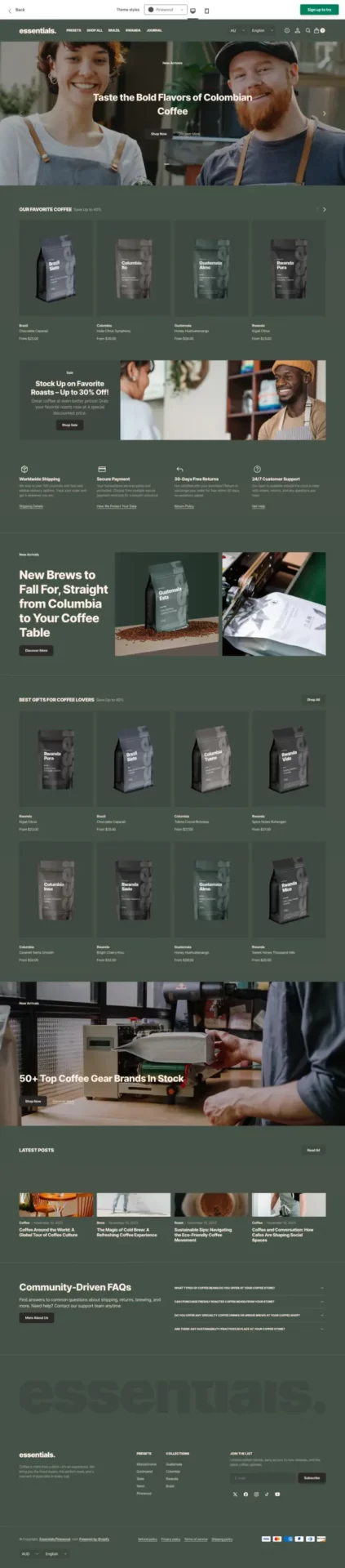
Essentials - Pinewood
A great choice for classic coffee stores, eco-friendly or those that love a dark vibe. This deep sleek modern dark design brings a vibe of deep roasted to your coffee shop. Perfect for a local place with a unique vibe or a branch of eco friendly coffee shops. Whether you’re selling roasted beans or selling beans roasters, this theme has the ability to keep up with your business.
Cornerstone - Barista
Bright and cheery, this coffee theme from Shopify could fit with many different vibes of coffee business. It’s designed for a coffee eCommerce shop and is set up to sell mugs, tea, accessories, and all sorts of coffee shop stuff. Whether you’re the tiny drive up coffee spot, a coffee truck or a full fledged coffee store, this theme can help you make your presence online impactful and intentional.
Icon - Vera
Classic, clean, and timeless, this Shopify coffee theme hits the mark for all the musts for a coffee shop website. White with a grid theme, it’s easy on the eyes and perfect for an eCommerce site that’s focused on selling more than a vibe or experience. The setup and menu is great for a multifaceted coffee business online that’s ready to make a profit on products that are truly outstanding.
Final Sip: Find a Shopify Coffee Theme That Fuels Your Brand
Let’s sit and have a sip… your coffee deserves more than a generic, cookie-cutter website. You’ve got bold roasts, carefully sourced beans, and a vibe that people wake up for. So your online store? It needs to feel just as interesting and robust.
That’s why choosing the right Shopify coffee theme is more than just a design decision, it’s a coffee growth move. Whether you’re a third-wave roastery, a cozy café, or an eCommerce subscription brand shipping beans worldwide, your storefront is the heartbeat of your customer journey. It’s the place where first impressions brew loyalty, and where storytelling meets sales.
The themes we’ve covered-each built with features like product bundles, subscription support, flavor profile breakdowns, and mobile-optimized layouts-were chosen specifically to help coffee brands stand out. They give you the tools to highlight what makes your coffee special. From origin stories and tasting notes to barista tips and merch drops, these Shopify themes aren’t just pretty-they’re packed with conversion power.
And let’s not forget the customer experience.
Today’s coffee shoppers are looking for more than just caffeine. They want clarity, trust, and seamless checkout. That means your website needs to load fast, look great on mobile, and guide people effortlessly from bean browsing to “add to cart.” The best Shopify coffee themes are built for all that-and more. Think built-in email capture, rich blog sections, social proof placement, and clean navigation designed for the short attention span of a caffeine-charged shopper.
Still sipping on your decision? If you didn’t find what you’re looking for here, check out our other drink themes: juice and smoothies, wine, or breweries.
Here’s how to pick the best theme for your coffee brand:
- Starting fresh? Go for a theme with bold imagery, a customizable homepage, and intuitive product pages.
- Launching subscriptions? Look for themes with integrated support for recurring orders and customizable flavor profiles.
- Running a local café with merch? Prioritize themes with event support, map integrations, and built-in retail grids.
- Scaling fast? Choose a theme that plays nice with custom apps, bundles, upsells, and marketing campaigns.
Bottom line? Your coffee tells a story-and your Shopify site is where that story comes to life.
Choose a theme that brews confidence, converts browsers into loyal customers, and makes every digital interaction feel like a perfectly pulled espresso shot.
Ready to give your brand the storefront it deserves?
Scroll back, explore your favorites, and take the next step toward building a coffee store that sells with style, speed, and flavor.