Palo Alto Shopify Theme Review
Last modified: October 1, 2026
The Palo Alto Shopify theme is a premium theme from Presidio, sold on the Shopify Theme Store as a single one-time license that includes 5 distinct styles: Palo Alto, Dynamo, Skylight, Phenomena, and Pluma. Each style carries its own look and mood, so one purchase covers a range of brand personalities. This review looks at what merchants actually run Palo Alto for, how it performs across real stores, who each style fits, and how it holds up against other premium themes.
So what does the data say? Across the Shopify stores in our dataset, Palo Alto keeps a steady place among the widely used premium themes. Because it is paid, every install is a deliberate choice a merchant made and paid for. That makes its adoption a stronger signal than a free default, which ships on every new store whether the owner wanted it or not.
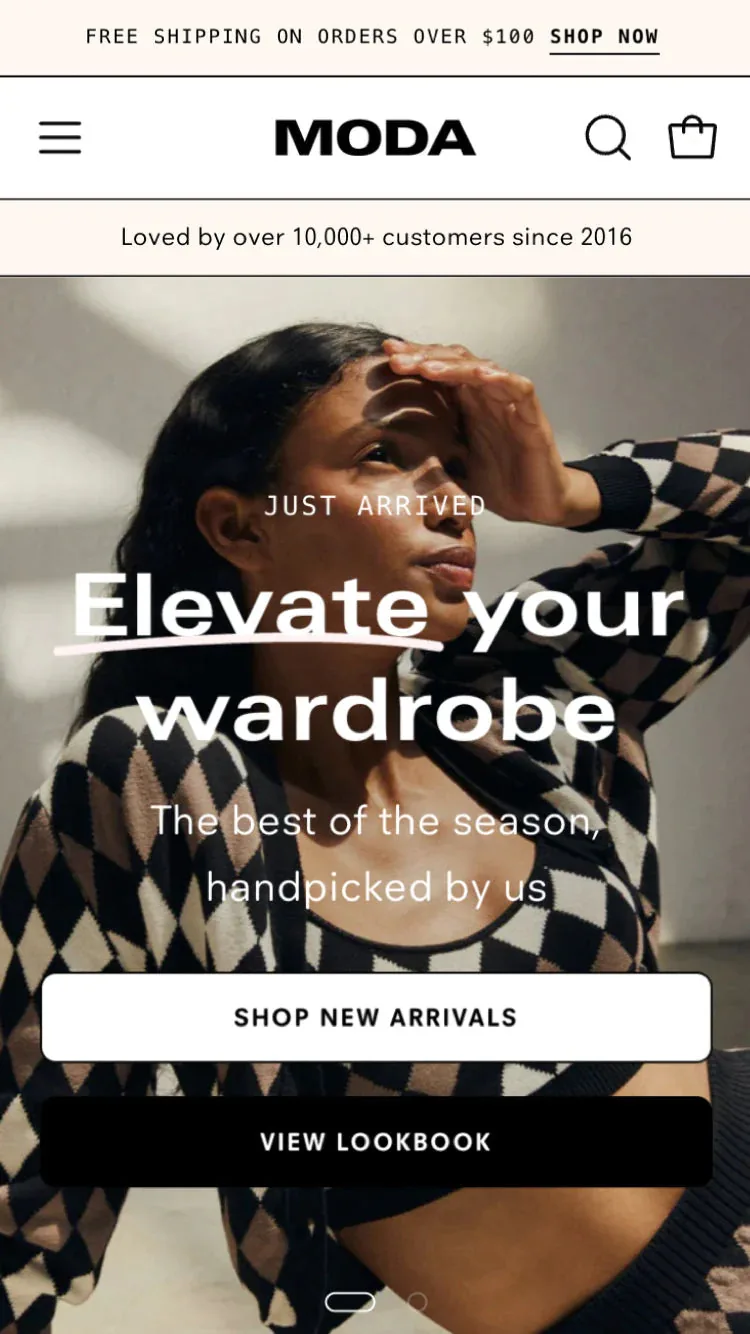
Quick Overview
- Developer: Presidio
- Styles included: Palo Alto, Dynamo, Skylight, Phenomena, Pluma
- Best for: Modern DTC brands across fashion, tech, lifestyle, and luxury
- OS 2.0: Yes
- Where to buy: Shopify Theme Store
What Apps Merchants Install on Palo Alto Stores
When a store commits to Palo Alto, what does it build around the theme? The live data below shows the apps that most often run alongside it:
| Rank | App | % of stores | Category |
|---|---|---|---|
| 1 | Klaviyo | 55.6% | Email Marketing |
| 2 | Shop Pay | 46.9% | Payment options - Other |
| 3 | Judge.me Product Reviews App | 38.8% | Product reviews |
| 4 | Loox ‑ Product Reviews App | 24.8% | Product reviews |
| 5 | Yotpo | 15.9% | Product reviews |
| 6 | Recharge | 14.5% | Subscriptions |
| 7 | Triplewhale | 11.8% | Analytics |
| 8 | Gorgias | 11.6% | Support - Other |
| 9 | Instafeed ‑ Instagram Feed | 10.9% | Marketing - Other |
| 10 | Rebuy Personalization Engine | 10.5% | Checkout - Other |
The mix reads like a mature, design-led DTC store. Email and marketing automation lead the stack, so these merchants treat owned channels as a core part of the plan rather than an afterthought. Product reviews are unusually well represented, with several review tools sitting near the top, because a clean, minimal storefront leans on social proof to build trust. Support and analytics fill out the picture. Taken together, the stack describes considered, brand-focused stores, not quick experiments.
Palo Alto’s Adoption Data
Here is where Palo Alto lands across the broader Shopify theme market:
The cards show its share of stores, its popularity rank, and the average app count and catalog size of the stores running it. For a premium paid theme, holding this kind of position says something. It reflects merchants who researched the choice and paid for polish, rather than defaulting to a free theme and moving on. The fuller breakdown, including the verticals Palo Alto shows up in most, lives on our Palo Alto theme statistics page.
How Palo Alto Compares
Adoption is only half the story. Here is how Palo Alto stacks up against the rest of the field:
The callouts put Palo Alto in context against the wider dataset. The app-count signal is the telling one: these stores are willing to extend the theme with tools, which fits its role as a design foundation rather than an all-in-one system. If you want a theme that sets a strong visual stage and lets your app stack do the rest, that profile is a match. If you would rather the theme itself carry the features, Safe As Milk’s Venue review covers their upsell-focused, feature-rich alternative.
What Buyers Actually Say
Ratings are where Palo Alto separates itself from the free defaults. On its Shopify Theme Store listing, more than nine in ten reviews are positive, across a few hundred reviews. That is a very different picture from the most-installed free themes, where the positive share often sits closer to a third.
The gap is not really about code quality. A free default lands on every new store whether the owner chose it or not, so its reviews fill up with people who hit a limit and left a complaint. A paid theme like Palo Alto is only ever installed on purpose, by merchants who researched the decision and were willing to pay for it. That self-selection lifts the score, and it also tells you something real: the people who spend on Palo Alto tend to be glad they did.
Read the strong rating as confidence, not perfection. The reviews that are not positive usually point at the same things this guide already flags. The price sits at the upper end, and the minimalist design only shines when your photography carries it. Neither is a defect. Both are expectations to set before you buy.
Palo Alto’s 5 Styles at a Glance
The 5 styles share the same underlying theme with different visual treatments. Pick based on the look and mood you want:
- Palo Alto is the theme’s signature look: clean, modern, and balanced. It is the safe default for contemporary brands that want the core aesthetic without leaning in any one direction.
- Dynamo uses stronger typography and bolder, more energetic layouts. It suits brands that want an active, confident feel.
- Skylight is lighter and airier, with generous whitespace and a bright, open feel. It suits brands that want a soft, gallery-like presentation.
- Phenomena is minimalist and high-contrast. It suits brands that want a current, confident look.
- Pluma is refined and understated, with a lighter typographic touch. It suits brands that want a calm, premium feel.
You get all 5 styles with a single one-time license. Switching between them is a setting in the theme editor, with no separate purchase needed.
Who Palo Alto Is For
The adoption data points to a clear profile. Palo Alto works best for stores that meet most of these conditions:
- Modern DTC brands with a clean, contemporary aesthetic: minimalist, confident, and performance-focused.
- Fashion, accessories, tech, lifestyle, luxury: categories where the brand identity is contemporary rather than traditional.
- Mid-sized catalogs: Palo Alto’s collection layouts work for focused lines and broader catalogs alike.
- Stores with strong product photography: the minimalist design needs real photography to land. Without it, the white space reads as empty rather than intentional.
- Mobile-heavy traffic: mobile-first design, predictive search, and clean navigation make Palo Alto strong on phones.
Palo Alto is not a great fit for B2B or wholesale stores, high-SKU general ecommerce, traditional or classic luxury brands (Adeline fits better there), or stores that lean heavily on promotional banners.
What Palo Alto Includes
- OS 2.0 sections on every page type: homepage, product, collection, and blog, all customizable without code.
- Full-width hero banner and slideshow: designed for flagship product or campaign visibility above the fold.
- Predictive search with instant suggestions: search-as-you-type with relevant results, useful for stores with broader catalogs.
- Mega menu navigation: for stores with multiple categories and subcategories.
- Dropdown menus and category organization: keeps broader inventories accessible without overwhelming customers.
- Flexible content blocks: new arrivals, best-sellers, customer testimonials, and featured products, rearrangeable from the theme editor.
- Quick-shop modal and side cart: reduces friction in the buy flow.
- Built-in product review integration: works cleanly with Shopify Product Reviews, Judge.me, and Yotpo.
- Mobile-first responsive design: built for the phone experience first.
- Multi-currency support: works with Shopify Markets.
What to Know Before Buying
- Photography is essential. Palo Alto’s minimalist aesthetic depends on strong product and lifestyle imagery. Without it, the design feels empty rather than clean. Budget for photography if you don’t have it.
- 5 styles means setup variety. Pick the style that matches your look before customizing, not the other way around. Spending hours customizing the wrong baseline is the most common Palo Alto setup mistake.
- Pricing is at the upper end. Palo Alto sits toward the top of Theme Store pricing, higher than most premium themes. The 5-style license helps justify the cost against buying several themes.
- Customization beyond the theme editor needs Liquid. Standard for premium themes.
- Apps still handle advanced features. Subscription billing, advanced filtering, and similar needs run on apps. Plan for a few supporting tools, which is exactly what the adoption data above reflects.
View Palo Alto on the Shopify Theme Store
Palo Alto vs Alternatives
- vs Flow: Flow and Palo Alto both offer 5 styles. Flow leans more category-specific (Crafted for handmade, Nourish for wellness, and so on); Palo Alto’s styles are aesthetic variations rather than category-tuned. For “I want a clean modern feel” Palo Alto wins; for “I want a category-tuned aesthetic” Flow wins.
- vs Be Yours: Be Yours is more specifically beauty and wellness with one-product strengths. Palo Alto is broader across modern DTC.
- vs Concept: Concept’s 2 styles are more premium-polished. Palo Alto’s five lean more contemporary and tech-forward. For that clean, modern brand feel, Palo Alto fits better; for premium lifestyle, Concept does.
- vs Broadcast: Broadcast leans editorial and content-driven. Palo Alto leans minimalist and modern. Different aesthetics for different brand positioning.
Is Palo Alto Right for Your Store?
Choose Palo Alto if you are a modern DTC brand that leads with design and photography, you want a store that looks premium without hiring a developer, and you value having five distinct looks under one license so you can shift the whole feel from the editor. Fashion, accessories, tech, and lifestyle brands with a tight, well-shot catalog get the most out of it.
Look elsewhere if your catalog is large and variant-heavy, your brand is traditional or classic rather than contemporary, or you need advanced selling features built into the theme itself. In those cases a category-tuned theme, a more polished premium option, or a heavier app stack will serve you better.
The through-line in the data is consistent. Palo Alto is bought on purpose, it runs on considered stores with real app stacks, and it keeps a strong rating because the merchants who choose it know what they are getting. If that description fits your store, it is a safe, good-looking foundation to build on.
For broader theme research, see our complete Shopify theme reviews guide, which compares every major theme in one place. Another premium clean-modern option worth weighing is the Adeline Shopify theme.
-
How much does the Palo Alto Shopify theme cost?
Palo Alto is sold through the Shopify Theme Store with a one-time license of $420. That covers your store and any expansion stores under your Shopify account, and includes all 5 styles (Palo Alto, Dynamo, Skylight, Phenomena, Pluma), so you don’t need to buy them separately. No recurring fees for the theme itself, but plan for paid apps to extend functionality.
-
Which Palo Alto Shopify theme style should I pick for my store?
Match the style to the look you want: Palo Alto is the clean, balanced signature look; Dynamo uses stronger typography and bolder, more energetic layouts; Skylight is lighter and airier with generous whitespace; Phenomena is minimalist and high-contrast; and Pluma is refined and understated. If you’re unsure, look at the style demos and pick the one whose existing demo most resembles what you want yours to look like.
-
Is Palo Alto an OS 2.0 Shopify theme?
Yes. Palo Alto is fully Online Store 2.0: section-based customization on every page type, JSON templates, full theme editor flexibility, and compatibility with all OS 2.0 apps. If you’re migrating from a Vintage theme, plan for the move as a switch (settings need redoing) rather than an update.
-
Can I switch between Palo Alto styles after buying?
Yes. The $420 license includes all 5 styles, and switching between them is a setting in the Shopify theme editor. Most brands pick one style and stick with it, but you can test multiple during setup or A/B test for conversion if you want. The theme settings, products, and customizations carry over between the 5 styles since they share the same underlying theme.
-
Who makes the Palo Alto Shopify theme?
Palo Alto is developed by Presidio, a long-running Shopify Theme Store developer also responsible for the Broadcast theme and several other premium themes. Presidio’ themes share polished design language and active update cadence through Shopify Theme Store channels.
-
Is Palo Alto a good fit for a small catalog?
It works well for focused lines and mid-size catalogs alike. The minimalist layouts flatter a smaller, curated range, since each product gets room to stand out. The one requirement is strong photography, because the design leans on your images to fill the white space.
-
Do you still need apps with Palo Alto?
Yes. Palo Alto covers the storefront look and core shopping features, but advanced needs like subscription billing and product filtering rely on apps. Most stores run a handful of supporting apps alongside it. Plan for those app costs on top of the one-time theme license.
Conclusion: Palo Alto for Modern DTC Brands
Palo Alto fits modern DTC brands wanting a clean, contemporary aesthetic across fashion, tech, lifestyle, and accessories. The 5-style license (Palo Alto, Dynamo, Skylight, Phenomena, Pluma) covers a wider design range than most premium themes at the same price, and the OS 2.0 architecture handles most customization without code. For more theme reviews, see our Broadcast, Concept, and Flow reviews.