Canopy Shopify Theme Review 2026
Last modified: September 14, 2026

Canopy is a premium Shopify theme from Clean Canvas, built for stores with big catalogs and a lot of products to organize. It leans on a full-width layout, a deep mega menu and strong filtering, which is why food and drink shops and other large-inventory brands gravitate to it. Our storefront detection shows it running on a small but steady slice of live Shopify stores, and it holds a 95% positive rating from merchants.
The short version: Canopy is fast, well-built and made for scale, and it costs accordingly. This is a one-time purchase aimed at established stores rather than a first storefront on a tight budget. This review uses live data from the stores actually running Canopy, not the Theme Store sales copy.
What Is Canopy?
Canopy is a paid theme sold on the Shopify Theme Store and made by Clean Canvas, the studio behind District. It is an Online Store 2.0 theme, so sections and blocks are editable across every page, and it ships in four preset styles (including the food-focused Kiln and the playful Cedar) so you can start close to your niche.
Where some themes chase conversion widgets, Canopy is built around merchandising a large range. Its layout gives shelves of products room to breathe, and the navigation is made to hold a deep catalog without losing shoppers.
The tools that stand out are the ones big stores actually need:
- Mega menu navigation with room for many collections
- Predictive search and advanced filtering with colour and size swatches
- Always-visible cart drawer and product quick view
- Product tabs, size charts and back-in-stock alerts
- Age verification and nutritional information blocks for food, drink and age-gated goods
- Built-in EU translations across English, French, German, Italian and Spanish
What Apps Do Canopy Merchants Install?
The apps a theme’s stores run tell you who really uses it. Canopy’s list reads like an established brand’s stack rather than a dropshipping starter kit.
| Rank | App | % of stores | Category |
|---|---|---|---|
| 1 | Klaviyo | 39.5% | Email Marketing |
| 2 | Judge.me Product Reviews App | 34.6% | Product reviews |
| 3 | Loox ‑ Product Reviews App | 19% | Product reviews |
| 4 | Recharge | 16.6% | Subscriptions |
| 5 | Yotpo | 11.7% | Product reviews |
| 6 | PageFly ✦ AI Page Builder | 9.8% | Page builder |
| 7 | Swym Wishlist | 9.8% | Wishlists |
| 8 | Trustpilot | 9.3% | Marketing - Other |
| 9 | Rebuy Personalization Engine | 8.3% | Checkout - Other |
| 10 | Omnisend Email Marketing & SMS | 8.3% | Email Marketing |
Email and retention lead the way with Klaviyo, backed by review tools like Judge.me and Loox, subscriptions through Recharge, and personalization from Rebuy. That mix points to stores that already have traffic and are working on repeat purchases, not first-day launches chasing urgency popups.
How Popular Is Canopy?
Canopy runs on 0.2% of the Shopify stores in our detection dataset. That is a focused rather than mass-market share, which fits a premium theme aimed at larger stores, and the stores that pick it tend to run more apps than average.
You can see the full picture, updated as our data refreshes, on the Canopy usage statistics page.
How Fast Is Canopy?
Speed is Canopy’s strongest card. Across real Canopy stores, 81.3% pass Google’s Core Web Vitals, which puts it ahead of most themes we track, and the rate climbs further on stores running only a few apps.
| Theme | CWV pass rate | Few apps | Median LCP |
|---|---|---|---|
| Canopy | 81.3% | 90% | 1.6s |
| Impulse | 78.3% | 87% | 1.6s |
| Dawn | 70.6% | 79.7% | 1.6s |
What matters here is that the speed holds up under load. Plenty of themes look quick on an empty demo and then buckle once a merchant adds apps and thousands of products. Canopy’s field numbers come from real, busy stores, so the fast largest-contentful-paint and steady layout are the version shoppers actually get.
Canopy Design and Layout
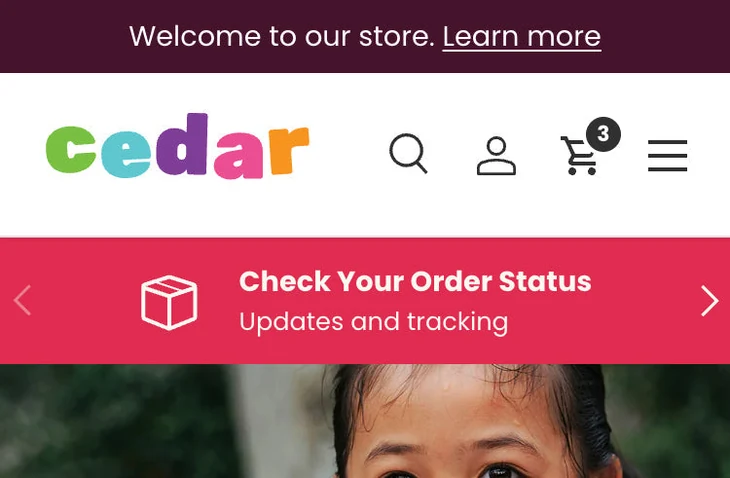
Canopy’s design is clean and confident, built to make a large range look organized rather than overwhelming. The full-width layout and generous imagery suit brands with strong product photography, and the preset styles give you a sensible starting point instead of a blank canvas.
It is less about flashy conversion widgets and more about structure: clear navigation, readable product cards and filtering that helps shoppers narrow a big catalog quickly. If your store lives or dies by how easily people can find the right product, that focus pays off.
Canopy Features That Matter
Most themes list dozens of features. These are the ones that earn their place on a large store:
- Deep navigation: a mega menu plus predictive search keep a big catalog browsable.
- Filtering and swatches: colour and size swatch filters let shoppers cut a long list down fast.
- Quick view and cart drawer: shorten the path from browsing to checkout without full page loads.
- Category depth tools: product tabs, size charts and back-in-stock alerts handle the detail big ranges need.
- Compliance blocks: age verification and nutritional information help food, drink and age-gated stores stay in line.
The honest caveat is that Canopy expects you to bring the catalog and the content. On a small store, a lot of this structure sits empty, and the theme can feel like more scaffolding than you need.
How Much Does Canopy Cost?
Canopy is a paid Theme Store theme priced at $420 as a one-time purchase. Like every Theme Store theme, you can install and build with it for free and only pay once when you publish it to a live store, and it goes through Shopify’s own theme review.
How to judge the price
Canopy sits at the top of the one-time Theme Store range, so weigh it against how much catalog and traffic you actually have. For an established store with a deep range, paying once for speed and structure can be cheaper than renting a stack of apps. For a small or new store, a free theme will stretch further.
Canopy Pros and Cons
Pros
- Fast on real, busy stores, not just on an empty demo
- Built for large catalogs, with a strong mega menu and filtering
- Made by Clean Canvas, a long-standing Shopify theme studio, with a high merchant rating
- One-time price with free trialing and Shopify’s theme vetting
- Useful niche tools for food, drink and age-gated stores
Cons
- One of the pricier one-time Theme Store themes
- More structure than a small catalog can fill
- Focused on merchandising rather than built-in conversion widgets
- Deep customization can still mean hiring a developer
Who Should Use Canopy?
Canopy fits established stores with big catalogs, especially in food, drink and other ranges where filtering, compliance blocks and fast browsing matter. If shoppers need to sort through hundreds or thousands of products, its navigation and speed carry real weight.
It is overkill for a small or brand-new store. If you have a lean catalog, a free theme will do, and if you want a large-inventory look at a lower price, compare it with Warehouse or the more conversion-focused Impulse before you commit.
Is Canopy Worth It?
Our verdict
A strong choice for established, large-catalog stores that value speed and structure over built-in conversion gimmicks. The price only makes sense once you have the range and traffic to use it.
Canopy earns its place for the stores it is built for. The data backs the pitch: it is genuinely fast on real stores, its merchants rate it highly, and its app profile is the established, retention-focused crowd rather than day-one dropshippers. Pay for it when your catalog and traffic justify the structure, and it will hold up as you grow.
Want to compare it with the rest of the field first? Our Shopify theme reviews guide lines up every theme we have tested, from free Theme Store options to premium builds like this one.
-
Is Canopy a good Shopify theme?
Canopy is a strong choice for stores with large catalogs, and our data supports the pitch. Real Canopy stores are among the faster ones we track, and merchants rate it highly. It is built by Clean Canvas, a long-standing Shopify theme studio, so it is well supported. It is less suited to very small stores, where its structure sits mostly empty.
-
Who makes the Canopy Shopify theme?
Canopy is made by Clean Canvas, a UK studio that has built Shopify themes for years, including District. Because it is sold on the Shopify Theme Store, it goes through Shopify’s own theme review and comes with the standard support and update expectations. That track record is part of why its merchant rating stays high.
-
How much does the Canopy theme cost?
Canopy is a paid Shopify Theme Store theme sold as a one-time purchase, and it sits at the upper end of the Theme Store price range. Like every Theme Store theme, you can install and build with it for free and only pay once when you publish it to a live store. Weigh the cost against how large your catalog and traffic actually are.
-
Is Canopy good for large catalogs?
Yes. Canopy is built for big inventories, with a mega menu, predictive search and advanced filtering that help shoppers narrow hundreds or thousands of products quickly. Its full-width layout gives large ranges room to display well. That focus is why food, drink and other high-SKU stores tend to choose it.
-
Is the Canopy Shopify theme fast?
Yes. Across real Canopy stores, a high share pass Google’s Core Web Vitals, which puts it ahead of most themes we track, and the rate is even higher on stores running only a few apps. The speed holds up on busy stores with real product counts, not just on an empty demo. That makes it a safe pick if page speed matters to your rankings and conversions.
-
What type of store is Canopy right for?
Canopy fits established stores with large catalogs, especially food, drink and other ranges that need filtering and compliance blocks like age verification or nutritional information. It rewards stores that already have traffic and a deep product range. A small or brand-new store will get more value from a free theme until its catalog grows.