6 Shopify Grocery Store Themes for 2026
Last modified: October 11, 2026
| # | Image | Name | Price | Reception | Adoption | CWV pass rate |
|---|---|---|---|---|---|---|
| 1 |

|
Impulse
|
$500 | (1,303) | 4.0% | 78.5% |
| 2 |

|
Broadcast
|
$420 | (284) | 1.6% | 74.1% |
| 3 |
|
Symmetry
|
$420 | (392) | 1.4% | 80.5% |
| 4 |
|
Warehouse
|
$320 | (325) | 0.8% | 67.6% |
| 5 |

|
Enterprise
|
$420 | (113) | 0.7% | 79.2% |
| 6 |
|
Local
|
$380 | (97) | 0.3% | 77.9% |
|
Show More
|
||||||
Data first, opinion second: we track usage across 3.5+ million Shopify stores daily, and have since 2017. The stats tell us what merchants actually use; our editors rank the final picks by quality, pricing, and fit.
How These Themes Compare on Speed
| Theme | CWV pass rate | Few apps | Median LCP |
|---|---|---|---|
| Symmetry | 80.5% | 86.8% | 1.5s |
| Enterprise | 79.2% | 86.5% | 1.5s |
| Impulse | 78.5% | 84.9% | 1.6s |
| Local | 77.9% | 87.3% | 1.6s |
| Broadcast | 74.1% | 86.8% | 1.5s |
| Warehouse | 67.6% | 76.8% | 1.7s |
Impulse
Ideal for: Promotions, essentials and deals
Impulse is a conversion-first theme with shoppable heroes and promotion tools, which suits grocery stores running weekly deals, essentials and bundle offers. Its heroes and promo bars keep offers front and centre.
The promotion tooling makes deals and multi-buys easy to surface, and quick buy speeds up a routine reorder. For a grocery store that competes on offers and convenience, it does real work.
Impulse Highlights:
- Built for conversion and promotions
- Shoppable hero images and promo tools
- Deal and multi-buy friendly sections
- Premium paid theme by Archetype
Here is how it shows up in our store data:
Impulse Page Speed: Live Data
Broadcast
Ideal for: Broad, mixed grocery ranges
Broadcast pairs a bold look with dozens of flexible sections and strong filtering, which suits grocery stores carrying a wide, mixed range. Its flexible sections leave room for categories, recipes and featured brands.
Filtering keeps a varied catalogue shoppable across food, drink and household, and the large sections help organise a broad store. For a grocery brand with a big, mixed range, it has the room to structure it clearly.
Broadcast Highlights:
- Bold, flexible design
- Dozens of customizable sections
- Strong category filtering
- Premium paid theme by Presidio
Here is how it shows up in our store data:
Broadcast Page Speed: Live Data
Symmetry
Ideal for: Large, multi-category catalogs
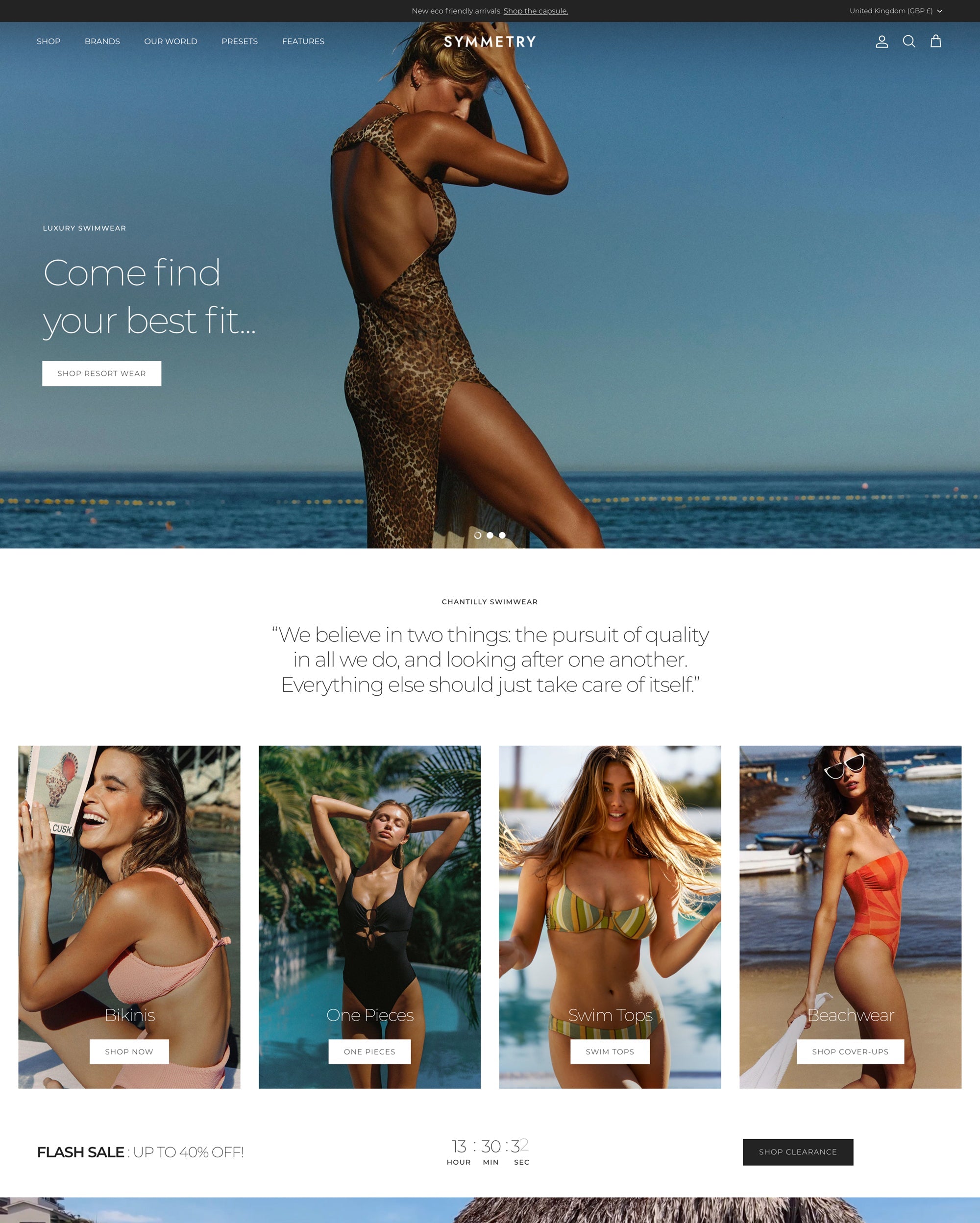
Symmetry is a top-selling theme, used by tens of thousands of stores, built around drag-and-drop sections and powerful filtering, exactly what a grocery store needs when a catalogue spans hundreds of products across many categories. Shoppers reach the right item fast.
The drag-and-drop editor makes restyling easy as ranges change, without code, and the filtering keeps a deep catalogue navigable. For a grocery store scaling a broad range, it stays quick and organised.
Symmetry Highlights:
- Powerful filtering by category and diet
- Drag-and-drop sections, no code
- Fast handling of large catalogs
- Premium paid theme by Clean Canvas
Here is how it shows up in our store data:
Symmetry Page Speed: Live Data
Warehouse
Ideal for: High-SKU grocery stores
Warehouse, by Maestrooo, is built for big catalogues with strong filtering and bold merchandising, which is exactly what grocery is, deep ranges across pantry, fresh, drink and household. It keeps a large catalogue fast and navigable.
For a store with hundreds or thousands of SKUs, its filtering helps shoppers reach the right product by category, diet or brand quickly, which is where a grocery catalogue wins or loses the sale. It is the specialist pick for range at scale.
Warehouse Highlights:
- Built for large catalogues
- Strong filtering and merchandising
- Handles very high product counts
- Premium paid theme by Maestrooo
Here is how it shows up in our store data:
Warehouse Page Speed: Live Data
Enterprise
Ideal for: Speed and high-volume checkout
Enterprise, by Clean Canvas, is built for store speed and conversion at scale, which suits grocery stores moving high volume where a fast catalogue and checkout matter. It handles a deep range with fast, advanced filtering.
For a grocery store where shoppers fill a large basket on thin margins, that speed is the difference between a completed order and an abandoned one, especially on mobile. It is the pick when performance and volume lead.
Enterprise Highlights:
- Built for speed and conversion
- Advanced filtering at scale
- Optimised for high-volume baskets
- Premium paid theme by Clean Canvas
Here is how it shows up in our store data:
Enterprise Page Speed: Live Data
Local
Ideal for: Specialty and neighborhood food shops
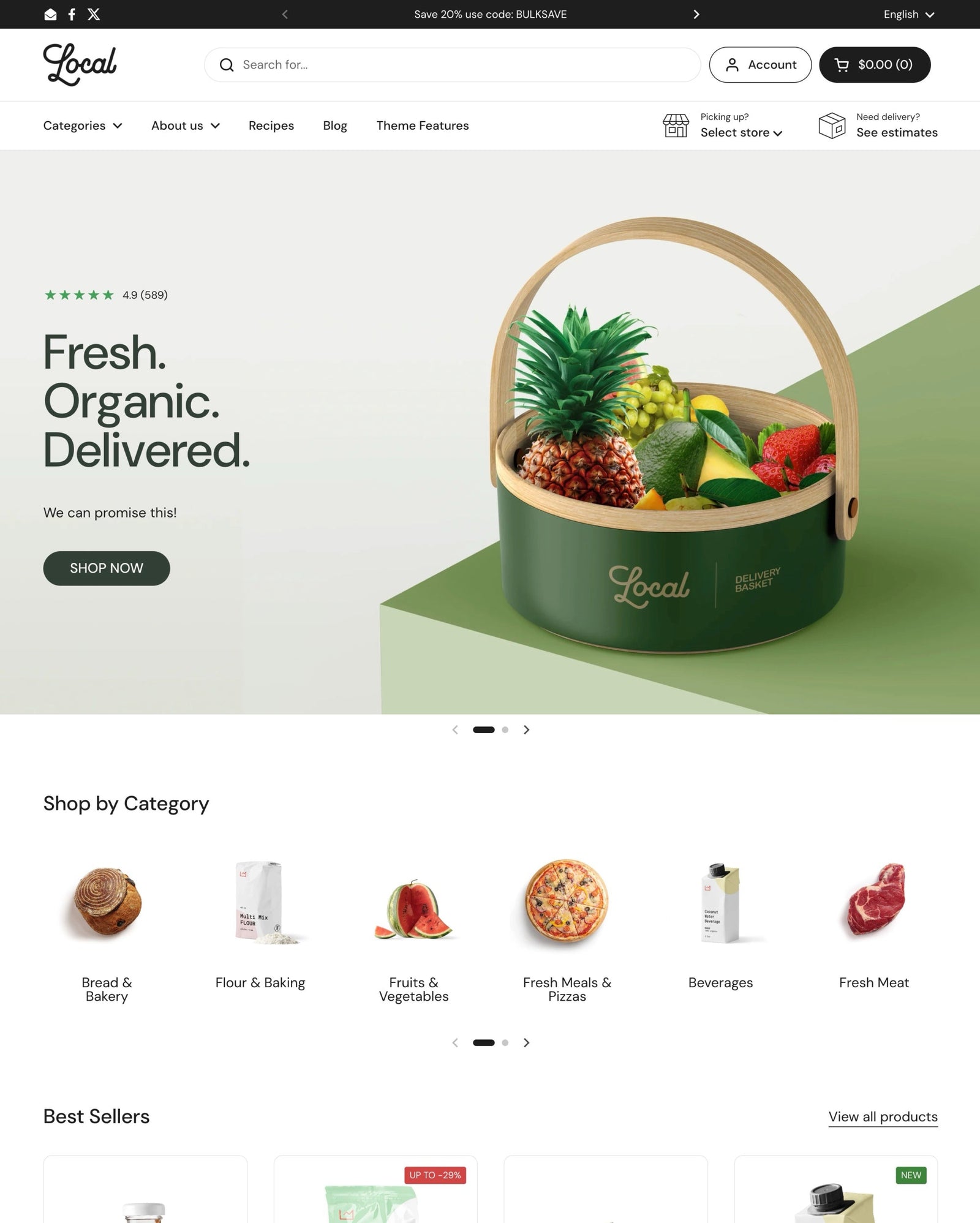
Local takes a different angle from the high-volume themes above it. Built by Krown Themes for food and local retail, it suits a specialty grocer or neighborhood food shop more than a sprawling supermarket catalog. Nutritional fact panels, age-restriction popups, and cross-selling blocks cover the details fresh and packaged food shoppers expect, while quick buy keeps repeat basket-fillers moving.
Its real edge for grocery is local selling. Local is designed around stores that also serve a physical counter, so pickup and delivery sit naturally in the layout, and the events calendar can promote a market day or a seasonal box. Adoption is modest next to the volume themes here, which is why it sits last, but for a smaller food store with a local footprint it is a focused fit. Our full Local theme review has the detail.
Local Highlights:
- Food and local-retail focus by Krown Themes
- Nutritional panels and age-restriction popups
- Built for in-store pickup and delivery
- Quick buy for repeat basket-fillers
- One-time purchase, not a subscription
Local Page Speed: Live Data
-
Are there Shopify themes suitable for organic grocery stores?
Absolutely, there are Shopify themes designed for organic grocery stores, emphasizing natural aesthetics and eco-friendly products. Consider themes that offer customization options to tailor the look to your brand.
-
Do Shopify grocery themes offer options for customer loyalty programs?
Yes, many Shopify grocery themes are compatible with loyalty program apps, allowing stores to implement reward systems to retain customers to join the program, earning rewards and discounts.
-
How do grocery Shopify themes handle product filtering and sorting?
Advanced themes offer robust filtering and sorting options, such as by price, category, brand, and dietary needs.
-
How can I add a subscription service for regular grocery deliveries using Shopify themes?
Use apps like Bold Subscriptions or ReCharge that integrate seamlessly with Shopify themes to manage subscriptions.
-
How can I use themes to highlight seasonal and special offer grocery products?
Use customizable banners, promotional sections, and product badges to draw attention to seasonal items and special offers.
-
What are the considerations for using free versus paid grocery Shopify themes?
Free themes offer basic features and are good for startups, while paid themes provide advanced functionalities, better customization, and support, making them ideal for growing businesses. If you have a very large product range, you’ll want to choose a theme that can support your inventory. Another thing to consider is customization - paid themes for grocery stores come with some features that stores need already - like ingredients, use-by date, and nutritional information. Decide what information you want to use and see if the free theme will support it, if not go for a paid theme. It’s much easier to go with a theme that has the functions you need than to customize a theme.