5 Shopify Plants and Gardening Themes for 2026
Last modified: October 11, 2026
| # | Image | Name | Price | Reception | Adoption | CWV pass rate |
|---|---|---|---|---|---|---|
| 1 |

|
Impulse
|
$500 | (1,303) | 4.0% | 78.2% |
| 2 |

|
Focal
|
$320 | (335) | 1.0% | 69.6% |
| 3 |

|
Enterprise
|
$420 | (113) | 0.7% | 79% |
| 4 |
|
Warehouse
|
$320 | (325) | 0.8% | 67% |
| 5 |

|
Blum
|
$170 | (265) | 0.1% | 70.2% |
|
Show More
|
||||||
Data first, opinion second: we track usage across 3.5+ million Shopify stores daily, and have since 2017. The stats tell us what merchants actually use; our editors rank the final picks by quality, pricing, and fit.
How These Themes Compare on Speed
| Theme | CWV pass rate | Few apps | Median LCP |
|---|---|---|---|
| Enterprise | 79% | 85% | 1.5s |
| Impulse | 78.2% | 85.5% | 1.6s |
| Blum | 70.2% | 88% | 1.3s |
| Focal | 69.6% | 81.5% | 1.9s |
| Warehouse | 67% | 75.7% | 1.7s |
Impulse
Ideal for: Seasonal ranges and gifting
Impulse is a conversion-first theme with shoppable heroes and promotion tools, which suits plant and gardening brands running seasonal ranges and gift-led campaigns. Its heroes put lush, lifestyle imagery to work through spring and holiday peaks.
The promo tooling builds momentum around a seasonal launch or a gift bundle, and quick buy keeps a browse moving. For a garden brand whose sales rise and fall with the seasons, it does real work.
Impulse Highlights:
- Built for conversion and promotions
- Shoppable hero images and promo tools
- Seasonal and gift-friendly sections
- Premium paid theme by Archetype
Here is how it shows up in our store data:
Impulse Page Speed: Live Data
Focal
Ideal for: Lush, image-led plant stores
Focal is built around striking imagery, which suits plants and gardening, sold on how green and healthy a plant looks. Its editorial, image-led layouts put high-resolution and lifestyle photography front and centre.
A slide-out cart and recommendation sections keep shoppers moving through varieties and companion products, so a browse turns into a basket. Where a brand’s photography carries the greenery, Focal lets it lead.
Focal Highlights:
- Image-led, editorial layouts
- Slide-out and sticky cart
- Recommendations and cross-sells
- Premium paid theme by Maestrooo
Here is how it shows up in our store data:
Focal Page Speed: Live Data
Enterprise
Ideal for: Large plant and garden catalogs
Enterprise is built for the deep catalogs garden shops tend to carry. Strong filtering and fast collection pages help a shopper move through hundreds of plants, tools, and supplies without losing the thread.
It keeps performance steady as the range grows through the seasons. For a nursery or garden store with a lot of stock, Enterprise handles the scale.
Enterprise Highlights:
- Strong filtering for deep catalogs
- Fast collection pages
- Steady as the range grows
- Premium paid theme by Clean Canvas
Here is how it shows up in our store data:
See the Enterprise store data and our full Enterprise review for the breakdown.
Enterprise Page Speed: Live Data
Warehouse
Ideal for: Wide plant and seed ranges
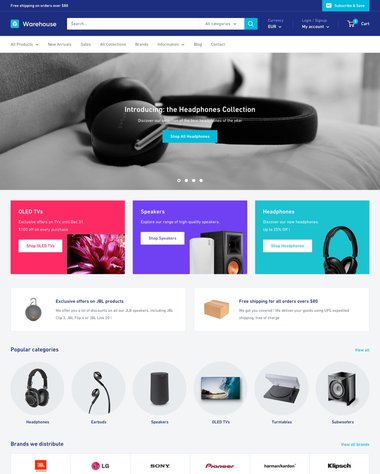
Warehouse, by Maestrooo, is built for big catalogues with strong filtering, which suits nurseries and garden stores carrying many plant varieties, seeds and tools. It keeps a large, varied catalogue fast and navigable.
For a store with hundreds of varieties, its filtering helps shoppers narrow by type, light, size or care level quickly, which is where a deep plant catalogue wins or loses the sale. It is the specialist pick when range is the challenge.
Warehouse Highlights:
- Built for large catalogues
- Strong filtering by type and care
- Handles high product counts
- Premium paid theme by Maestrooo
Here is how it shows up in our store data:
Warehouse Page Speed: Live Data
Blum
Ideal for: Styled, editorial plant edits
Blum takes a lookbook-first approach, which suits plant and garden brands that style greenery into complete, aspirational looks rather than a plain grid. It shows up less often than the mass-market themes, mainly because it is newer, and it lands as the value pick.
Its shoppable hotspots tag plants and pots on a styled photo, matching how these brands sell a whole vignette, and the fashion-friendly design means a polished store with little setup. For a newer plant brand building styled edits on a budget, it punches above its price.
Blum Highlights:
- Lookbook and styling-led layouts
- Shoppable hotspots on styled photos
- Purpose-built for a polished, low-setup store
- Premium paid theme by eComX
Here is how it shows up in our store data:
Blum Page Speed: Live Data
-
What’s the best Shopify theme for a plant store on a tight budget?
Dawn (Shopify’s free flagship theme) is the strongest free option for plant stores, it’s flexible enough to push toward a warm, editorial feel through customization. Switch to a serif headline font (Cormorant or Lora via Google Fonts), use a cream or sage background with warm-charcoal text, and replace product-card grids with collection-list layouts. The trade-off versus a paid theme is that Dawn’s section blocks weren’t designed for editorial plant-store pacing, so you’ll spend more time on customization. For a brand committing fully to the aesthetic, a paid theme purpose-built for the category saves weeks of work.
-
Should a plants and gardening Shopify store use lifestyle photos or white-background product photos?
Both. White-background shots show the product clearly without distraction (essential on collection pages and as the first product image). Lifestyle shots (plants in a styled room, hands holding plants, plants on a windowsill) show context, scale, and use case (essential for the buyer to imagine the plant in their home). The strongest plant-store galleries lead with one clean white-background shot and follow with 4-6 lifestyle shots. White only feels clinical; lifestyle only loses scale.
-
How do I show plant care information without cluttering the product page?
Use your theme’s product-tabs or accordion content block. Tabs let you put core info (light, water, zone, size) in a clean grid up front, while collapsing detailed care guides, propagation tips, and FAQ-style content behind expandable sections. Accordions work the same way and tend to look cleaner on mobile. If your theme doesn’t have these blocks built in, look at metafields with theme support: most modern themes (Dawn, Sense, Studio, and most paid themes) read product metafields and let you display them as structured sections without an app.
-
Why is mobile speed so important for a plants and gardening Shopify store?
Plant browsing skews heavily mobile and image-heavy at the same time, a worst case for page speed. Slow loads (LCP over 3 seconds) cost you 5-10% of conversions per second of delay AND hurt your Google rankings, since Core Web Vitals are a ranking factor. Plant catalogs that don’t lazy-load images, don’t serve WebP/AVIF, or pile too many apps on top of the theme routinely score poorly in PageSpeed Insights. Test before launch and quarterly after, pages over 3.5s LCP on mobile are conversion killers regardless of how good the theme looks.
-
Which theme suits a large plant nursery?
Warehouse suits a plant nursery with a deep range, built for big catalogues with strong filtering so shoppers can narrow by type, light or care level across hundreds of varieties. For a smaller, styled plant boutique, Blum or Palo Alto fit better. Match the theme to how wide your range runs.