7 Shopify Health and Beauty Themes for 2026
Last modified: October 11, 2026

| # | Image | Name | Price | Reception | Adoption | CWV pass rate |
|---|---|---|---|---|---|---|
| 1 |

|
Prestige
|
$400 | (869) | 4.4% | 78.8% |
| 2 |

|
Impulse
|
$500 | (1,301) | 4.0% | 78.3% |
| 3 |

|
Sleek
|
$350 | (616) | 0.6% | 80.5% |
| 4 |
|
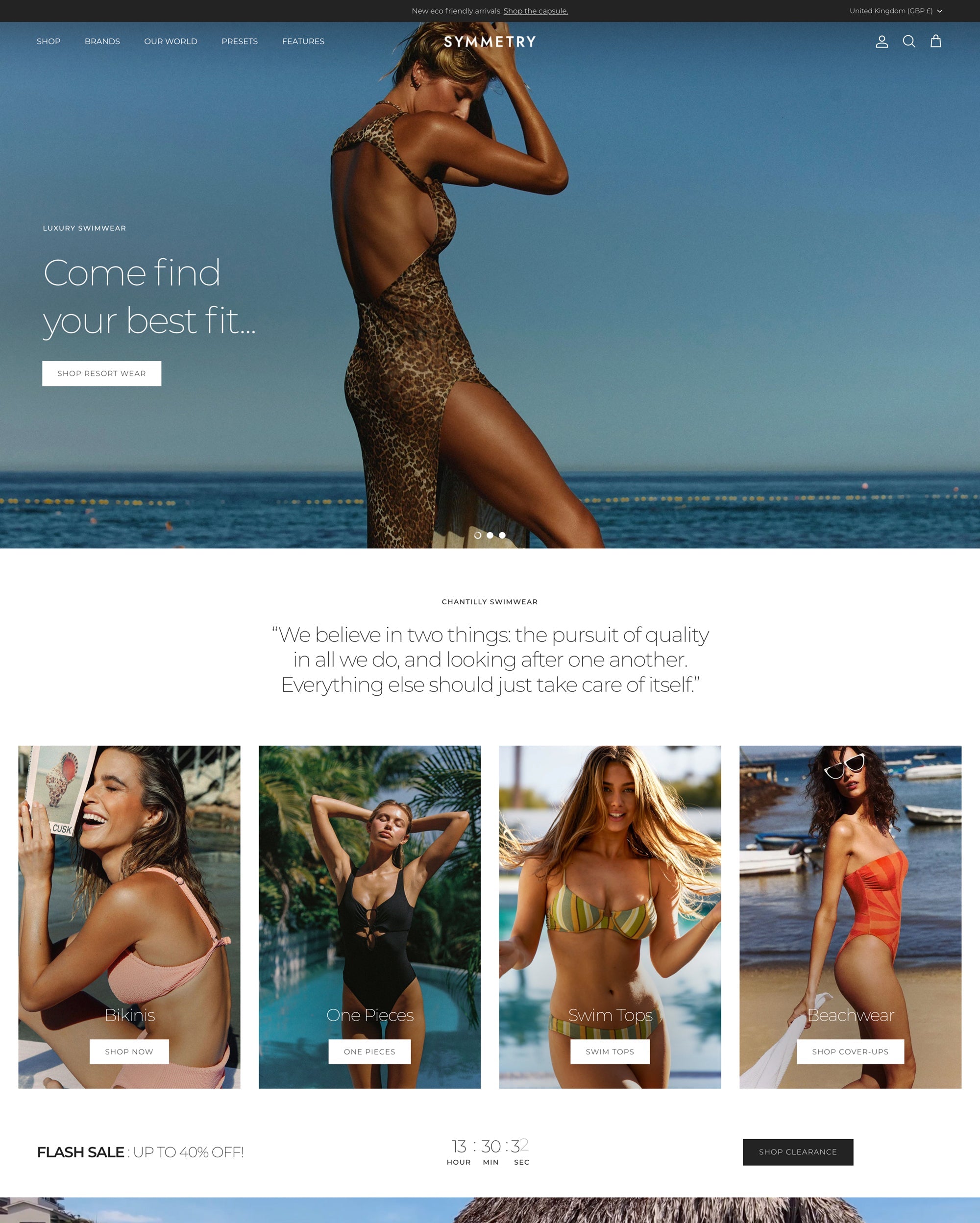
Symmetry
|
$420 | (391) | 1.4% | 81.1% |
| 5 |

|
Eurus
|
$350 | (599) | 0.4% | 71.9% |
| 6 |

|
Atlantic
|
$300 | (226) | 0.1% | 91.8% |
| 7 |

|
Zest
|
$330 | (233) | 0.2% | 70.1% |
|
Show More
|
||||||
Data first, opinion second: we track usage across 3.5+ million Shopify stores daily, and have since 2017. The stats tell us what merchants actually use; our editors rank the final picks by quality, pricing, and fit.
How These Themes Compare on Speed
| Theme | CWV pass rate | Few apps | Median LCP |
|---|---|---|---|
| Atlantic | 91.8% | 96% | 1.3s |
| Symmetry | 81.1% | 88.1% | 1.5s |
| Sleek | 80.5% | 84.9% | 1.7s |
| Prestige | 78.8% | 85.8% | 1.6s |
| Impulse | 78.3% | 85.7% | 1.6s |
| Eurus | 71.9% | 80.4% | 1.7s |
| Zest | 70.1% | 78% | 1.9s |
Prestige
Ideal for: Premium beauty and skincare
Prestige is the premium choice for beauty and skincare, and it leads here for a reason: Maestrooo built it for high-end brands, and its refined layout and large imagery suit clean shots of packaging, texture and ingredients. A premium label looks the part from the first scroll.
That polish supports a higher price and builds desire, while the merchandising stays capable without cluttering the look. It is the proven foundation for a beauty brand that trades on quality.
Prestige Highlights:
- Refined, high-end aesthetic
- Large imagery for texture and packaging
- Strong, quiet merchandising
- Premium paid theme by Maestrooo
Here is how it shows up in our store data:
Prestige Page Speed: Live Data
Impulse
Ideal for: Beauty brands with launches
Impulse is the most-reviewed theme here, a lifestyle theme with shoppable hero images and promotion tools that fit beauty brands built on launches and seasonal pushes. Its heroes put styled product and routine imagery to work.
The promotion tooling builds momentum around a new drop, and quick buy keeps an eager shopper moving. Where a beauty brand lives on campaigns and hype, it earns its keep.
Impulse Highlights:
- Built for lifestyle and apparel
- Shoppable hero images and promo tools
- Launch-friendly sections
- Premium paid theme by Archetype
Here is how it shows up in our store data:
Impulse Page Speed: Live Data
Sleek
Ideal for: Beauty and skincare brands with a polished look
Sleek lives up to its name for beauty and skincare. Its polished, modern sections suit routines, shade ranges, and before-and-after storytelling, giving a beauty line a professional gloss.
The design keeps product education close to the imagery, which skincare shoppers rely on. For a beauty brand that wants a refined, current look, Sleek fits.
Sleek Highlights:
- Polished, modern sections
- Room for routines and shades
- Keeps education near imagery
- Premium paid theme by FoxEcom
Here is how it shows up in our store data:
See the Sleek store data and our full Sleek review for detail.
Sleek Page Speed: Live Data
Symmetry
Ideal for: Large beauty catalogs
Symmetry is a top-selling theme, used by tens of thousands of stores, built around drag-and-drop sections and powerful filtering, exactly what a large beauty catalogue needs. Shoppers reach the right product by skin type, concern or range quickly.
The drag-and-drop editor makes restyling easy as the catalogue grows, without touching code. For a beauty store scaling up its range, it stays fast and organised.
Symmetry Highlights:
- Powerful filtering by concern and type
- Drag-and-drop sections, no code
- Fast variant handling
- Premium paid theme by Clean Canvas
Here is how it shows up in our store data:
Symmetry Page Speed: Live Data
Eurus
Ideal for: Soft, refined beauty brands
Eurus, by BSS Commerce, is a refined, conversion-focused theme with a soft, gentle look built for beauty, so it suits skincare and cosmetics that sell on a clean, calming aesthetic. Its dozens of built-in sections cover routines, ingredients and hero products.
That polish reassures shoppers on a personal purchase, and the depth of features means less reliance on extra apps. It is a comfortable home for a soft, considered brand that wants a beauty-ready store out of the box.
Eurus Highlights:
- Soft, refined design for beauty
- Dozens of built-in sections
- Routine and ingredient blocks
- Premium paid theme by BSS Commerce
Here is how it shows up in our store data:
Eurus Page Speed: Live Data
Atlantic
Ideal for: Clean, classic beauty stores
Atlantic brings a warm, classic design with image zoom and high-resolution support that let texture and packaging detail show, a natural match for a clean, natural beauty brand. Its trust-building layout keeps a considered range easy to browse.
The classic styling suits brands built on simple, honest products rather than trends, and it rounds out the list as the understated, timeless option. For a pared-back natural label, it feels right.
Atlantic Highlights:
- Warm, classic design
- Image zoom and high-resolution support
- Clean, trust-building layout
- Premium paid theme by Pixel Union
Here is how it shows up in our store data:
Atlantic Page Speed: Live Data
Zest
Ideal for: DTC health-and-beauty brands wanting a clean, fast catalog
Zest is a paid Shopify Theme Store theme built for catalog-driven merchants who want a clean, section-based storefront without stacking apps to get there. It leans on category-first navigation, deep filters and editorial product pages, and it stays legible as the catalog grows.
Its speed shape is what puts it on this list. On real Zest stores, Chrome UX Report field data shows a solid pass rate across LCP, INP and CLS, and the lightly-loaded cohort climbs higher, which points to the theme itself having room to run once the app stack is not sitting on top of it.
Zest Highlights
- Clean, section-based storefront for catalog-driven stores
- Real-world Core Web Vitals pass rate above most Shopify themes we track
- Suits DTC brands with a curated app stack rather than a widget-heavy one
- Paid one-time Theme Store purchase
Zest Page Speed: Live Data
-
What should a Shopify health and beauty theme include?
A health and beauty theme should build trust before checkout, with room for reviews, ingredients and results, plus clean, credible design. Strong galleries let shoppers judge a product, and filtering by concern or type helps them find the right one. Support for routines and subscriptions matters too, since beauty sells on repeat, and a mobile-first layout is essential.
-
How do beauty brands build trust online?
Lead with social proof. Reviews, before-and-after imagery, clear ingredient lists and how-to-use guidance reassure a shopper buying something for their skin or body. In our data, two reviews apps sit at the very top of the beauty app stack, which shows how central proof is. Make that content easy to find on every product page.
-
Do beauty stores need subscriptions?
Often, yes. Skincare and supplements are replenishable, so subscribe-and-save and easy reordering turn one sale into a recurring one and lift lifetime value. Subscriptions are more common in beauty than almost any other category. None of these themes need it built in, since apps add it, but they all support routines and bundles that make it work.
-
Which theme suits a premium skincare brand?
Prestige suits a premium skincare or beauty brand, with a refined, high-end layout and large imagery that lets texture and packaging read as luxurious. Eurus is a softer alternative built specifically for beauty. Both give the polished, trustworthy feel a premium personal-care brand needs.
-
Is a free theme enough for a beauty store?
A free theme can launch a beauty store, and many top beauty stores run on Shopify’s free themes. Premium themes add stronger galleries, routine and subscription-friendly sections and more refined design, which help as a brand grows. Start with your budget and stage, then upgrade when presentation and features start to limit you.