Testament Shopify Theme Review
Last modified: September 30, 2026
| # | Image | Name | Price | Reception | Adoption | CWV pass rate |
|---|---|---|---|---|---|---|
| 1 |

|
Testament - Revelation
|
$250 | (400) | 0.1% | 67.1% |
| 2 |

|
Testament - Genesis
|
$250 | (400) | 0.1% | 67.1% |
| 3 |
|
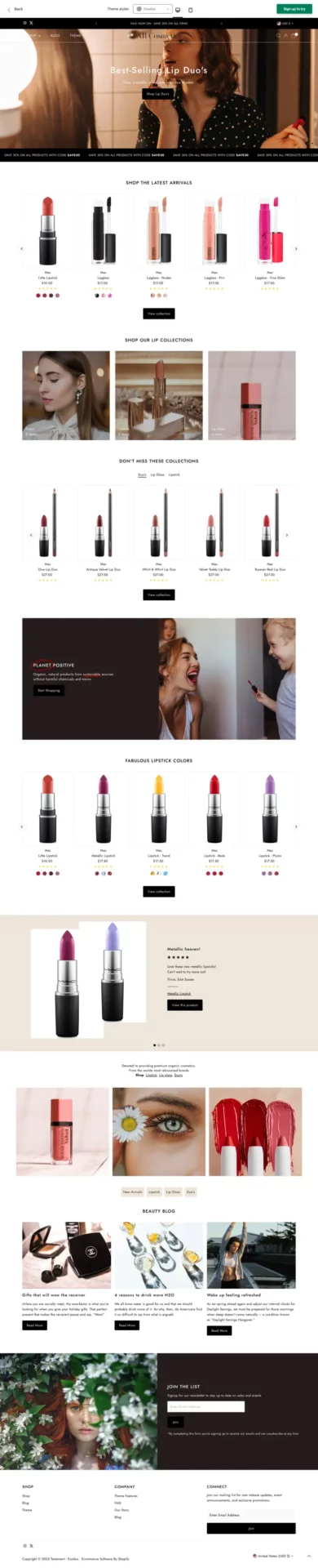
Testament - Exodus
|
$250 | (400) | 0.1% | 67.1% |
| 4 |
|
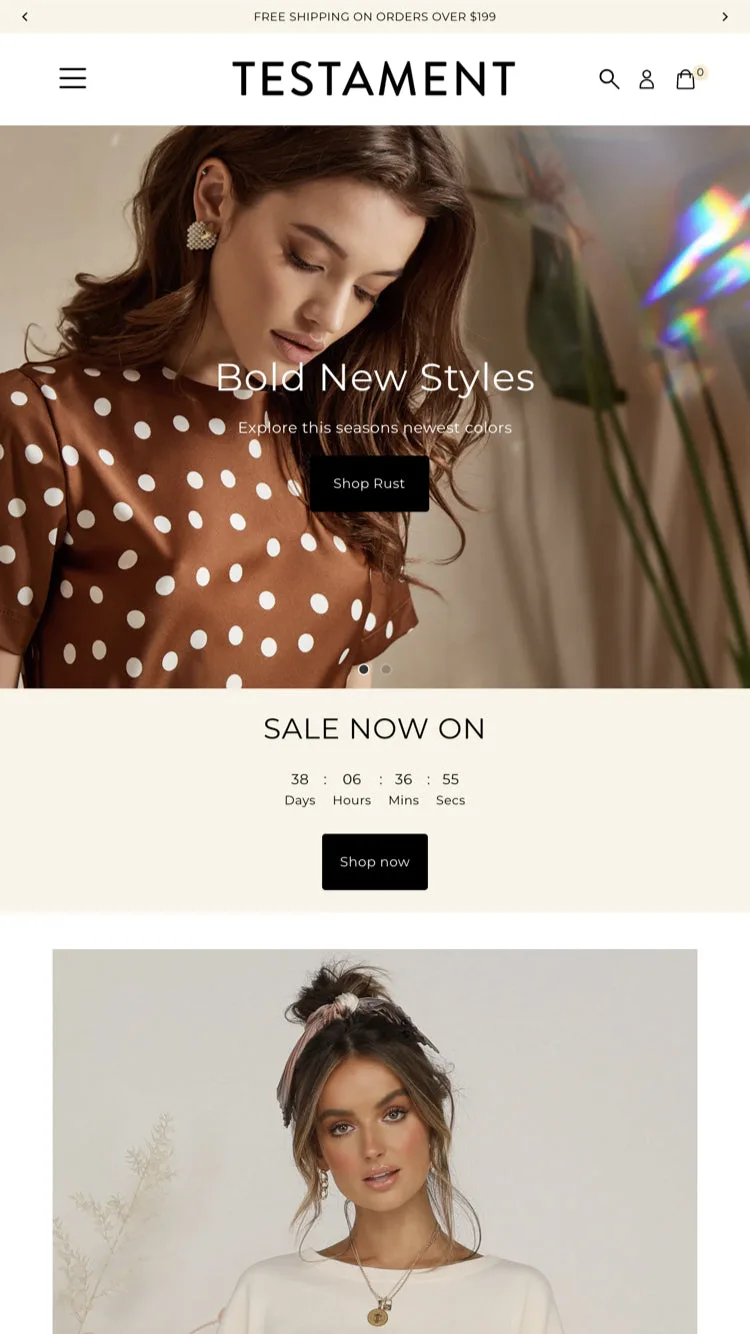
Testament - Testament (Default)
|
$250 | (400) | 0.1% | 67.1% |
|
Show More
|
||||||
Quick Comparison
| Preset | Best For | Aesthetic |
|---|---|---|
| Testament | Most boutique brands (default style) | Balanced, neutral baseline |
| Revelation | Maximalist boutique fashion, streetwear | Bold typography, high contrast |
| Genesis | Slow fashion, premium beauty | Calmer, lighter, whitespace-led |
| Exodus | Sustainability-led, outdoor lifestyle | Earthy palette, lookbook-led |
Data first, opinion second: we track usage across 3.5+ million Shopify stores daily, and have since 2017. The stats tell us what merchants actually use; our editors rank the final picks by quality, pricing, and fit.
Testament - Revelation
Revelation is built for summer-loving, photo-heavy brands, especially if you’re in swimwear, resortwear, or lifestyle fashion. The layout is bright, immersive, and made for storytelling through visuals. With edge-to-edge hero banners, curated collections, and plenty of touchpoints for product discovery, it’s designed to let your products shine and your story lead. Perfect for “scroll and shop” experiences.
Revelation Highlights
- Gorgeous image-first layout ideal for fashion-forward or beachwear brands
- “Shop the Look” sections and lifestyle galleries for conversion + storytelling
- Emphasis on social proof with built-in review and quote modules
- Minimalist elegance with soft serif fonts and muted color tones
Testament - Genesis
Genesis is clean, chic, and a little more structured. It’s ideal for fashion collections, capsule wardrobes, and minimalist brands that care about product hierarchy. Think curated drops, flash sales, and new arrivals that pop thanks to generous white space and snappy CTAs. It’s fashion-meets-function without the clutter.
Genesis Highlights
- Editorial homepage flow with banners, categories, and trending styles
- Highlight bar for flash promos, countdowns, and urgency plays
- Well-balanced product grids with star ratings, hover effects, and price callouts
- Great for new brands who want polished UX with visual simplicity
Testament - Exodus
Bold and product-led, Exodus is made for beauty brands, cosmetics, and anything that lives close-up. Its modular grid system supports lots of SKUs without feeling chaotic, while smart use of contrast and lifestyle shots makes it feel premium. There’s also tons of space for showcasing collections, product lines, and even ingredients or sustainability creds.
Exodus Highlights
- High-contrast design great for makeup, skincare, or bold accessories
- Built-in collection tabs for fast browsing across variants (gloss, matte, etc.)
- Scroll-friendly homepage with product-first focus and editorial flair
- Designed for content-rich brands that mix storytelling + selling
Testament - Testament (Default)
Testament is the flagship default style and the most neutral starting point of the four. It ships with balanced typography, generous spacing, and a clean editorial baseline, so it works for most boutique brands before you commit to a stronger aesthetic. Shopify describes it as conversion focused and mobile optimized for fast online shopping. Start here if you want the theme’s core layout without leaning maximalist or minimalist.
Testament Highlights
- Neutral, balanced baseline that suits most boutique catalogs
- Full-bleed hero media and editorial product storytelling
- Mobile-first product interactions (zoom, swipe gallery, sticky cart)
- Easiest style to customize toward your own brand direction
-
What is the Testament Shopify theme good for?
Testament is built for boutique brands where photography carries the conversion. It’s strongest for boutique fashion (50 to 300 SKUs), swimwear and resortwear, premium accessories, slow-fashion brands with story-driven product pages, and home goods or lifestyle brands where mood imagery sells the product. Less strong for spec-heavy categories, large catalogs, or B2B/wholesale flows.
-
How many presets does Testament have?
Testament ships with 4 presets: Testament (the balanced default style), Revelation (maximalist, bold typography), Genesis (calmer, lighter, whitespace-led), and Exodus (earthier palette, lookbook-led). Pick the one closest to your brand baseline to minimize customization; all four share the same theme engine, so you can switch presets after purchase if your aesthetic evolves.
-
Is Testament good for large Shopify catalogs?
Not by default. Testament’s filtering and search are tuned for boutique catalogs (50 to 300 SKUs). Past that, you’ll want a search and filter app like Searchspring or Boost to handle larger catalogs. If your store carries 500+ SKUs, Testament can work but plan for a search overlay in the launch budget.
-
Does Testament work for slow-fashion or sustainability-led brands?
Yes, especially the Genesis and Exodus presets. Genesis leans calmer and quieter, suitable for slow-fashion brands with muted aesthetics. Exodus has an earthier palette and stronger lookbook-led layouts that fit sustainability-led brands wanting to surface provenance and brand story alongside products.
-
Is Testament mobile-friendly?
Yes. Testament’s most-used interactions (product zoom, swipe gallery, sticky add-to-cart) are designed mobile-first rather than retrofitted from desktop. Mobile performance is solid out of the box, though the heavy imagery means you should serve WebP at appropriate dimensions and use a CDN to keep page speed competitive.
-
How much does the Testament Shopify theme cost?
The Testament Shopify theme costs $250 as a one-time purchase on the Shopify Theme Store. That single license covers all 4 presets (Testament, Exodus, Revelation, Genesis), so you can switch between styles without paying again. There is no recurring subscription fee for the theme itself, though any premium apps you add to extend it are billed separately.
Conclusion
Testament is a focused theme, not a general-purpose one. If your brand sells on photography and story, its editorial layouts, lookbook sections, and clean customizer give you a professional framework across all 4 presets without a page builder. If you lead with specs, dense filtering, or a very large catalog, a more utilitarian theme will serve you better.
The one thing to manage is the app stack. Testament stores run more apps than average, and combined with large imagery that is where speed can slip, so keep photos optimized and the app list tidy.
If you like Testament, you might also like the Mavon, Sahara, Xtra, and Expanse theme reviews. For more options, see our full guide to Shopify theme reviews.