7 Shopify Wallet Store Themes (2026)
Last modified: October 5, 2026
| # | Image | Name | Price | Reception | Adoption | CWV pass rate |
|---|---|---|---|---|---|---|
| 1 |
|
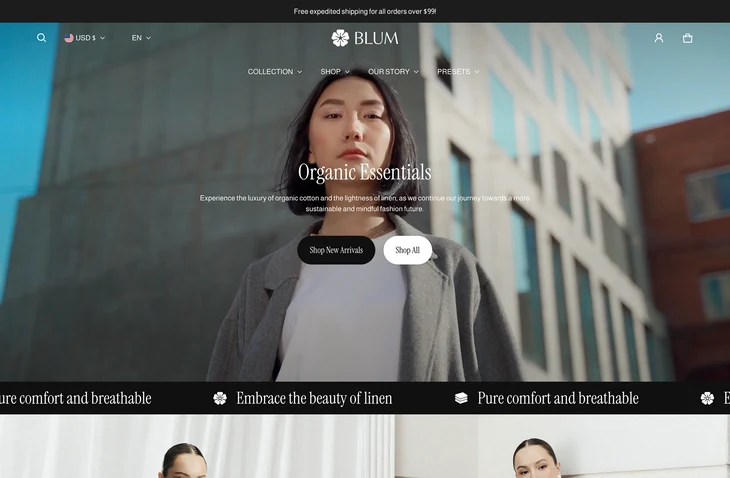
Blum
Boutique leather brands on a smaller theme budget
|
$170 | (260) | 0.1% | 72.3% |
| 2 |

|
Wonder
Jewelry-adjacent accessory brands with a boutique feel
|
$390 | (146) | 0.5% | 63.5% |
| 3 |
|
Concept
Versatile premium theme with room for the brand to grow
|
$400 | (656) | 1.3% | 75.8% |
| 4 |
|
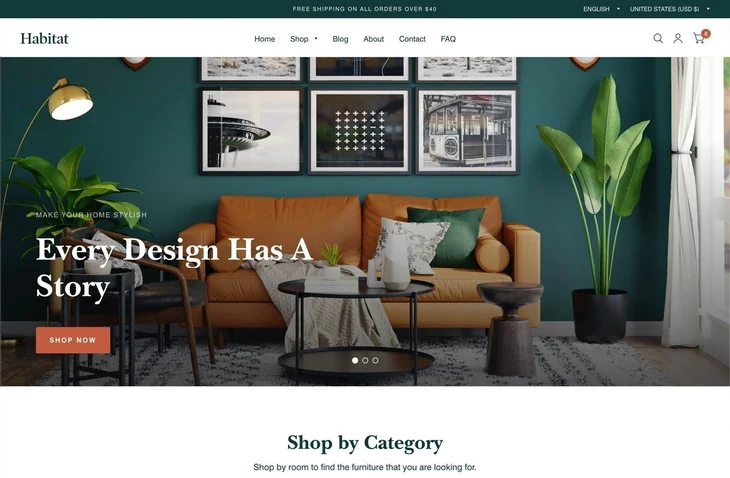
Habitat
Fast, modern theme for a brand with speed as a priority
|
$360 | (64) | 0.1% | 83.3% |
| 5 |
|
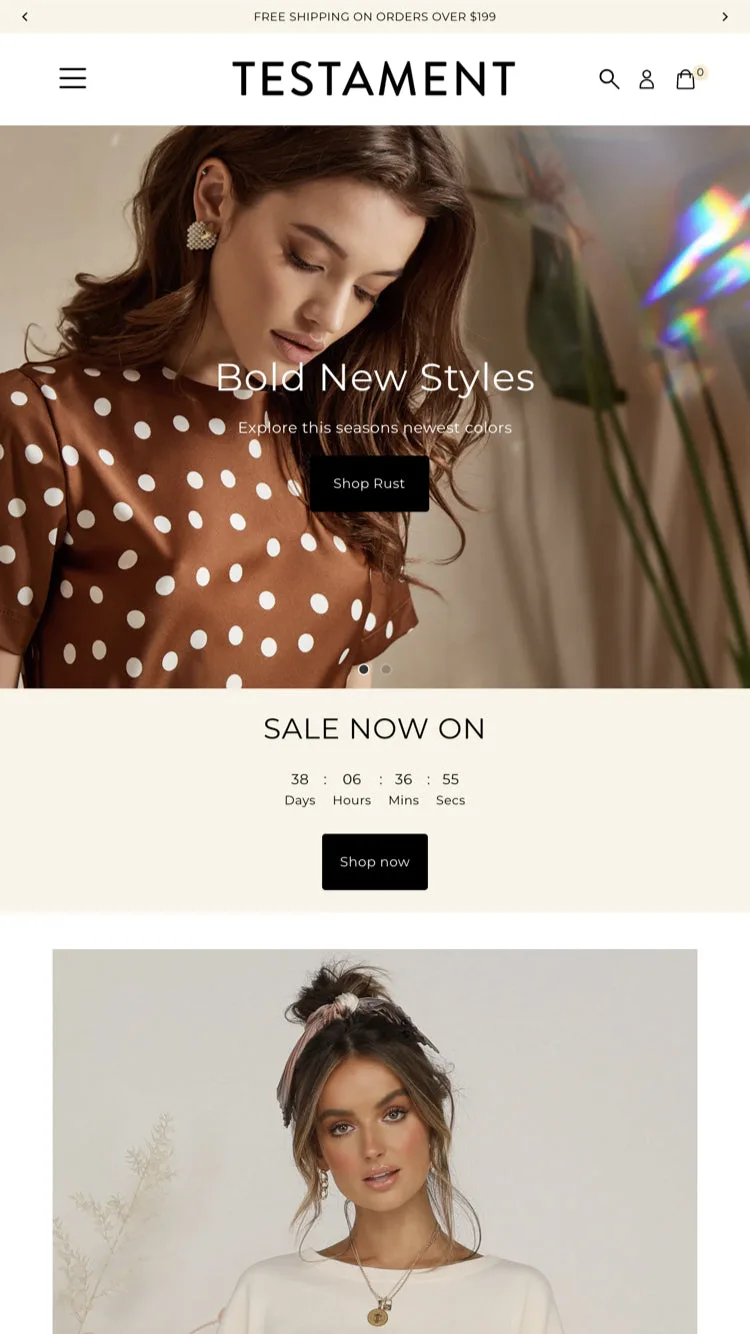
Testament
Craft and leather brands wanting an artisan voice
|
$250 | (400) | 0.1% | 66.2% |
| 6 |
|
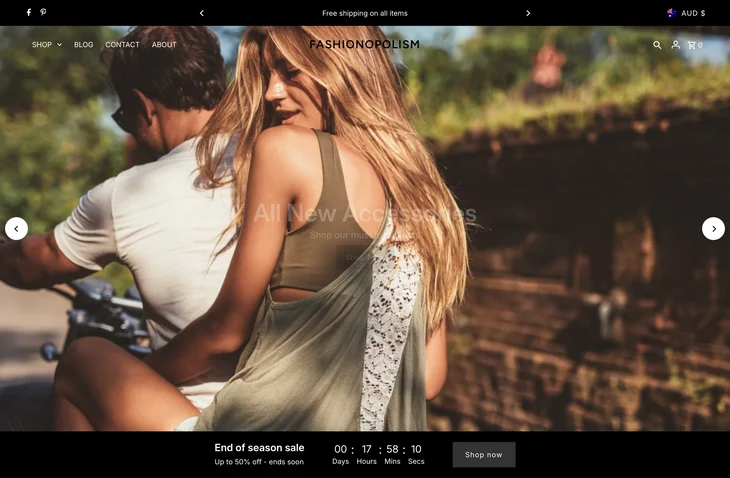
Fashionopolism
Fashion-accessories brands at the entry premium price
|
$200 | (252) | 0.1% | 72.6% |
| 7 |
|
Retina
Multi-purpose premium theme at an affordable price
|
$220 | (295) | 0.1% | 64.1% |
|
Show More
|
||||||
Data first, opinion second: we track usage across 3.5+ million Shopify stores daily, and have since 2017. The stats tell us what merchants actually use; our editors rank the final picks by quality, pricing, and fit.
How These Themes Compare on Speed
| Theme | CWV pass rate | Few apps | Median LCP |
|---|---|---|---|
| Habitat | 83.3% | 81.8% | 1.5s |
| Concept | 75.8% | 84.1% | 1.5s |
| Fashionopolism | 72.6% | 83.3% | 1.8s |
| Blum | 72.3% | 88% | 1.3s |
| Testament | 66.2% | 78.1% | 1.7s |
| Retina | 64.1% | — | 1.9s |
| Wonder | 63.5% | 63.9% | 1.8s |
Blum
Ideal for: Boutique leather brands on a smaller theme budget
Blum from Woolman is the most affordable paid theme on this list and does not read as such. Its default preset leans editorial, with a serif-forward type palette and plenty of whitespace, which makes it a natural fit for a leather-goods brand that wants to feel craft-made without the price tag of a true premium theme.
For a wallet store, Blum’s product page does the two things that matter most: image zoom works cleanly out of the box, and section blocks let a merchant drop a dimension diagram, an interior-view photo, and a plain-text spec table in without touching code. Alternate presets (Fuji, Monti, Solie, Totem) each shift the aesthetic enough to feel like a different theme, which gives a brand room to iterate without buying a second theme.
Blum Highlights for a Wallet Store:
- Editorial serif typography that reads premium at a mid-tier price.
- Clean product-page section blocks for dimension diagrams and interior views.
- Five presets to match leather, vegan, or minimalist positioning without buying another theme.
- Image zoom and gallery handling that showcases material texture.
Blum Page Speed: Live Data
Wonder
Ideal for: Jewelry-adjacent accessory brands with a boutique feel
Wonder from Soft Themes sits comfortably in the jewelry-and-accessories lane, and that visual language translates cleanly to small leather goods. The default preset reads elegant without feeling precious, with generous padding, soft background tones, and a type palette suited to a brand selling by craft rather than discount.
What makes Wonder work for a wallet store specifically is how it treats small products on big product pages. Collection and product templates are built to flatter a single detailed object rather than a crowded grid, which suits a catalog of six to thirty wallet styles. Alternate presets (Nook, Petit, Root, Velour, Wonder) cover different accessory-brand aesthetics without redesign work.
Wonder Highlights for a Wallet Store:
- Jewelry-and-accessories visual DNA that reads premium on small-leather photography.
- Product templates designed to flatter single objects, not crowded grids.
- Five presets covering several accessory-brand aesthetics.
- Section library deep enough to drop in dimension tables and gift-flow blocks.
Wonder Page Speed: Live Data
Concept
Ideal for: Versatile premium theme with room for the brand to grow
Concept from DMW Group is the broadest premium pick on this list and the one with the most headroom. It is already running on more than a thousand Shopify stores we detect, and the install base covers verticals from home decor to apparel to small accessories, which tells you the theme is built to be shaped rather than used off-the-shelf.
For a wallet brand, that flexibility is the sell. The default preset is clean enough to not pre-commit the storefront to any one visual direction, and the section library is deep enough to build a dimension-focused product page, a materials story page, and a gift-flow collection without wiring in an app. The trade-off is build time: Concept rewards a merchant who treats the first week after install as design work, not setup work.
Concept Highlights for a Wallet Store:
- Deepest section library of the picks, suited to a brand still shaping its storefront.
- Alternate presets lean editorial, minimalist, and lifestyle depending on choice.
- Install base runs across many verticals, so the theme is tested on diverse catalogs.
- Build time is longer than template-driven themes; plan for a design pass, not just a setup pass.
Concept Page Speed: Live Data
Habitat
Ideal for: Fast, modern theme for a brand with speed as a priority
Habitat from Fuel Themes is the fastest theme in the shortlist on real-world Core Web Vitals data, and that is not an accident. The theme ships with a tight baseline of sections and reads modern without piling on marketing widgets that drag page speed. For a wallet brand that lives on paid traffic or that cares about search ranking on long-tail queries, Habitat buys back time on every pageview.
Visually, the default preset is clean and lifestyle-adjacent, with generous whitespace and a type palette that leans contemporary. Habitat’s product-page section blocks support the same dimension-diagram, interior-view, and spec-table pattern as the heavier themes above, with less of the setup overhead that comes from a bigger section library.
Habitat Highlights for a Wallet Store:
- Fastest Core Web Vitals performance in this shortlist on real-world data.
- Clean, modern baseline that reads lifestyle without a lot of ornament.
- Tight section library: less to learn, less to configure before launching.
- Fuel Themes’ track record on performance-tuned themes.
Habitat Page Speed: Live Data
Testament
Ideal for: Craft and leather brands wanting an artisan voice
Testament from Switch Themes is the clearest leather-and-craft fit on this list. The default preset reads workshop-made rather than studio-polished, with warm backgrounds, a strong serif type palette, and photography slots that favor close-up detail over wide hero shots. For a merchant building a brand around hand-finished leather, raw materials, or small-batch production, Testament’s voice is already in the right place.
Beyond the aesthetic, Testament handles the practical wallet-store needs without extensions. Product pages support image zoom and layered gallery blocks that work well for showing stitching, grain, and interior layout. At a $250 price point, it is also one of the lower-cost paid themes in the premium band, which matters for a brand launching with a small catalog.
Testament Highlights for a Wallet Store:
- Workshop-made visual voice that fits full-grain leather brands by default.
- Four presets covering different leather-brand aesthetics.
- Image zoom and layered gallery blocks for detail shots.
- Below the typical premium-theme price point.
Testament Page Speed: Live Data
Fashionopolism
Ideal for: Fashion-accessories brands at the entry premium price
Fashionopolism from We Are Underground is the cheapest paid pick in the shortlist and is pitched squarely at fashion-adjacent brands. For a wallet merchant whose branding leans fashion-first (coordinated handbag collections, seasonal drops, lookbook photography) rather than craft-first, Fashionopolism’s default voice fits without reskinning.
The theme supports the standard wallet-store product-page pattern with the usual Shopify section blocks, and its presets (Haute, Horology, Salon, Fashionopolism) each shift the aesthetic enough to serve a different accessory-brand lane. The ceiling is lower than Concept or Habitat on sheer feature count, which keeps the theme simpler to launch but constrains stores that want to grow into complex merchandising.
Fashionopolism Highlights for a Wallet Store:
- Lowest paid price in the shortlist, pitched at fashion-adjacent brands.
- Four presets covering seasonal-drop, lookbook, and salon aesthetics.
- Standard section library handles the wallet-store product-page pattern.
- Lower feature ceiling than the top premium themes; suited to launch stage, not scale.
Fashionopolism Page Speed: Live Data
Retina
Ideal for: Multi-purpose premium theme at an affordable price
Retina from Out of the Sandbox is the multipurpose premium theme on this shortlist and sits at an unusually low price for a Theme Store option in its tier. Its default preset is deliberately neutral, which cuts both ways: a wallet brand can shape it to feel boutique or minimalist, but has to do that shaping rather than trust the theme to carry a voice on its own.
Where Retina earns its place is on the mechanics. Product pages support the dimension, interior-view, and spec-table pattern cleanly; collection pages scale from a dozen SKUs to several hundred without feeling empty or crowded; and the theme has been iterated for years by a prolific developer with a strong support track record. Four presets (Radiate, Retina, Sculpt, Sprint) each push the aesthetic a different direction.
Retina Highlights for a Wallet Store:
- Lowest paid price in the premium band, with Out of the Sandbox’s development track record.
- Deliberately neutral default preset: a brand has to shape it rather than inherit a voice.
- Collection pages scale cleanly from small catalogs upward.
- Four presets covering different accessory-brand lanes.
Retina Page Speed: Live Data
-
Which Shopify theme is right for a leather wallet brand?
Testament fits leather-and-craft positioning out of the box with a workshop-made voice and warm visual palette. Blum reads editorial and premium at a lower price, which suits a leather brand that wants a boutique feel without the full premium budget. For a brand that wants to pick its own voice, Concept gives the widest canvas to shape, at the cost of more setup time up front.
-
Do I need a special theme for wallets or will any apparel theme work?
Any apparel theme will technically run a wallet store, but the themes above are chosen because their default product-page layouts, section libraries, and gallery handling favor small, detail-heavy objects over clothing variants. A general apparel theme is built to flatter outfits across multiple sizes and photos; a wallet-friendly theme is built to flatter one object with close-up detail. The practical difference shows up most on the product page and the collection grid.
-
How many wallet SKUs can these themes handle?
All seven handle up to a few hundred SKUs cleanly. Concept and Retina scale cleanest as a catalog grows past that, because their collection templates and filtering stay fast on large product sets. Habitat and Blum are faster at small catalogs but need more careful theme-section configuration before scaling. For most wallet brands, catalog size is not the limiting factor; the limiting factor is how much time the merchant can invest in configuring product-page detail blocks.
-
Which theme suits a wallet brand just starting out?
Fashionopolism and Retina are the cheapest paid themes in the shortlist, and both ship with enough defaults to launch a store without a design pass. For a brand still finding its voice, these two trade some flexibility for faster time-to-launch. Once the brand has settled on a positioning (craft, fashion, minimalist), migrating to Blum or Concept is a reasonable second-year move.
-
How do these themes support personalization and monogramming?
Shopify handles personalization at the product-variant layer, so every theme in the shortlist supports monogramming the same way: a merchant adds a line-item property field to the product page. The theme-specific difference is where that field renders and how prominent it is in the layout. Concept, Habitat, and Wonder expose the field cleanly in their default product templates; Fashionopolism and Blum require minor theme-section configuration to surface it above the add-to-cart button.
-
Do any of these themes work for a gift-wrap or gift-note flow?
Gift wrap is a cart-level feature in Shopify, usually added through a free gift-wrap app or a line-item property on the cart page, which every theme in this shortlist supports natively. Gift-note fields work the same way. The themes themselves do not need to ship a bespoke gift-flow block; what they do need to do is let the merchant place a text input on the cart page without custom code, which all seven handle.
-
How much do Shopify wallet store themes cost?
The shortlist spans the Theme Store price band for premium themes. Fashionopolism is the cheapest at $200 one-time, followed by Retina at $220 and Testament at $250. Blum sits in the middle at $170 for a theme that reads premium. Habitat, Wonder, and Concept are at the top of the shortlist, between $360 and $400. All seven are one-time purchases rather than subscriptions, so the cost is paid once and the theme stays with the store.
Picking a Theme for a Wallet Store
The right theme follows the brand. A full-grain leather brand on a budget leans toward Testament or Blum; a jewelry-adjacent accessories brand reaches for Wonder; a merchant wanting a canvas that scales reaches for Concept or Habitat. Fashionopolism and Retina trade features for affordability without feeling off-brand on this vertical, and are the quickest to launch when the catalog is still being built out.
For related reading on the blog: our Shopify bag store themes listicle covers the sibling bag-and-luggage category, our Shopify jewelry themes post covers the broader accessories family, and the Shopify theme reviews guide collects the full theme catalog.