Edge Shopify Theme Review 2026
Last modified: October 4, 2026

Edge is a premium Shopify theme from OranThemes, built around conversion mechanics instead of a single aesthetic. One codebase, five presets, and a feature stack skewed toward timers, cross-sells, and a mobile checkout flow make it one of the more conversion-forward themes in the Theme Store catalog. The numbers back the pitch: on stores running it, Edge sits above the reviewed-cohort median for real-world Core Web Vitals.
Our verdict is in the detailed sections below, but the short version: Edge earns its place for merchants who want conversion tools shipped in the theme rather than bolted on through apps, and who care about mobile speed on real traffic. It is less interesting for operators who already have a page-builder or heavy app stack in mind. This review covers what you get for the one-time fee, where the presets diverge, and how the theme performs on real stores we detect.
What Is Edge?
Edge is OranThemes’ premium Shopify theme, licensed as a one-time purchase at $340. The developer sits in the small-studio tier rather than being one of Shopify’s big-portfolio partners like Out of the Sandbox or Pixel Union, and Edge is their main theme in the store. OranThemes’ pitch is conversion-first: countdown timers, cross-sell blocks, a mobile-tuned checkout flow, and a sections library wide enough to assemble a storefront without a page-builder app on top.
Edge targets the merchant who is choosing a theme for what it does, not just what it looks like. The five presets handle the aesthetic, so the real question is whether the toolkit sitting underneath them fits your conversion stack.
Edge Design and Layout
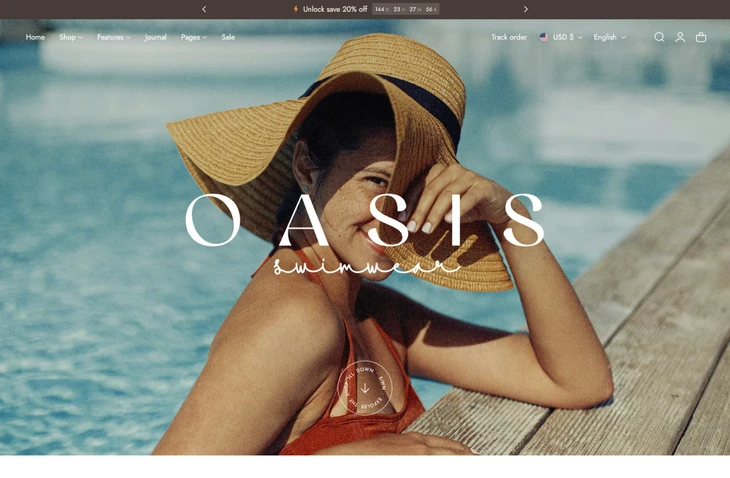
Edge ships five presets off one codebase: Layer, Edge, Sundown, Step, and Linea. Each one takes the same sections library and dresses it differently, running from clean fashion through jewelry and small-batch beauty into streetwear and footwear. The Oasis demo above (built on the Sundown-style preset) shows the pattern: full-bleed hero, serif brand mark, a lifestyle shot that drops directly into a trust bar, then a product grid where the collection cards do the visual work.
Switching presets is a one-click job inside the theme editor, which is useful if a brand’s visual direction is not fully settled at launch. The caveat is that none of the five is a vertical-specialist build in the way a jewelry-only or furniture-only theme would be. If your category has a specialist theme in the Theme Store (Loft for furniture, Palo Alto for lifestyle fashion), it will almost always read sharper from day one than Edge’s closest preset.
Customization sits in Shopify’s standard theme editor. Sections include hero sliders with countdown timers, product collection grids with filters, Instagram feeds, “shop the look” image hotspots, testimonial carousels, and newsletter blocks with discount hooks. None of them require code, and most carry 10 to 20 style settings so you can tune padding, typography, and color scheme per section without touching the theme files.
Edge Features
Five Presets, One Engine
The preset system is the first thing to understand. Layer, Edge, Sundown, Step, and Linea share the sections library and the settings panel. Pay the fee once and you can rebuild the storefront on a different preset six months later without buying a second theme. Few premium themes offer this breadth off a single license.
Conversion Mechanics Shipped With the Theme
Where many themes lean on apps for conversion tooling, Edge includes countdown timers, product-page cross-sells, “frequently bought together” blocks, free shipping bars, and announcement bars natively. For a merchant starting from scratch, that removes two or three app subscriptions off the top: a sales timer app, an upsell app, and a free-shipping-bar app.
Mobile and Checkout Flow
OranThemes positions Edge as mobile-first, and the checkout flow is the specific piece they call out: sticky add-to-cart, drawer cart with recommendations, and a one-page checkout layout. Mobile accounts for the bulk of Shopify traffic in most verticals, so the ordering is right. The Core Web Vitals numbers (see Performance below) suggest the build backs the claim.
Mega Menu, Search, and Filters
The mega menu supports image blocks alongside text links, which matters for stores running more than 30 or 40 collections. Predictive search is included out of the box. Collection filters cover the standard set (price, availability, type, color swatches), and swatches render inline on product cards without needing a variant-swatch app.
Blog, Journal, and Content Pages
Edge includes a journal/blog template with featured posts, author cards, and category filtering. Several presets lean on editorial content for the brand voice, so the blog treatment feels designed rather than tacked on.
Edge Performance
Edge’s real-world speed is where the theme makes its most interesting case. These numbers come straight from Chrome User Experience Report data on actual stores running the theme, not a one-time lab test.
| Theme | CWV pass rate | Few apps | Median LCP |
|---|---|---|---|
| Edge | 79.3% | 96.6% | 1.7s |
| Impulse | 78.4% | 85.4% | 1.6s |
| Dawn | 71.2% | 79.9% | 1.6s |
Edge sits above both Dawn (Shopify’s flagship free theme) and roughly on par with Impulse (one of Out of the Sandbox’s premium themes) in the all-stores cohort. On the few-apps cohort, which isolates the theme’s own code from third-party app weight, Edge’s pass rate is noticeably higher again, which is the signal that OranThemes’ optimization work is doing the heavy lifting rather than merchants running unusually lean app stacks.
Translated: if you install Edge and keep your app stack sensible, you should land in the “passes Core Web Vitals” bucket on Google’s measurement. That matters for both ranking and ad quality scores.
Edge Pricing
Edge is a one-time purchase at $340 from the Shopify Theme Store. There is no subscription, and future updates are free for the life of the theme. Shopify’s standard preview-and-try flow applies: you can install Edge on your development store and preview all five presets with your real catalog before paying.
Set that against monthly page-builder apps that can replicate some of Edge’s section library: the one-time fee breaks even inside roughly a year of app fees, and the savings compound after that. Among premium Theme Store peers, Edge sits in the mid-upper band, below the long-standing flagship-tier themes and well above the free options like Dawn and Sense. For a developer-made theme shipping five presets off one license, that is a reasonable spot in the market.
Edge Pros and Cons
Pros
- Real-world Core Web Vitals pass rate above the reviewed-theme median
- Five presets off one license, swap in-editor without a second purchase
- Conversion mechanics (timers, cross-sells, free shipping bar) native to the theme
- Mobile-first build with sticky add-to-cart and drawer cart
- Mega menu, predictive search, and swatches without extra apps
- One-time fee, free updates for the lifetime of the theme
Cons
- Smaller review pool than mainstream premium themes, so the rating is an early signal rather than a mature one
- No vertical-specialist preset: Edge is a generalist across five looks rather than a specialist in any one category
- OranThemes is a single-theme studio, so support and update cadence are less proven than Out of the Sandbox or Pixel Union
- Adoption share in our dataset is small, so there are fewer live reference stores to study before buying
Who Should Use Edge?
Edge is a strong fit for mid-catalog brands that want their conversion stack shipped in the theme rather than assembled app by app. If you are launching with a few hundred SKUs across one to three collections and planning to lean on apps only for reviews, email, and analytics, Edge saves you money and configuration time versus buying a lighter theme and layering timer, upsell, and free-shipping apps on top.
It is a weaker fit for merchants who have already committed to a page-builder (PageFly, GemPages, EComposer), who need a vertical-specific design language that reads as “jewelry” or “furniture” at first glance, or who are shopping premium themes primarily on review-pool depth. If you want 500+ reviews behind your purchase decision, Dawn, Impulse, Prestige, or Palo Alto are safer bets.
Conclusion
Edge earns the premium slot it is asking for. The speed numbers are credible, the preset range is wider than most themes at this price point offer, and the native conversion tooling removes two or three app subscriptions from a typical setup. The weak spots (small review pool, no vertical specialization, single-theme developer) are real but not disqualifying for the merchant Edge is built for.
For broader Shopify theme coverage, see our full Shopify theme review index. If speed is your lead criterion, our Athens review and Habitat review both cover themes that also PASS the fast-theme gate on real stores. For a different conversion-forward premium pick, our Impulse theme review covers Out of the Sandbox’s long-standing flagship.
-
Who makes the Edge Shopify theme?
OranThemes, a specialist Shopify theme developer. Edge is their main theme in the Shopify Theme Store catalog, and it ships with five presets off one codebase: Layer, Edge, Sundown, Step, and Linea.
-
How much does Edge cost?
Edge is a one-time Shopify Theme Store purchase from OranThemes. No monthly subscription applies, and future updates are included for the life of the theme. The current price is displayed on the theme’s Shopify Theme Store listing.
-
How fast is the Edge theme compared to Dawn?
Faster. On the Core Web Vitals pass rate from real stores (Chrome User Experience Report data), Edge sits above Dawn in the all-stores cohort. On the few-apps cohort, which isolates theme code from third-party app weight, Edge’s advantage widens noticeably.
-
How many presets does the Edge theme include?
Five: Layer, Edge, Sundown, Step, and Linea. All five share one sections library and settings panel, so switching between presets is a one-click change inside the Shopify theme editor without buying a second theme.
-
Does Edge need extra apps to add countdown timers or free shipping bars?
No. Edge ships countdown timers, product-page cross-sells, free shipping bars, and announcement bars natively. For a new store, that removes two or three recurring app subscriptions from the setup, which is where the one-time theme fee starts paying for itself.
-
Who should not buy Edge?
Merchants who already use a page-builder app (PageFly, GemPages, EComposer) will not get full value, since Edge’s own section library overlaps much of what those builders do. Merchants in a strongly visual vertical (jewelry, furniture) may read sharper on a specialist theme than any of Edge’s five generalist presets.
-
Is OranThemes a Shopify-approved theme developer?
Yes. All themes in the Shopify Theme Store, including Edge, pass Shopify’s technical review before listing. OranThemes is a single-theme studio rather than a multi-theme partner like Out of the Sandbox, so its support and update cadence are less proven at scale than long-tenured developers.