Motion Shopify Theme Review
Last modified: October 1, 2026
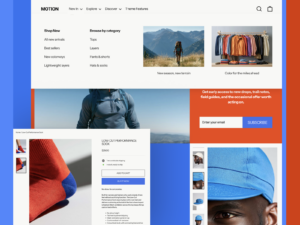
The Motion Shopify theme is a premium theme from Archetype Themes built around movement. It is known for subtle animations, smooth scrolling, and video that makes a storefront feel alive from the first click. It comes as 3 styles, Motion, Memo, and Satchel, so the same animation engine can carry a bold streetwear brand or a calmer editorial one. This review looks at what merchants actually run Motion for, how it performs across real stores, and how it holds up against other premium themes.
So what does the data say? Across the Shopify stores in our dataset, Motion holds a solid place among premium themes, and the merchants who use it rate it highly. Because it is paid, every install is a deliberate choice, which makes its adoption a stronger signal than a free default.
Quick Overview
- Developer: Archetype Themes
- Styles included: Motion, Memo, Satchel
- Ideal for: Design-forward brands that sell on energy and video
- OS 2.0: Yes
- Where to buy: Shopify Theme Store
What Apps Merchants Install on Motion Stores
When a store commits to Motion, what does it build around the theme? The live data below shows the apps that most often run alongside it:
| Rank | App | % of stores | Category |
|---|---|---|---|
| 1 | Klaviyo | 40.8% | Email Marketing |
| 2 | Judge.me Product Reviews App | 32.7% | Product reviews |
| 3 | Loox ‑ Product Reviews App | 22.3% | Product reviews |
| 4 | Recharge | 19.9% | Subscriptions |
| 5 | Yotpo | 10.8% | Product reviews |
| 6 | Rebuy Personalization Engine | 9.6% | Checkout - Other |
| 7 | PageFly ✦ AI Page Builder | 8.7% | Page builder |
| 8 | Shopify Inbox | 8.2% | Support - Other |
| 9 | Smart SEO AI & Image Optimizer | 7.3% | SEO |
| 10 | Triplewhale | 7.3% | Analytics |
The stack reads like a mature, design-led DTC store. Email and marketing automation lead, so these merchants treat owned channels as a core part of the plan. Product reviews are heavily represented, with several review tools near the top, because an animation-rich store still leans on social proof to build trust. Subscriptions and personalization round it out. Taken together, it describes considered brands, not quick experiments.
Motion’s Adoption Data
Here is where Motion lands across the broader Shopify theme market:
The cards show its share of stores, its rank, and the average app count and catalog size of the stores running it. For a premium paid theme, that is a meaningful position. The fuller breakdown, including the verticals Motion shows up in most, lives on our Motion theme statistics page.
How Motion Compares
Adoption is only half the story. Here is how Motion stacks up against the rest of the field:
The callouts put Motion in context against the wider dataset. Read alongside its app profile, they describe a theme used by brands that invest in presentation and are willing to extend it with tools.
Is Motion still gaining or fading?
One thing no other Motion write-up can tell you: we detect themes on live stores, so we can watch its adoption move over time. The trend below tracks Motion across the Shopify stores in our dataset.
Motion has slipped from 0.9% to 0.7% of Shopify stores in our dataset over recent months.
The direction is worth being honest about. Motion’s share has been easing down as newer frameworks arrive with animation and merchandising built in. That does not make it a weak theme. It makes it a mature one. If you love its motion-first feel it still delivers, but know the market is drifting toward newer options.
What Buyers Actually Say
Ratings are where Motion stands out. On its Shopify Theme Store listing, the large majority of reviews are positive, across several hundred reviews. That is a strong score, and a different picture from the free defaults, where the positive share often sits closer to a third.
The gap is not really about code. A paid theme like Motion is only installed on purpose, by merchants who researched the choice and were happy to pay. That self-selection lifts the score, and it tells you something real: the people who choose Motion tend to be glad they did. The few complaints usually point at the same thing this guide flags, that heavy animation asks for discipline and good assets, not that the theme is broken.
Motion’s 3 Styles at a Glance
The 3 styles share the same engine with different moods. Pick based on the feel you want:
- Motion is the signature look: animation-forward and energetic, built to show movement off.
- Memo is cleaner and more editorial, with the motion dialed back for a calmer, content-led feel.
- Satchel is bolder and more product-focused, suited to brands that want punch without losing polish.
All three come with the single license, and you switch between them in the theme editor.
Who Motion Is For
The data points to a clear profile. Motion works well for stores that meet most of these conditions:
- Design-forward brands that sell on energy, story, and visual impact.
- Fashion, streetwear, lifestyle, and single-product stores: categories where mood drives the purchase.
- Focused catalogs: Motion shines when each product gets a moment, less so on sprawling inventories.
- Stores with strong photography and video: the animation needs real assets to land.
Motion is not the right fit for high-SKU general stores, B2B or wholesale, or brands that want a plain, static, fast-loading base above all else.
What Motion Includes
- OS 2.0 sections on every page type, editable without code.
- Scroll animations and transitions that give the store movement.
- Video sections and hero blocks for a dynamic homepage.
- Quick buy and slide-out cart to keep the buy flow smooth.
- Promotion and merchandising blocks for campaigns and featured products.
- Predictive search and mega menu for navigation.
- Mobile-first responsive design.
What to Know Before Buying
- Content carries it. Without strong images and video, the animations feel empty. Budget for good visual assets.
- Keep the motion purposeful. Effects on every section can feel busy and slow pages. Use movement where it helps the sale.
- Watch speed on large catalogs. Animation and video add weight, which matters more as your range grows.
- Deep changes need Liquid. Standard for premium themes.
- Some advanced features run on apps. Subscriptions and advanced filtering lean on apps, as the adoption data above reflects.
View Motion on the Shopify Theme Store
Is Motion Right for Your Store?
Choose Motion if you are a design-forward brand that sells on energy and story, you have real photography and video, and you want a store that feels alive without hiring a developer. Fashion, streetwear, and lifestyle brands with a focused catalog get the most from it.
Look elsewhere if your catalog is large and variant-heavy, speed is your top priority, or your brand is plain and utilitarian. In those cases a lighter, more modern framework will serve you better.
The through-line in the data is consistent. Motion is bought on purpose, runs on considered stores, and keeps a strong rating even as newer themes pull share. If its motion-first feel fits your brand, it is still a capable, well-liked choice.
For more options, see our Motion theme alternatives, or our complete guide to Shopify theme reviews.
-
How much does the Motion Shopify theme cost?
Motion is a premium Shopify theme sold as a one-time license, with all 3 styles included in the single purchase. There is no recurring theme fee. You will still pay for any apps you add for features the theme does not cover, such as subscriptions.
-
What styles come with Motion?
The license includes 3 styles: Motion, Memo, and Satchel. Each has its own mood, from animation-forward to cleaner and editorial. You switch between them in the theme editor without buying anything extra.
-
Who develops the Motion theme?
Motion is built by Archetype Themes and sold through the official Shopify Theme Store. That means it passes Shopify’s theme review and receives ongoing updates. Support comes from the developer.
-
Is Motion a good choice for a large catalog?
Motion is happiest with a focused catalog, where each product gets room to breathe and the animation can shine. On a very large, high-SKU store the movement and video add weight that can slow pages. If range is your priority over mood, a lighter theme is a better fit.
-
Will Motion’s animations slow down my store?
They can if you overuse them. Animation and video add page weight, so the key is discipline: apply motion where it helps the sale and keep your images and video optimized. Used with restraint on a focused catalog, Motion stays quick enough while still feeling lively.
-
Does Motion support Shopify OS 2.0?
Yes. Motion is built on Online Store 2.0, so you get sections and blocks on every page type, not just the homepage. You can rearrange layouts from the editor without touching code. Deeper changes still need Liquid.
A Homepage That Draws Customers In
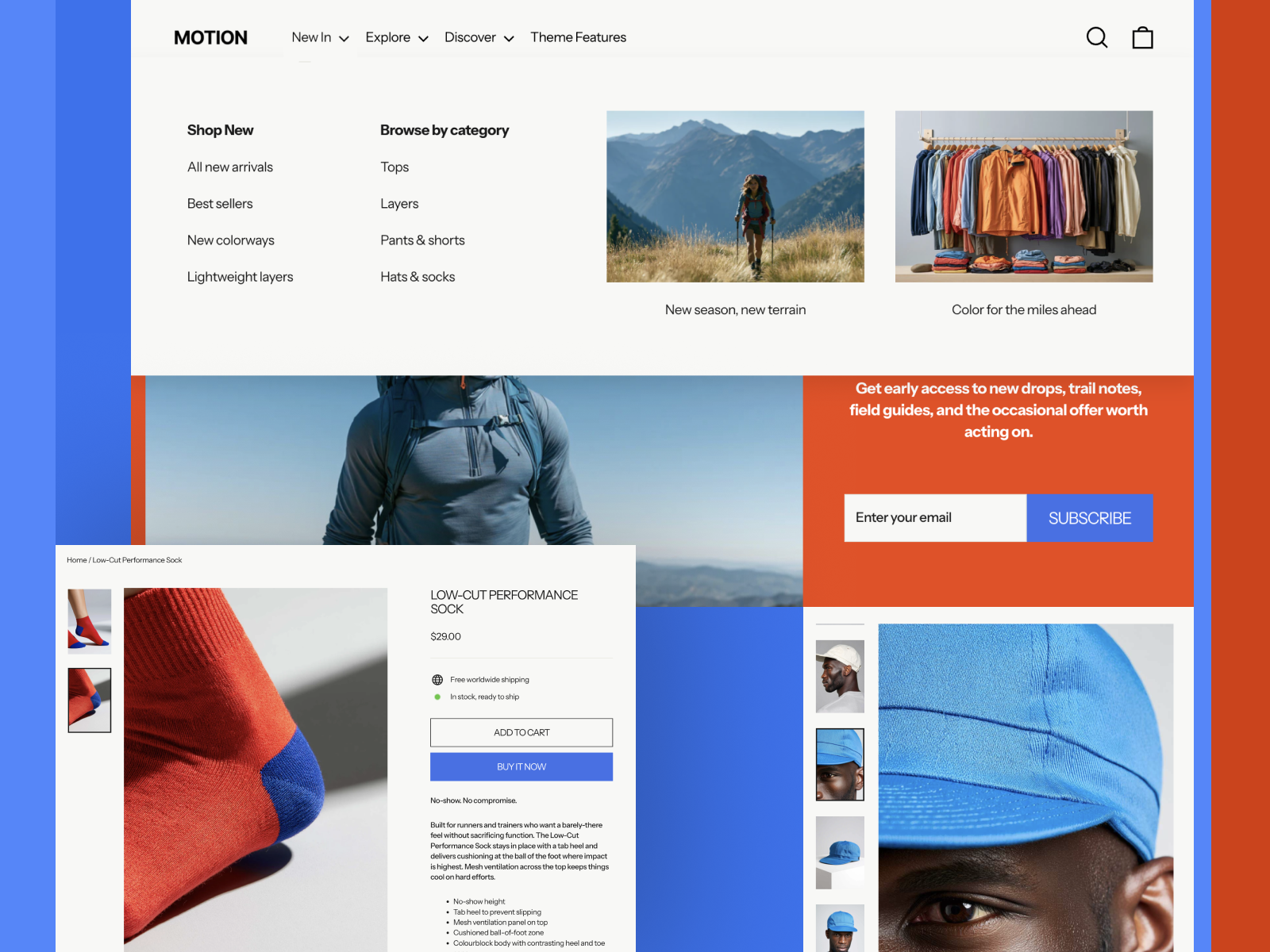
Motion Shopify theme is built to impress right from the homepage. Hero banners elegantly fade in, text elements slide into place, and call-to-action buttons subtly expand on hover, giving your storefront a refined, polished feel. These animations aren’t distracting; they guide the eye naturally through the page, helping direct attention to key products and offers.
Scrolling down, you’ll find customizable sections to showcase your collections, promotions, and testimonials. Motion’s carefully designed content blocks allow you to create an experience that flows, with just the right balance of visuals and whitespace. The result? A homepage that doesn’t just display your products, it brings them to life.
Smooth, Intuitive Navigation
While Motion Shopify theme is all about visual storytelling, it doesn’t sacrifice usability. Navigation is clean and intuitive, ensuring that customers can browse your store effortlessly. The main menu supports dropdowns for larger inventories, keeping everything neatly organized. A sticky header ensures that the menu is always within reach, making it easy for shoppers to find what they need, no matter how deep they scroll.
For stores with extensive product catalogs, Motion includes advanced filtering options. Customers can refine their searches by size, color, price, and other attributes, allowing them to locate products faster. The predictive search feature is another standout, offering instant, relevant results as shoppers type. All of these features work together to create a navigation experience that’s as smooth as the theme’s animations.
Product Pages That Do More Than Showcase
Product pages in Motion Shopify theme are designed to convert. High-resolution images take center stage, with zoom functionality and multiple image views that help customers examine products in detail. But what really makes Motion shine is its video integration. Merchants can add product videos directly to their listings, helping shoppers visualize how items look, move, or function in real life.
The product page layout is structured for clarity, ensuring that pricing, variant options, and call-to-action buttons are easy to find. Descriptions, reviews, and additional details are neatly organized in collapsible sections, keeping the page sleek while still offering essential information. Subtle animations, like a review section gliding into view or a “You may also like” carousel smoothly transitioning, enhance engagement without overwhelming the customer.
A Seamless Mobile Shopping Experience
Motion Shopify theme isn’t just about looking good on desktops, it’s fully optimized for mobile. The animations and transitions remain smooth on smaller screens, while touch-friendly navigation ensures effortless browsing. Menus collapse neatly, images load crisply, and call-to-action buttons are perfectly sized for tapping.
With mobile shopping continuing to rise, Motion ensures that your store delivers the same elegant experience across all devices. Whether customers are browsing on a laptop, tablet, or smartphone, they’ll enjoy a cohesive and polished shopping journey.
Customization Without Limits
Motion Shopify theme offers an impressive level of customization, allowing merchants to craft a store that reflects their brand identity. Using Shopify’s theme editor, you can easily tweak colors, fonts, and layouts without any coding experience. Whether you want to highlight a particular collection, add promotional banners, or adjust spacing for a more refined look, Motion provides all the tools you need.
Pre-designed templates and a library of customizable content blocks make it easy to create a unique storefront. Each element is adjustable, allowing you to experiment with different animation styles and arrangements to make your store stand out. No two Motion-powered stores look exactly the same, giving you a personalized and professional online presence.
Optimized for Speed and Performance
Despite its focus on animations and visual effects, Motion Shopify theme is built for speed. Pages load quickly, ensuring that customers don’t experience frustrating delays. This optimization not only improves user experience but also enhances SEO rankings, helping your store attract more organic traffic.
Fast-loading images, lightweight coding, and performance-focused design elements ensure that your store runs smoothly, keeping bounce rates low and conversion rates high.
Final Thoughts on Mavon
Motion Shopify theme is perfect for brands that want to create a dynamic, visually engaging online store. With its subtle animations, intuitive navigation, and video-friendly product pages, Motion adds an extra layer of sophistication to any storefront. It’s an excellent choice for businesses looking to stand out with a theme that feels interactive, polished, and designed for conversions.
Didn’t find what you like with Mavon? Check out our big list of Shopify theme reviews or have a look at similar themes Sahara, Yuva, or Xtra.
If you’re ready to upgrade your e-commerce experience and make your store feel more alive, Motion Shopify theme is the perfect solution. Whether you’re launching a new brand or revamping an existing one, Motion gives you the tools to create an unforgettable shopping experience.